


How Does a Lithium Battery Heat Pad Work?
A lithium battery heat pad warms LiFePO4 cells before charging in freezing conditions. Learn how the thermostat, sensor and BMS work together.
Last Updated: 20 November 2026
Quick Summary
A lithium battery heat pad is a resistive heating element that warms LiFePO4 cells so they can accept charge safely in freezing conditions. A temperature sensor and thermostat or BMS switch the pad on only when the battery is cold enough, then off once it is warm. This protects the cells from low-temperature charging damage.
- Charging below 0°C can plate lithium onto the anode, and that damage does not reverse.
- A 20W pad draws about 1.7A, roughly 10Ah daily over six hours of use.
- A 50W pad draws about 4.2A, around 25Ah daily across six hours.
- A 20W pad on a 100Ah battery in a well-insulated enclosure may take 30-60 minutes to lift cell temperature by 10°C.
- The Core2 340Ah pairs integrated heat pad technology with a 250A JBD BMS and IP65 housing.
Table of Contents
- Why a Lithium Battery Heat Pad Matters in Cold Weather
- How a LiFePO4 Battery Heating Pad Generates and Moves Heat
- The Battery Heater Thermostat and Temperature Sensor Explained
- Lithium Battery Low-Temperature Charging: What the BMS Allows
- Lithium Battery Heating Pad Power Consumption and Sizing
- The Heating Cycle, Step by Step
- Choosing a Self-Heated Battery for Your Campervan
- Frequently Asked Questions
Why a Lithium Battery Heat Pad Matters in Cold Weather
A lithium battery heat pad is a resistive heating element that warms LiFePO4 cells so they can accept charge safely in freezing conditions. It matters because charging a cold lithium battery can cause permanent damage, and a heat pad removes that risk.
Cold slows the chemistry inside any lithium-ion battery. Charging below 0°C can plate lithium onto the anode, and that damage does not reverse.
The fix is simple in principle. Warm the cells first, then charge.
- Discharge still works in the cold. A cold battery can usually power your fridge and lights.
- Charging is the problem. Most lithium batteries block charging near or below freezing.
- Heat pads solve it. They bring cells back into a safe range before current flows.
If you want reassurance before going further, our guide on whether it is safe to use lithium leisure batteries in cold weather covers the safety questions owners ask most.
How a LiFePO4 Battery Heating Pad Generates and Moves Heat
A LiFePO4 battery heating pad works by passing current through a resistive element, converting electrical energy into heat. The pad sits against the cells or the battery case, and heat moves by conduction into the cell mass.
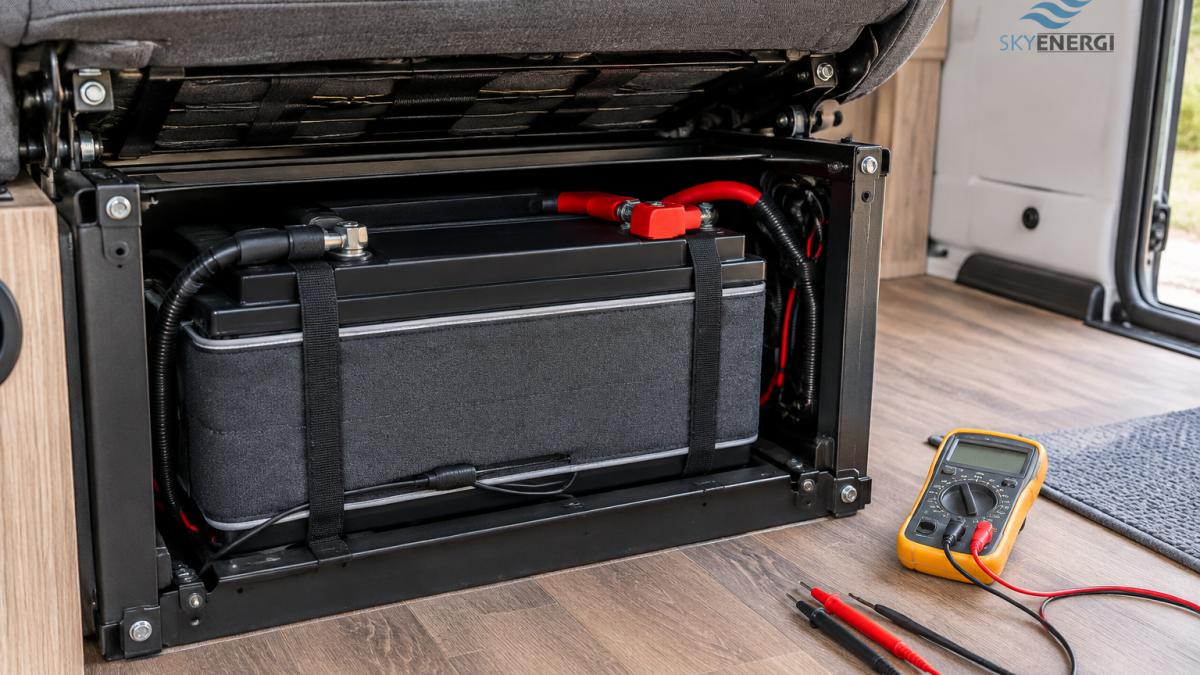
There are two common designs. Some batteries build the pad inside the enclosure. Others use an external pad with an adhesive backing stuck to the battery case.
Placement matters either way. The underside or the largest flat face gives the best contact area. Insulation around the battery enclosure then keeps that heat where it is needed.
The Battery Heater Thermostat and Temperature Sensor Explained
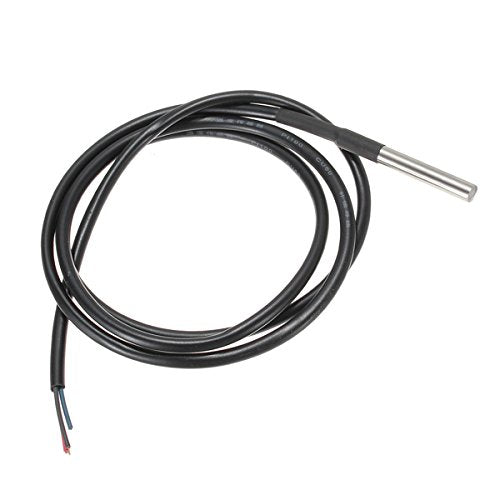
The battery heater thermostat and temperature sensor form the control loop that decides when heating starts and stops. A sensor reads cell temperature, and the thermostat or BMS switches the pad on only when it is cold enough.
This is the part most buyers overlook. A pad with no control will run whenever it has power, draining your bank and risking overheating.
Here is how the loop works in practice:
- The temperature sensor measures the battery.
- The thermostat compares that reading to its set threshold.
- Below the threshold, the pad switches on.
- Once warm enough, the pad switches off.
- The cycle repeats as ambient temperature changes.
Manufacturer designs vary. Battle Born, for example, describes a sensor that activates its heat pad at a set low temperature, as covered in Battle Born's explanation of heated batteries. Epoch and others describe a BMS that detects low temperature and heats before charging.
If you run an SRNE system, a compatible sensor such as the SRNE CU2 indoor or outdoor temperature sensor lets you monitor inside and outside temperatures alongside the thermostat logic.
Lithium Battery Low-Temperature Charging: What the BMS Allows
Lithium battery low-temperature charging is limited by the battery management system, which blocks charge current when cells are too cold. The BMS protects the cells; the heat pad brings them back into range.
A heat pad is not permission to charge a cold battery immediately. LiFePO4 cells can be damaged by charging below 0°C, and the correct threshold depends on the battery design. Always follow the manufacturer's instructions rather than a generic number.
A good BMS does three things:
- Blocks charging below its low-temperature limit.
- Allows discharge so your appliances keep running.
- Re-enables charging once the pad has warmed the cells.
The Core2 batteries pair a JBD BMS with integrated heat pad technology. For the fuller picture on charging safely, see our guide on how to charge a lithium leisure battery.
Lithium Battery Heating Pad Power Consumption and Sizing
Lithium battery heating pad power consumption is modest but not zero, and it comes out of your stored energy. A pad typically draws a small number of amps at 12 volts, and the total depends on pad wattage, run time and how well the battery enclosure is insulated. Here is how to size a pad and estimate its daily energy use for your own setup.
Estimating daily consumption. The arithmetic is straightforward:
- Find the pad wattage (often printed on the pad or in the battery datasheet).
- Divide watts by 12 to get amps at 12V nominal.
- Multiply amps by run hours per day to get amp-hours consumed.
A 20W pad draws about 1.7A. Run for six hours a day, that is roughly 10Ah daily. In amp-hour terms, that is a small slice of a 230Ah bank, around 4% of capacity. A 50W pad draws about 4.2A; six hours of run time gives 25Ah daily, or roughly 11% of a 230Ah bank. These figures assume continuous operation; in practice the thermostat cycles the pad on and off, so actual consumption is usually lower unless ambient temperatures stay well below freezing.
Sizing the pad. The pad must be able to lift the cell mass above the charge threshold in reasonable time, and the battery enclosure should be insulated to hold that heat.
The pad's job is to overcome heat loss to the surroundings, so insulation matters as much as wattage.
Warm-up time. Warm-up time depends on pad wattage, cell mass, ambient temperature and insulation. A larger battery bank takes longer to warm because there is more mass to heat, and a higher-wattage pad or better insulation will shorten the wait.
Insulation and heat retention. Insulation around the battery enclosure keeps heat where it is needed and reduces the pad's duty cycle. The goal is to slow heat loss, not to seal the battery completely, some ventilation is needed to avoid trapping gases in the event of a fault.
To judge how much the pad draws against your whole setup, work through our guide on how to calculate campervan power needs.
The Heating Cycle, Step by Step
The heating cycle is a closed control loop: sense, heat, verify, charge. That same sense–heat–verify discipline helps preserve battery health beyond the heating cycle, a principle that also applies to travel speakers at Electro Gift Shop.
Stage 1, Sense. A temperature sensor, typically a thermistor or digital probe, reads cell temperature. If the sensor is mounted on the case, it may read several degrees warmer than the cells during heating, causing the controller to shut off early.
Stage 2, Compare. The thermostat or BMS compares the sensor reading against its low-temperature threshold. For LiFePO4 cells, charging is typically inhibited below 0°C, and many BMS units block charge current at or near that point.
Stage 3, Heat. Below threshold, the controller energises the resistive pad. Current flows through the heating element, converting electrical energy to heat. The pad warms the cells by conduction. Warm-up time depends on pad wattage, cell mass and insulation.
Stage 4, Verify. The sensor confirms the cells have reached a safe charging temperature. This is the stage most DIY systems skip. Without verification, the BMS may open the charge path while some cells are still cold, particularly if the sensor is poorly placed.
Stage 5, Charge. Once the BMS confirms the temperature is within the safe window, it opens the charge path and current flows. The heat pad may continue to cycle on and off to hold temperature during charging, especially in sub-zero ambient conditions.
Stage 6, Hold. The pad cycles to maintain temperature stability. A well-designed system will not let the cells cool below the charge threshold while charging is in progress, but it also will not overheat them. The thermostat's hysteresis, the difference between the on and off thresholds, determines how tightly temperature is controlled.
Temperature uniformity is the hidden challenge. If the sensor sits far from the pad, it may read warm while colder cells lag behind. Good designs place the sensor where it reflects the true cell temperature, not just the case surface.
Watch out: if your BMS re-enables charging based on a single sensor reading while other cells remain cold, you can plate lithium onto the anode of the colder cells. That damage is permanent and reduces capacity over time.
For SRNE users, the SRNE CU2 indoor or outdoor temperature sensor can be used to monitor ambient and enclosure temperatures alongside the battery's own sensor, giving you a second reference point to verify that the heating cycle is working as intended.
Choosing a Self-Heated Battery for Your Campervan
A self-heated battery is the simplest route for most campervan owners. The pad, sensor and BMS arrive matched and tested, so there is no wiring to get wrong and no separate thermostat to mount.
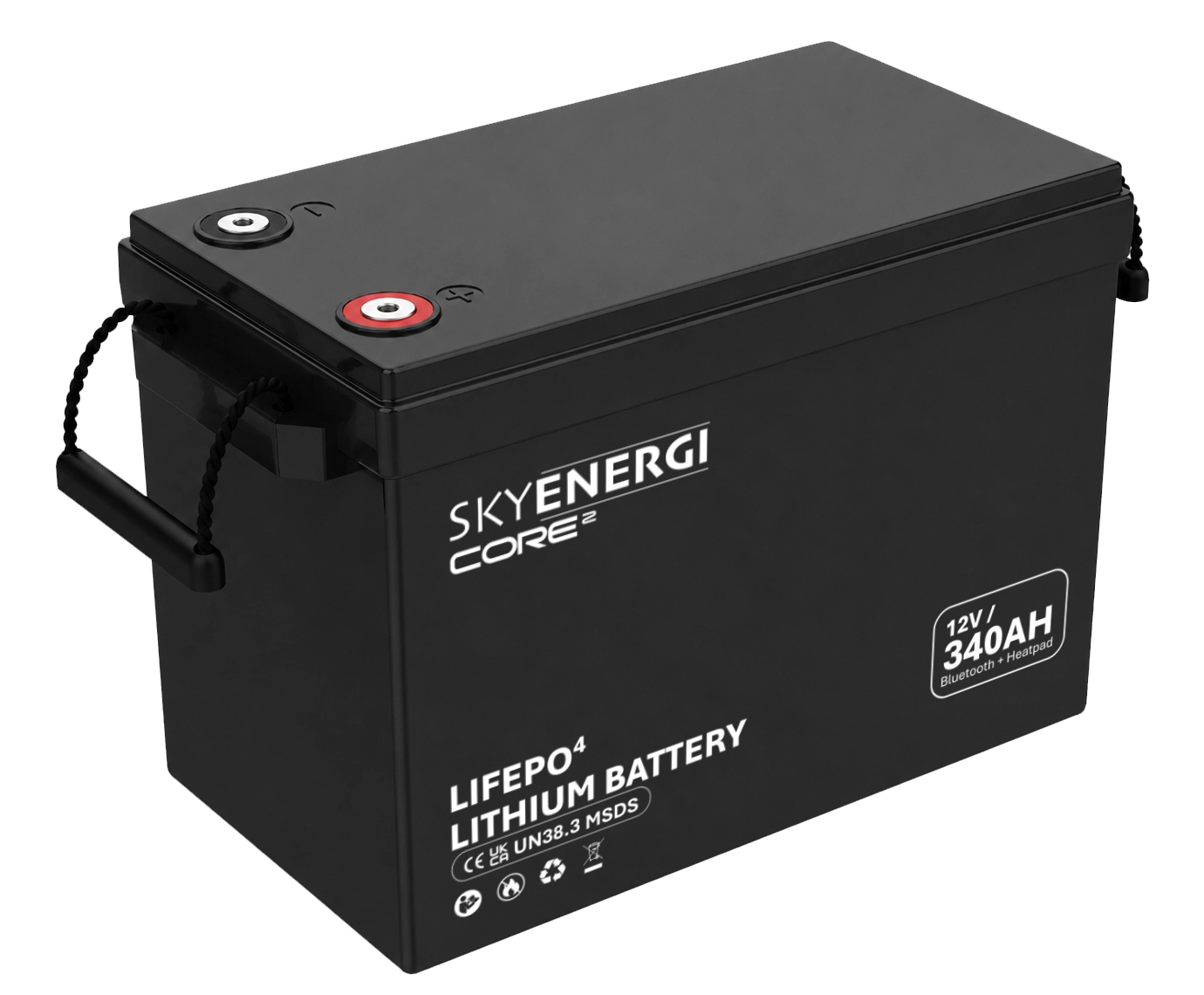
The Skyenergi Core2 340Ah lithium leisure battery with Bluetooth and heat pad pairs integrated heat pad technology with a 250A JBD BMS, IP65 housing and app monitoring for £685.00. If you need more capacity, the 680Ah version offers integrated heat pad technology at £1,129.00, and the 230Ah seat-base model is designed to fit under the seat base of the vehicles listed in its product description.
| Battery | Capacity | Heat Pad | BMS | Price |
|---|---|---|---|---|
| Core2 230Ah | 230Ah | Integrated | 200A JBD | £527.00 |
| Core2 230Ah seat-base | 230Ah | Integrated | 200A JBD | £619.00 |
| Core2 340Ah | 340Ah | Integrated | 250A JBD | £685.00 |
| Core2 680Ah | 680Ah | Integrated | 300A JBD | £1,129.00 |
Capacity
Best for: owners who want winter charging without a DIY control system. Skip if: you already have a battery you are happy with and only need a retrofittable external pad.
Before buying, check the BMS temperature limits, the pad's control method, and whether the supplier offers technical support after the sale. Those three things separate a battery that works in February from one that sits idle.
Cold weather should not park your campervan's power system. The right heat pad, matched to a BMS that knows when to charge and when to wait, keeps your lithium bank working all year. Skyenergi supplies Core2 batteries with integrated heat pad technology, SRNE charging systems and UK-based technical support before and after purchase. Get in touch with Skyenergi and keep your power reliable through every season.
Frequently Asked Questions
Can you charge a lithium battery when it is cold?
Not straight away. LiFePO4 cells can be damaged by charging below 0°C, so a lithium battery heat pad is there to warm the cells first. A temperature sensor and thermostat, or the battery management system, hold the charge off until the cells are warm enough, then allow current in. The exact threshold depends on the battery design, so follow the manufacturer's instructions for your model. A self-heated battery such as the Skyenergi Core2 range handles this automatically.
How does a battery heating pad know when to switch on?
A temperature sensor mounted on or inside the battery enclosure feeds readings to a thermostat or the battery management system. When the reading drops below the set threshold, the controller switches the resistive heating element on. Once the cells reach the target temperature, the controller cuts the supply. Some designs also block charging until warm-up is complete, which is why the thermostat and sensor work as a pair rather than the pad running on its own.
Can a lithium battery heating pad drain the battery?
It can use stored energy, so heating pad power consumption matters when you are off-grid. A pad draws from the 12-volt supply, and the controller limits how long it runs. On a self-heated battery the heat pad is integrated and managed by the BMS, so it only operates in cold conditions rather than continuously. Size the pad to the battery and check the wattage and amp-hour draw before relying on it through a long cold spell.
Can you use a heating pad with an SRNE lithium battery system?
Yes. SRNE charging systems and MPPT solar charge controllers work with self-heated lithium batteries, and Skyenergi supplies both SRNE charging equipment and its own lithium battery range with integrated heat pad technology. Check compatibility and wiring with the supplier before installation.

Prev post

7 Ways SRNE Data Acquisition Units Optimise Solar Power
Updated on 23 November 2026
Next post

How to Size an SRNE Solar Kit for a UK Home
Updated on 16 November 2026


