





Efficient Energy Management with Solar and MPPT Integration
Discover efficient energy management with solar and MPPT integration for fast solar charging. Compare SRNE controllers and optimise your off-grid system.
Table of Contents
- Why MPPT Integration Defines Efficient Energy Management
- MPPT vs PWM Charge Controller Efficiency: What the Data Shows
- SRNE MPPT Controller Setup Guide for Fast Solar Charging
- Best Solar Charge Controller for Lithium Batteries: SRNE vs Victron
- Optimising Solar Charging in Low Light Conditions
- Real-Time MPPT Response to Partial Shading
- Build Your Efficient Energy Management System
- Frequently Asked Questions
Last Updated: September 8, 2026
MPPT charge controllers can improve solar system efficiency by up to 30%, separating a workable off-grid setup from one that leaves you chasing every watt. That gain is the core of efficient energy management with solar and MPPT integration for fast solar charging. At Skyenergi, we supply the charging hardware that makes this possible.
Most guides treat MPPT as a black box that simply "gets more power." The reality is more specific: maximum power point tracking continuously adjusts the electrical operating point of your photovoltaic array so it delivers peak power as light intensity shifts. The practical result, documented across recent studies, is an energy conversion efficiency gain of 10 to 30 percent over systems without tracking ScienceDirect research on MPPT strategies. For a campervan roof carrying 380W of solar, that difference can mean a full battery by mid-afternoon rather than a top-up that leaves the fridge struggling overnight.
Why MPPT Integration Defines Efficient Energy Management
Efficient energy management orchestrates every power source, from solar panels to alternator charging, so your battery bank receives the right voltage and current at the right time. MPPT integration sits at the centre because it ensures the solar side operates at peak energy yield.
The architecture matters more than most buyers realise. In a DC-coupled system, the solar charge controller feeds the battery directly, which suits most 12V leisure installations. An AC-coupled setup routes solar through an inverter and is more common in larger hybrid systems. The SRNE range we stock covers both, but for campervans and motorhomes the DC-coupled approach with an MPPT controller is almost always the right call.
Smart electronics have become critical to transforming these solar-powered systems into adaptive energy networks ResearchGate analysis of smart energy management. That means choosing a controller that can communicate, whether through Bluetooth for direct monitoring or through a broader data system for remote control.
MPPT vs PWM Charge Controller Efficiency: What the Data Shows
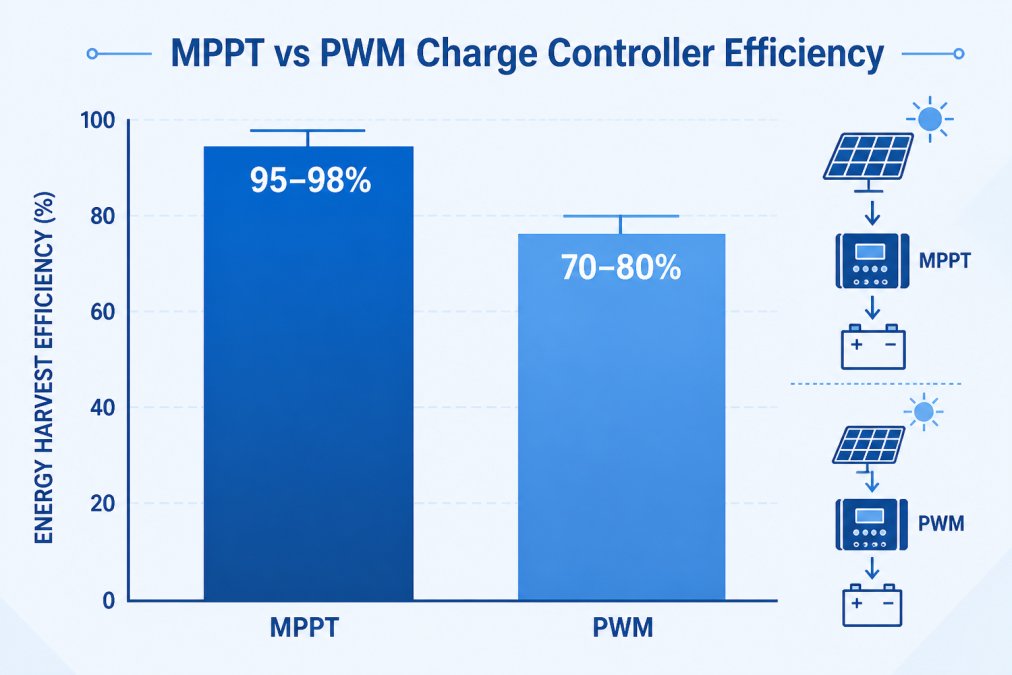
The efficiency gap between MPPT and PWM controllers is the single strongest argument for paying more upfront, but understanding why the gap exists matters more than quoting headline percentages. Modern MPPT controllers achieve 95 to 98 percent tracking efficiency by constantly monitoring panel voltage and current, while PWM units typically operate in the 70 to 80 percent range under identical conditions. Industry data for 2026 indicates MPPT technology can boost total solar energy harvests by up to 30 percent compared with non-MPPT alternatives 2026 MPPT controller efficiency analysis.
That headline figure is a consequence of the relationship between panel voltage and battery voltage. A PWM controller acts as a simple switch, connecting the panel directly to the battery and holding it at battery voltage. When a 12V battery sits at 13.5V during absorption charging, a nominal 12V panel producing around 18V at its maximum power point is forced down to 13.5V, wasting the difference as heat.
An MPPT controller, by contrast, operates as a DC-to-DC converter. It decouples panel voltage from battery voltage, holds the panel at its maximum power point, and converts excess voltage into additional charging current. The power harvested is the same, but it arrives at a lower voltage and higher current, which is what actually charges the battery. This is why the MPPT advantage grows as the gap between panel voltage and battery voltage widens.
If you wire a single 12V panel to a 12V battery, the MPPT advantage shrinks because the panel's maximum power point sits close to the battery's charging voltage. The real gains appear with higher-voltage panels: a 36V panel feeding a 12V battery bank, or a 60V panel feeding a 24V bank, gives the MPPT controller substantial headroom. In those configurations, the 30 percent harvest improvement is realistic; in a matched 12V-to-12V setup, the gain may drop to 10 or 15 percent.
Panel voltage falls as temperature rises, so a fixed-voltage PWM system drifts further from the maximum power point on hot days. An MPPT controller tracks that drift continuously. The SRNE units we stock sample panel voltage and current multiple times per second and adjust accordingly, maintaining rated tracking efficiency across the full operating temperature range.
Pulse width modulation has its place in small, simple setups where a few extra watts do not justify the cost. For any serious off-grid build, the energy harvest gains from MPPT pay for the controller within a season of use.
SRNE MPPT Controller Setup Guide for Fast Solar Charging
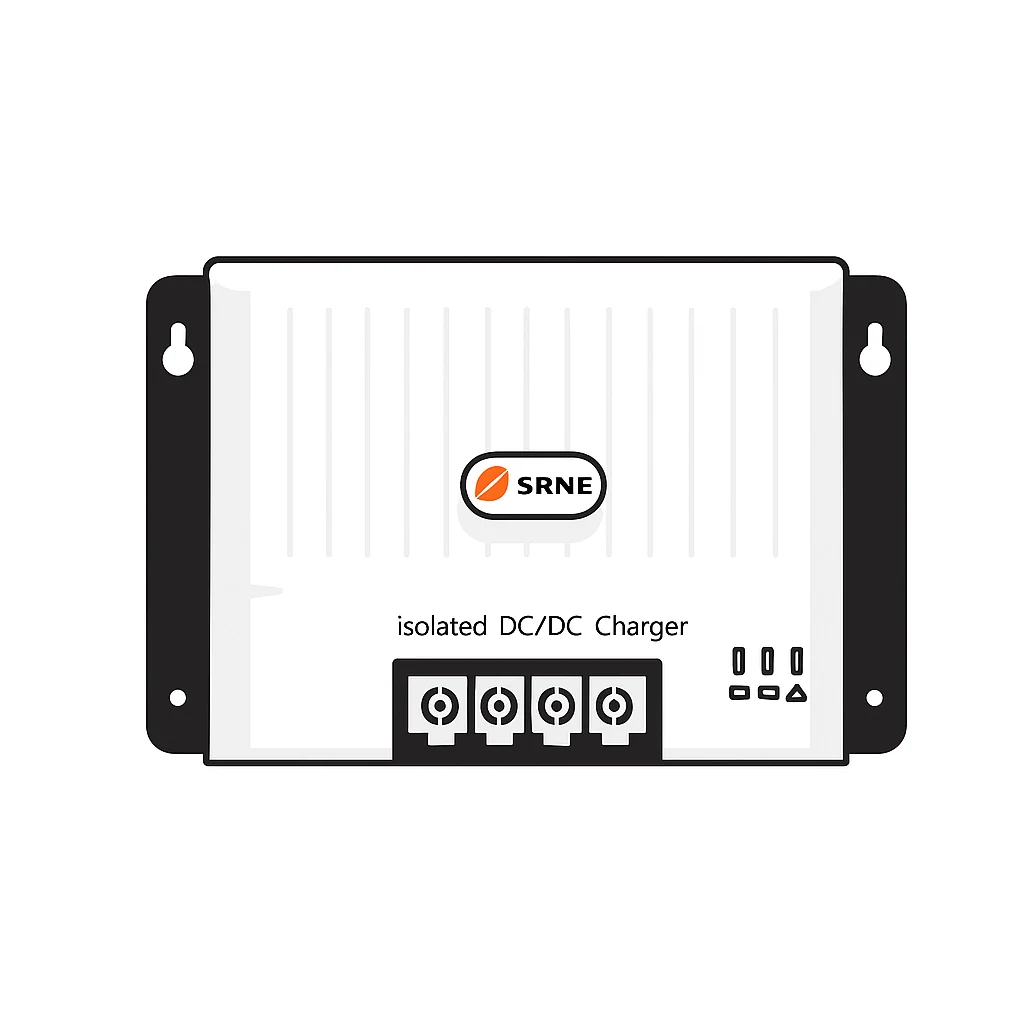
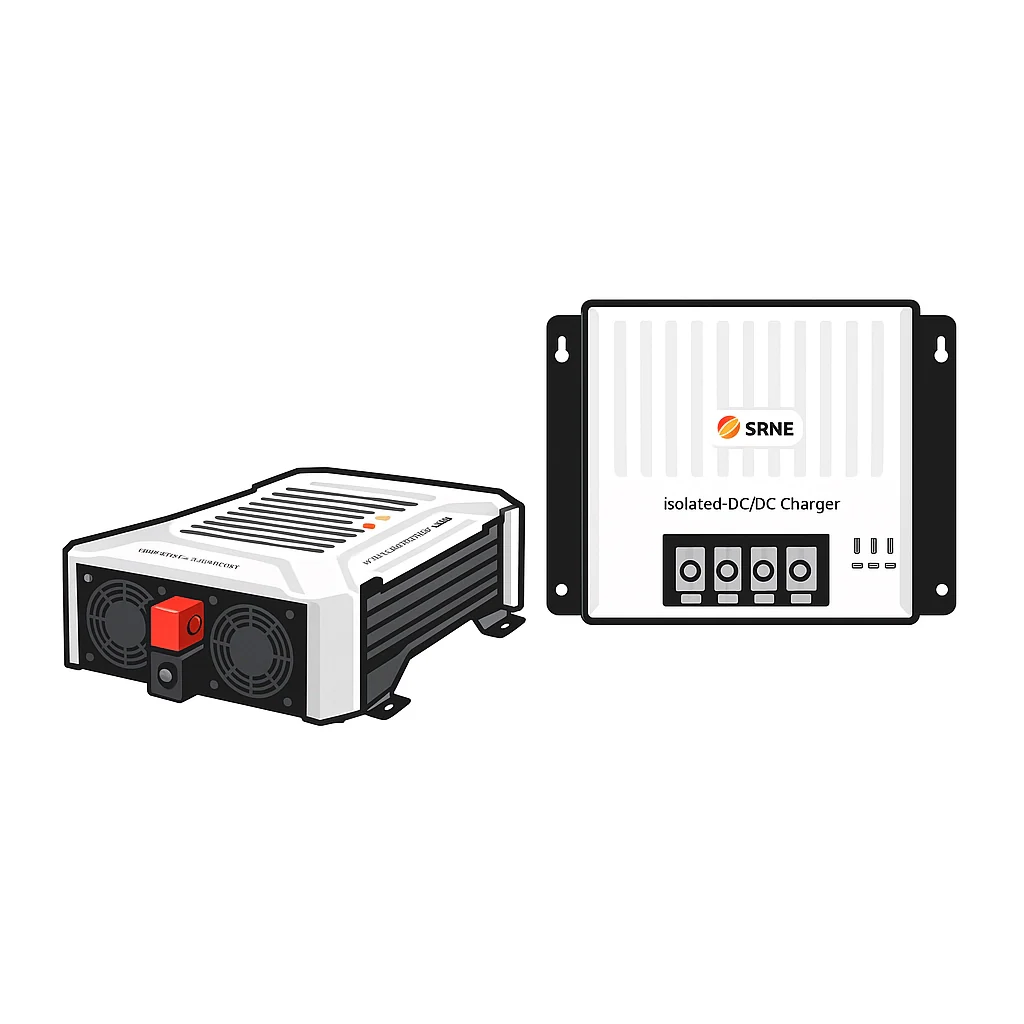
Setting up an SRNE MPPT controller correctly is the difference between fast solar charging and a system that never quite delivers its rated output. The SRNE MD1250, a dual DC-to-DC and MPPT controller, is our most popular unit for campervan builds because it handles both solar and alternator charging in one compact device.

Start with the basics of installation:
- Mount the controller in a ventilated space, away from the battery to avoid temperature interference.
- Connect the battery first, then the solar panels, to let the controller detect the system voltage.
- Set the correct battery chemistry profile. For lithium LiFePO₄ batteries, select the lithium setting or use a user-defined profile with the manufacturer's recommended voltages.
- Configure the MPPT voltage range. The MD1250 operates between 17 and 36V DC for its MPPT window, so ensure your panel array sits within that range.
- Pair the controller via Bluetooth and verify the charging parameters in the SRNE app before leaving the system unattended.
The MD1250 supports up to 700W of solar input and delivers 50A of MPPT charging current, with a maximum charging conversion efficiency of 96 percent. Its dual-input design accepts power from both the alternator and solar simultaneously, prioritising whichever source offers the best charging conditions.
Best Solar Charge Controller for Lithium Batteries: SRNE vs Victron
SRNE and Victron represent two different philosophies in solar charge controller design, and both work well with lithium batteries. The right choice depends on your system architecture, budget, and how much you value open interoperability versus a tightly integrated ecosystem.
SRNE controllers, such as the MD1250 and the 3-in-1 SAA 1250, integrate multiple charging sources into a single unit. The SAA 1250 combines an MPPT solar charge controller, a 50A DC-to-DC alternator charger, and an AC mains charger in one box, supporting up to 700W of solar at 12V. This consolidation reduces wiring, mounting space, and potential fault points. SRNE units also communicate through a dedicated app and are compatible with the broader SRNE ecosystem, including touchscreen displays and data control units.
Victron's SmartSolar range, including the MPPT 75/15 and 100/30, takes a modular approach. Each controller focuses on solar charging alone but offers exceptionally fast maximum power point tracking and the BatteryLife feature, which protects battery health by adjusting disconnect voltages during poor weather. Victron's Bluetooth monitoring, through the VictronConnect app, is polished and reliable.
The deeper question is how these controllers talk to the rest of your system. This is where interoperability standards matter, and where the market is quietly consolidating around a few key protocols.
OpenADR is the open automated demand response standard, designed primarily for grid-interactive systems. In a UK home context, it allows an energy management system to receive signals from the grid or an aggregator and automatically adjust charging loads. Neither SRNE nor Victron currently speaks OpenADR natively at the controller level, but both can integrate into broader home energy management systems that do, provided the system architecture supports it.
OCPP, the Open Charge Point Protocol, governs communication between EV chargers and charging station management systems. If your solar setup feeds an EV charger, OCPP compatibility determines whether that charger can participate in smart charging schemes, load balancing, or remote monitoring. The SRNE ecosystem does not yet offer an OCPP-compliant EV charger, which matters if you plan to expand into EV charging later. Victron's ecosystem, through its Cerbo GX and compatible chargers, offers more mature integration paths for OCPP-based smart charging.
Controller choice is not just about today's solar harvest. A controller that only speaks its proprietary Bluetooth protocol is a dead end. One that can feed data into a broader system, whether through Modbus, CAN bus, or a documented API, keeps your options open.
For most UK campervan and motorhome owners, the SRNE all-in-one units deliver better value because they replace three separate devices and their Modbus interface allows integration with third-party monitoring systems. Victron makes sense when you already have a DC-to-DC charger in place and only need to add solar capacity, or when building a home system that will eventually include OCPP-compliant EV charging.
Optimising Solar Charging in Low Light Conditions
Low light conditions are where MPPT earns its keep. When light intensity constantly changes, an MPPT controller adjusts its tracking point rapidly to extract whatever power is available. A PWM controller in the same conditions struggles.

The science is straightforward: solar panels have a single operating point where they produce maximum power, and that point shifts with light intensity and temperature. MPPT algorithms, including the optimised fuzzy logic approaches studied in recent research, continuously hunt for that point ScienceDirect study on fuzzy logic MPPT control. Under overcast UK skies, this can mean the difference between a battery that gains a meaningful charge and one that slowly drains.
Practical steps to improve low-light performance:
- Use panels with higher open-circuit voltage to give the MPPT controller more headroom to work with.
- Keep panels clean. A thin film of grime can cut output by 10 to 20 percent in diffuse light.
- Angle panels toward the equator, even in winter, to capture maximum irradiance.
- Choose a controller with low standby consumption. The SRNE units draw under 0.6W in standby, which matters when solar input is marginal.
Real-Time MPPT Response to Partial Shading
Partial shading is the silent killer of solar harvest. A single shadow across one panel in a series string can cut the output of the entire array disproportionately, because the current through the whole string is limited by the shaded cell.
When a cloud passes or a tree branch casts a shadow, the panel's maximum power point shifts dramatically. A controller with fast tracking re-optimises within milliseconds to seconds, recovering energy that a slower unit would lose. The advantage is most noticeable when light intensity is constantly changing.
The SRNE MD12100, our highest-capacity dual controller, handles this well with a maximum PV input current of 95A and support for up to 1400W of solar at 12V. Its MPPT tracking efficiency exceeds 99 percent, meaning it spends almost no time operating away from the optimal point. For larger builds with multiple panels, this real-time response prevents a single shadow from crippling the whole array.
Build Your Efficient Energy Management System
An efficient energy management system pairs an MPPT controller with a lithium battery that can accept high charge currents, and a monitoring setup that shows you what is happening in real time.
The integration of solar-powered charging into broader energy networks is a proven strategy for reducing emissions and improving efficiency MDPI study on solar EV charging integration. The same principle applies at the smaller scale of a campervan or off-grid home: every watt you harvest cleanly is a watt you do not need to generate elsewhere.
A practical build sequence looks like this:
- Size your battery bank to your daily consumption, not your roof space.
- Select a controller whose MPPT voltage range matches your panel array.
- Choose a controller with dual-input if you want alternator charging while driving.
- Install a monitoring system, whether the SRNE app or a dedicated display, to track system performance.
- Verify your charging profile matches the lithium battery's specifications.
The global solar charger market is projected to grow at a compound annual growth rate of 13.63 percent between 2025 and 2035 Spherical Insights market projection, reflecting the accelerating shift toward solar as a primary energy source. For UK leisure vehicle owners, that shift means the technology is both more capable and more affordable than ever.
Building an efficient energy management system with solar and MPPT integration is about matching the right controller to your battery chemistry and usage patterns. At Skyenergi, we supply the full range of SRNE controllers, from the compact MD1250 to the high-capacity MD12100, alongside Victron SmartSolar units and our Edge and Elite lithium batteries. Our team offers practical product knowledge and UK-based support to help you design a system that delivers reliable power wherever you park.
Frequently Asked Questions
What is the 20% rule for solar panels?
The 20% rule refers to keeping the charge controller's operating current below 80% of its rated capacity. For example, a 30A controller should handle a maximum of 24A continuously. This safety margin prevents overheating and extends component life. When sizing your system, calculate your panel's short-circuit current and ensure it does not exceed this limit.
What are the downsides of using an MPPT charge controller?
MPPT controllers cost more than PWM units and have a higher upfront price. They are also bulkier, which can be a challenge in tight campervan installs. The efficiency gains, up to 30% more energy harvest, usually justify the extra cost for lithium battery systems. For very small setups under 100W, a PWM controller may be more cost-effective.
What is the best MPPT solar charge controller in the UK?
For UK campervan and off-grid systems, the SRNE MD1250 and SAA 1250 are strong choices. The SRNE MD1250 combines a 50A MPPT solar controller with a DC-to-DC charger at £221.00. The SAA 1250 adds a 50A AC mains charger for £369.00. Both support lithium LiFePO₄ batteries and include Bluetooth monitoring via the SRNE app.
How does MPPT integration improve solar charging speed?
MPPT integration improves charging speed by constantly tracking the maximum power point of your solar panels. Standard controllers force panels to operate at battery voltage, wasting potential. MPPT technology adjusts the electrical operating point to harvest up to 30% more energy. This means your lithium battery bank reaches full charge faster, especially during partly cloudy UK conditions.
How do I choose the right MPPT controller for my lithium battery bank?
Match the controller's max PV input power to your solar array. For a 400W array, the SRNE MD1250 handles up to 700W of solar. For larger 1400W arrays, the SRNE MD12100 supports up to 1400W. Always ensure the controller has a lithium LiFePO₄ charging profile and check the max PV open-circuit voltage against your panels' specifications.
Why is energy management critical for campervan solar setups?
Energy management in a campervan balances solar input, alternator charging, and battery storage to keep appliances running reliably. Poor management leads to voltage drops that cut out fridges and lights. Systems like the SRNE SAA 1250 integrate solar MPPT, DC-to-DC alternator charging, and AC mains charging in one unit. This coordination ensures your lithium battery receives the right charge from every available source.
Prev post

Best Lithium Leisure Battery for Motorhomes (2026 UK Guide)
Updated on 09 September 2026
Next post

DIY Van Conversion Electrical Setup: Complete UK Guide
Updated on 07 September 2026


