





Can I Mix Lithium and Solar? Safety Guide
Can you mix lithium and solar safely? Learn voltage compatibility, BMS risks, and how to integrate lithium batteries with solar charge controllers.
Table of Contents
- Can You Mix Lithium and Solar Systems?
- Understanding Voltage Compatibility and Battery Management Systems
- Connecting Lithium Batteries in Parallel vs Series with Solar
- MPPT Solar Charge Controller Settings for Lithium Batteries
- SRNE Solar Controller Lithium Compatibility
- Solar Battery Bank Capacity Calculation for Lithium Systems
- Why Mixing Different Battery Chemistries Is High-Risk
- Safe Integration: DC-to-DC Chargers and Retrofitting Existing Systems
Last Updated: August 19, 2026
Can You Mix Lithium and Solar Systems?
The short answer is no. Mixing different lithium battery chemistries or lithium with lead-acid batteries creates serious safety and performance risks. Understanding voltage compatibility, Battery Management System (BMS) communication, and charging profiles is essential for your solar power setup. A misconfigured battery bank can damage equipment, void warranties, or create fire hazards.
According to MCS deployment data, over 30% of newly installed solar PV systems in the UK were paired with battery storage solutions in the first half of 2025. Mixing different battery chemistries creates voltage mismatch, uneven current distribution, and BMS communication incompatibility.
Understanding Voltage Compatibility and Battery Management Systems
Lithium batteries require precise voltage regulation through a Battery Management System (BMS) that monitors cell voltage, temperature, and current flow in real time. When you connect batteries with different chemistries or from different manufacturers, their nominal voltages, charging curves, and BMS protocols may not align.
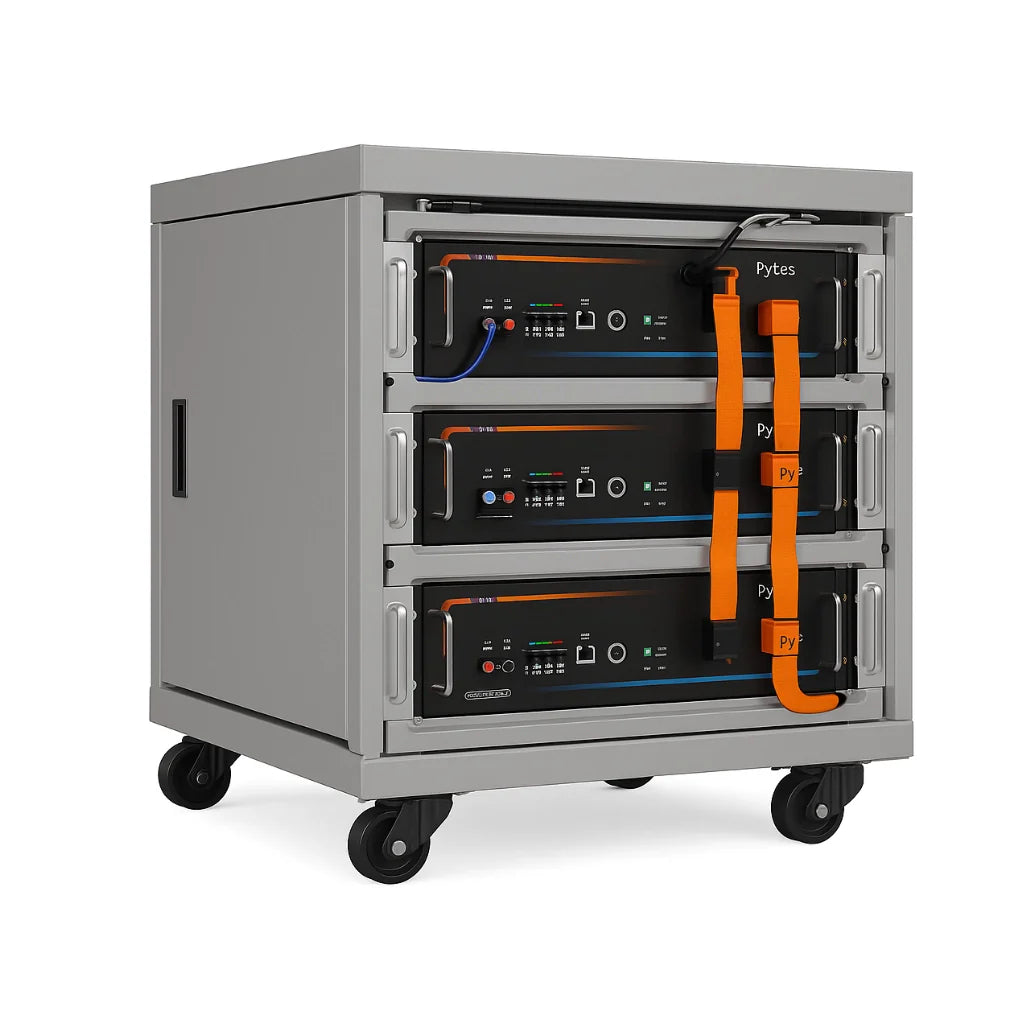
LiFePO4 (Lithium Iron Phosphate) batteries operate at 3.2V per cell. A 48V LiFePO4 battery contains 16 cells in series. Lead-acid batteries operate at 2V per cell, requiring 24 cells for 48V. This fundamental difference means they charge and discharge at incompatible rates. When wired in parallel, the higher-voltage battery forces current into the lower-voltage battery, causing overcharging, heat generation, and potential cell damage.
BMS communication protocols vary between manufacturers. A Victron MPPT solar charge controller configured for LiFePO4 uses specific voltage setpoints: absorption voltage around 55-56V, float voltage around 51-53V. Lead-acid systems use lower setpoints. These differences create voltage regulation failures and uneven charge distribution.

Research from the University of Warwick and the University of Birmingham, funded by the Faraday Institution, focuses on understanding battery degradation and extending battery life. This research highlights the importance of consistent operating conditions for battery lifespan.
Connecting Lithium Batteries in Parallel vs Series with Solar
Parallel and series connections create different failure modes when batteries don't match.
Parallel connections link positive terminals together and negative terminals together, increasing total capacity while keeping voltage the same. If one battery has higher voltage than the other, current flows between them to equalise voltage. With mismatched capacity in parallel, the larger battery charges faster and reaches full voltage first. The smaller battery then receives reverse current, which damages its cells. Internal resistance increases, heat generation accelerates, and the BMS may cut off the connection entirely.
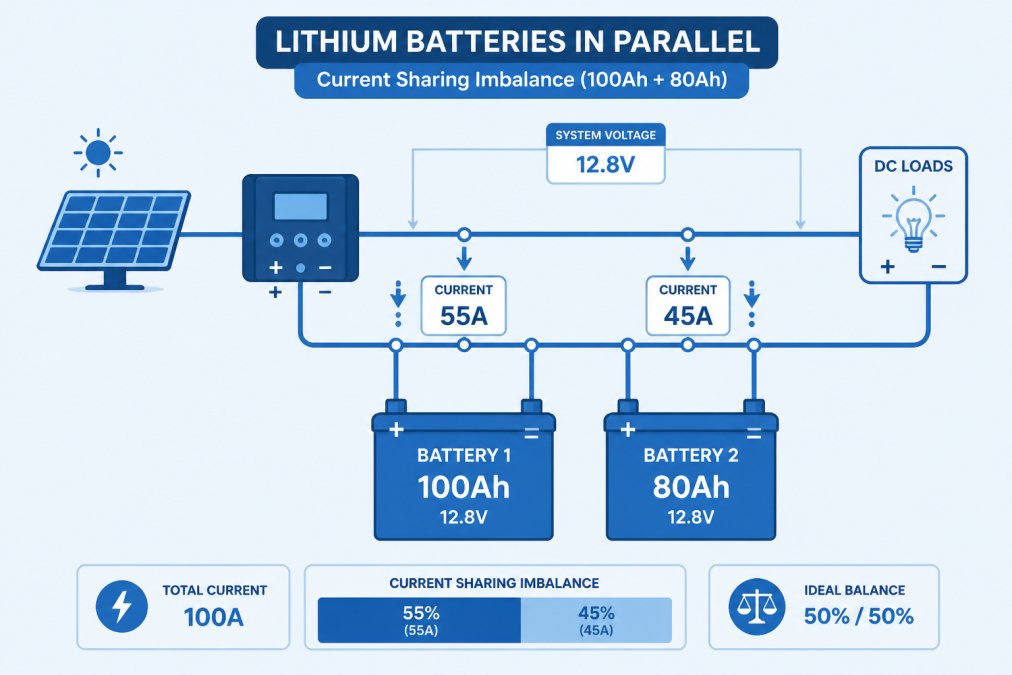
Series connections link positive to negative, increasing voltage while keeping capacity the same. Each battery in the series string must charge and discharge evenly. If one battery has slightly lower capacity, it charges faster and reaches its voltage limit first. The charge controller then stops charging the entire string, leaving the higher-capacity battery undercharged. Over time, this creates a state-of-charge imbalance where one battery ages faster.
Parallel connection risks with mismatched capacity
When you parallel batteries with different amp-hour ratings, current sharing becomes unequal. A 280Ah battery and a 100Ah battery wired in parallel don't share load equally. The smaller battery carries less current and ages faster.
Skyenergi Edge batteries come with integrated BMS protection, but that protection assumes a single battery or matched pairs. Mixing a Skyenergi Edge 100Ah with an older lead-acid leisure battery creates a protection mismatch. The Skyenergi BMS cuts off at safe thresholds for LiFePO4, but the lead-acid battery has no equivalent protection and can be overcharged or over-discharged, shortening its lifespan dramatically.
Series connection and voltage regulation challenges
Series connections amplify voltage mismatch problems. If you connect a 48V LiFePO4 battery in series with a 48V lead-acid battery, you get 96V nominal. But the charging profiles are incompatible. LiFePO4 accepts fast charging up to around 0.5C (50A on a 100Ah battery). Lead-acid batteries prefer slower charging, typically 0.1-0.2C. A 100A solar charge controller feeding both batteries in series will overcharge the lead-acid battery while the LiFePO4 battery sits at its voltage limit.
The BMS in the LiFePO4 battery will cut off to protect itself. The lead-acid battery continues charging, generating gas and heat. Your system becomes unstable and unpredictable. A properly configured solar system with matched lithium batteries charges smoothly and delivers full capacity every cycle.
MPPT Solar Charge Controller Settings for Lithium Batteries
An MPPT (Maximum Power Point Tracking) solar charge controller is the bridge between your solar array and your battery bank. For lithium systems, the settings matter enormously.

When you select "LiFePO4" in the controller settings, it uses these voltage setpoints:
- Absorption voltage: 55-56V (for 48V systems)
- Float voltage: 51-53V
- Charge current limit: User-defined, typically 0.3-0.5C
These setpoints keep LiFePO4 cells in their safe operating window. Lead-acid batteries require different setpoints. If you wire a lead-acid battery to a controller configured for lithium, the lead-acid battery gets undercharged and sulphates over time.
Configuring charge profiles and absorption voltage
Absorption voltage is the peak voltage the controller applies while charging. For LiFePO4, this is typically 3.4-3.5V per cell (55-56V for a 16-cell 48V battery). The controller holds this voltage for a set time until current drops to a threshold, then transitions to float.
If you're mixing battery types, you face a dilemma: set absorption voltage too high and you damage lead-acid cells; set it too low and you undercharge LiFePO4 cells. There's no middle ground that works for both. The only safe solution is to use a single battery chemistry.
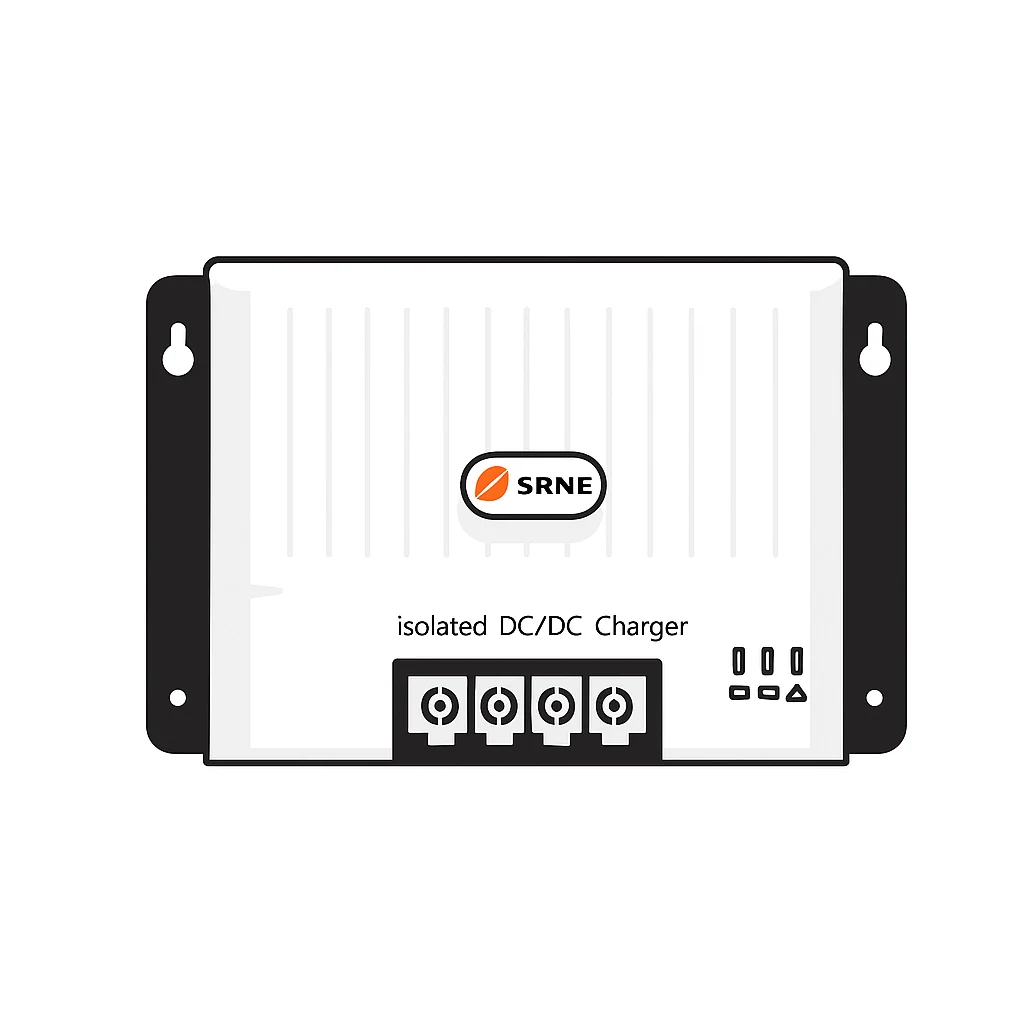
SRNE solar controllers, commonly used in campervan and off-grid systems, offer lithium profiles and are designed to work with a single battery type. If you're retrofitting an existing system with an SRNE controller, verify its current settings before adding new batteries. Mismatched settings are a common cause of system failures.
Float voltage and LiFePO4 compatibility
Float voltage is the steady-state voltage the controller applies after absorption phase ends. For LiFePO4, float typically sits at 51-53V. This voltage keeps the battery topped up without overcharging. LiFePO4 batteries accept float voltage indefinitely without damage.
SRNE Solar Controller Lithium Compatibility
SRNE controllers are popular in leisure vehicle and off-grid installations because they're affordable and reliable. Many come with lithium battery profiles built in. However, "lithium compatible" doesn't mean "safe for mixed lithium systems."
SRNE controllers support LiFePO4 profiles, but they don't support mixed-chemistry configurations. If you're using an SRNE controller with a LiFePO4 battery, the controller manages charging correctly. If you then add a lead-acid battery in parallel or series, the SRNE controller has no way to adjust its behaviour. It continues using LiFePO4 setpoints, which is wrong for the lead-acid battery.
The SRNE advantage is simplicity: select your battery type, and the controller does the rest. For Skyenergi customers upgrading systems, we recommend using SRNE controllers for straightforward lithium installations where you won't be mixing chemistries.
Solar Battery Bank Capacity Calculation for Lithium Systems
Calculating your battery bank size depends on three factors: daily energy consumption, days of autonomy, and usable capacity. Lithium changes the calculation because usable capacity is much higher than lead-acid.
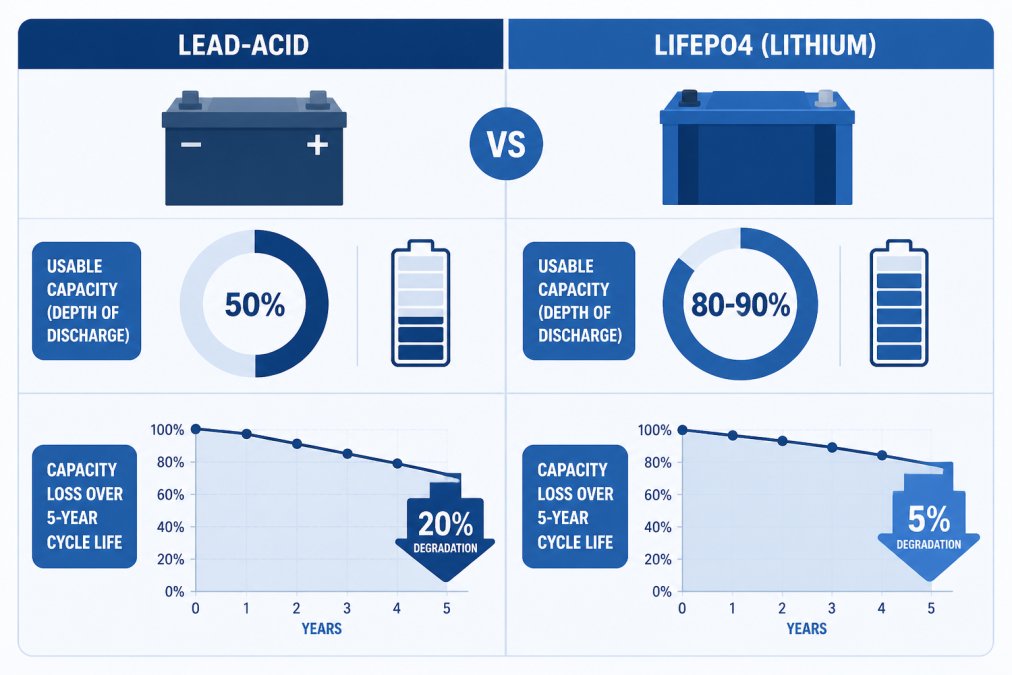
A lead-acid battery rated 100Ah has only 50Ah usable capacity if you follow best practices (50% depth of discharge). A LiFePO4 battery rated 100Ah has 80-90Ah usable capacity (80-90% depth of discharge). This means lithium batteries deliver more energy from a smaller physical size.
Example calculation:
Your campervan uses 20kWh per day with 3 days of autonomy (cloudy weather buffer).
- Total energy needed: 20 × 3 = 60kWh
- With lead-acid (50% usable): 60 ÷ 0.5 = 120kWh rated capacity
- With LiFePO4 (85% usable): 60 ÷ 0.85 = 70.6kWh rated capacity (one Skyenergi Edge 280Ah Lithium Leisure Battery, or two Skyenergi Edge 100Ah Lithium Leisure Battery batteries plus one Edge 80Ah)
The lithium solution is physically smaller, lighter, and more efficient.

Depth of discharge and usable capacity in lithium
Depth of discharge (DoD) is the percentage of battery capacity you use before recharging. Lead-acid batteries tolerate 50% DoD as a best practice. LiFePO4 batteries tolerate 80-90% DoD with minimal lifespan impact. Over 10 years, a LiFePO4 battery at 85% DoD retains 70-80% of original capacity. A lead-acid battery at 85% DoD retains 40-50%.
If you configure your charge controller based on lead-acid best practices (50% DoD), you're only using 40-50Ah of a 100Ah LiFePO4 battery. You've paid for capacity you're not using. If you configure for lithium (85% DoD), you're overcharging the lead-acid battery and shortening its life.
Matching solar array output to battery charge rate
Your solar array must match your battery bank's charge acceptance rate. LiFePO4 batteries accept charging at 0.3-0.5C (30-50A on a 100Ah battery). Lead-acid batteries prefer 0.1-0.2C (10-20A on a 100Ah battery). A 5kW solar array might generate 100A at peak sun. This is fine for a LiFePO4 battery but excessive for lead-acid.
When your solar array produces more current than the battery can accept, the charge controller must dump the excess. A mixed system creates a mismatch: your solar array is sized for lithium efficiency but your lead-acid battery can't absorb the power. You lose the main advantage of upgrading to lithium: higher charge rates and faster recovery.
Why Mixing Different Battery Chemistries Is High-Risk
Different battery chemistries have different voltage curves, charge acceptance rates, and internal resistance profiles. When you force them to work together, one battery always suffers. Research from the Infonomics Society emphasised that lithium battery lifespan depends on consistent operating conditions. Mixing chemistries creates inconsistent conditions where one battery charges faster, reaches full voltage first, and ages differently.
Thermal runaway and fire safety hazards
Thermal runaway is the most serious risk. It occurs when a battery's internal temperature rises uncontrollably, causing a chain reaction of chemical decomposition. In lithium-ion batteries, thermal runaway can lead to fire. When you mix batteries with incompatible BMS systems, voltage regulation fails. One battery overcharges while another undercharges. Overcharging generates heat. If the BMS can't cut off charging, the battery continues heating. Internal resistance increases, more heat is generated, and eventually the battery catches fire. According to Zurich Insurance, lithium-ion battery fires are a documented risk, with most failures involving mixed or mismatched battery systems. The risk in a campervan or off-grid home is real.
Warranty voiding and system reliability
Every battery manufacturer voids warranty if you mix their battery with a different chemistry or brand. Skyenergi's Edge batteries come with 10-year manufacturer cover and a 70-80% capacity guarantee at end of warranty. This cover is valid only if the battery is installed as a single unit or with identical matched batteries. Mixing an Edge battery with a lead-acid battery or a different lithium brand voids the warranty immediately.
If your mixed system fails, you have no recourse. You're left paying for replacement batteries out of pocket. In a campervan, this failure happens 500 miles from home, and you're stranded. In an off-grid home, this failure happens during winter when you need the battery most.
:::warning Warranty voiding isn't just a paperwork issue, it's a financial and safety issue. A lithium battery failure during a campervan trip, with no warranty cover because you mixed it with another chemistry, is a catastrophic outcome.
Safe Integration: DC-to-DC Chargers and Retrofitting Existing Systems
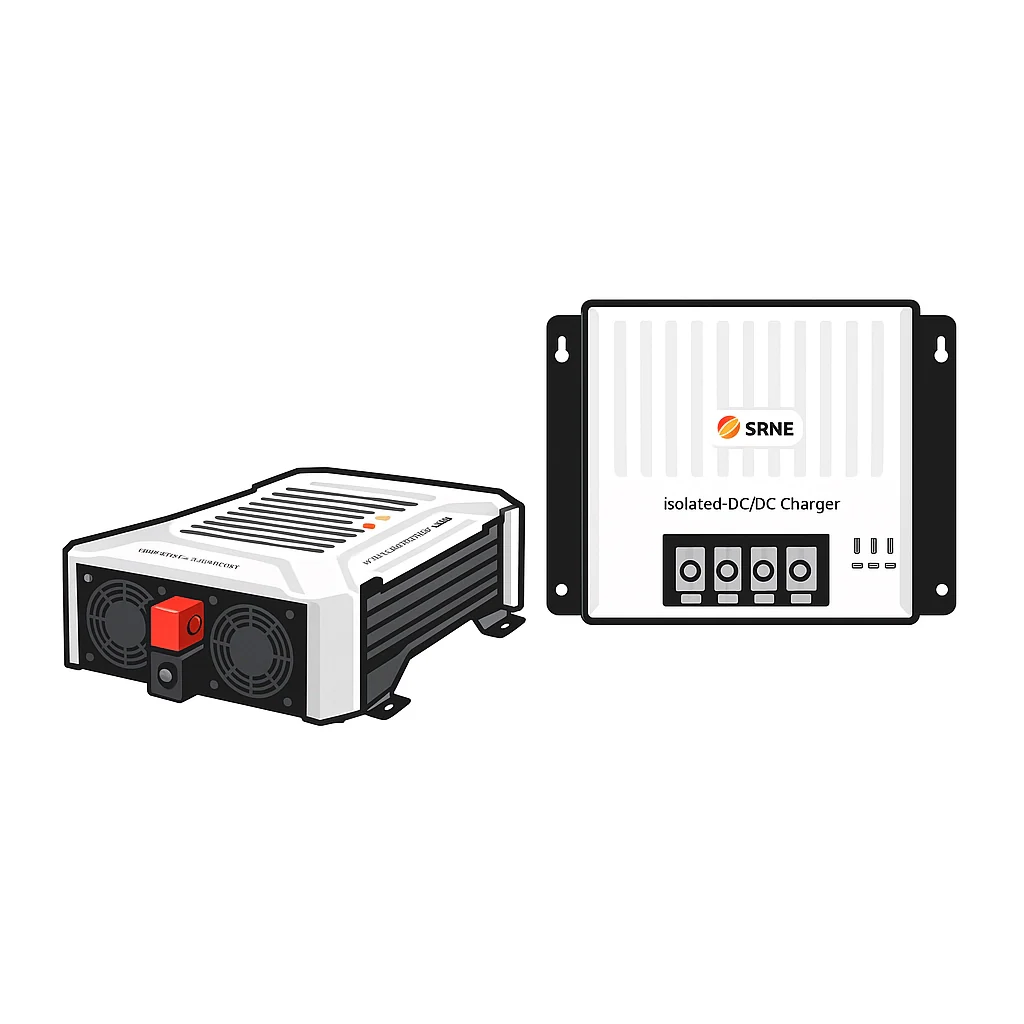
If you have an existing lead-acid system and want to upgrade to lithium without tearing everything out, a DC-to-DC charger is your solution. This device sits between your solar charge controller and your battery bank. It isolates the two battery systems electrically while allowing energy transfer.
A DC-to-DC charger accepts input from your solar controller (configured for lead-acid) and outputs to your LiFePO4 battery (at settings appropriate for lithium). The charger manages voltage regulation, current limiting, and isolation. You're not mixing batteries, you're connecting them through an intelligent intermediary.
This approach works, but it's inefficient. A DC-to-DC charger typically loses 5-10% of energy as heat. For new installations, there's no reason to use a DC-to-DC charger. Start with lithium from day one. For retrofits in campervans or off-grid homes, a DC-to-DC charger lets you phase out lead-acid gradually. Run both systems in parallel, with the lead-acid battery as backup. Over time, as the lead-acid battery degrades, rely more on lithium. Eventually, remove the lead-acid battery entirely.
Skyenergi recommends using a Victron Orion DC-to-DC charger for retrofits. Pair it with a Skyenergi Edge 100Ah Lithium Leisure Battery or Skyenergi Edge 280Ah Lithium Leisure Battery, depending on your energy needs. This gives you a hybrid system that's safe, efficient, and upgradeable.
Mixing lithium and solar systems sounds like a cost-saving shortcut, but the technical risks far outweigh the savings. Voltage incompatibility, BMS communication failures, and warranty voids create reliability problems that emerge over months or years. For campervan owners and off-grid installers, system reliability is essential. Skyenergi supplies matched lithium battery systems with MPPT solar charge controllers and SRNE charging equipment designed to work together safely. Start with a single battery chemistry, configure your charge controller correctly, and you'll have a system that delivers reliable power for a decade or more.
| Risk Factor | Lead-Acid + Lithium Mix | Single Lithium System |
|---|---|---|
| Voltage compatibility | Mismatch (2V vs 3.2V cells) | Matched (all 3.2V cells) |
| BMS communication | Incompatible protocols | Unified protocol |
| Usable capacity | 50-60% (lead-acid limits) | 80-90% (lithium potential) |
| Warranty coverage | Voided on both batteries | Valid for 10 years |
| Fire risk | High (thermal runaway) | Low (matched BMS protection) |
| 5-year lifespan retention | 40-50% (lead-acid degrades) | 70-80% (minimal degradation) |
Frequently Asked Questions
Can a lithium battery be charged with a solar panel?
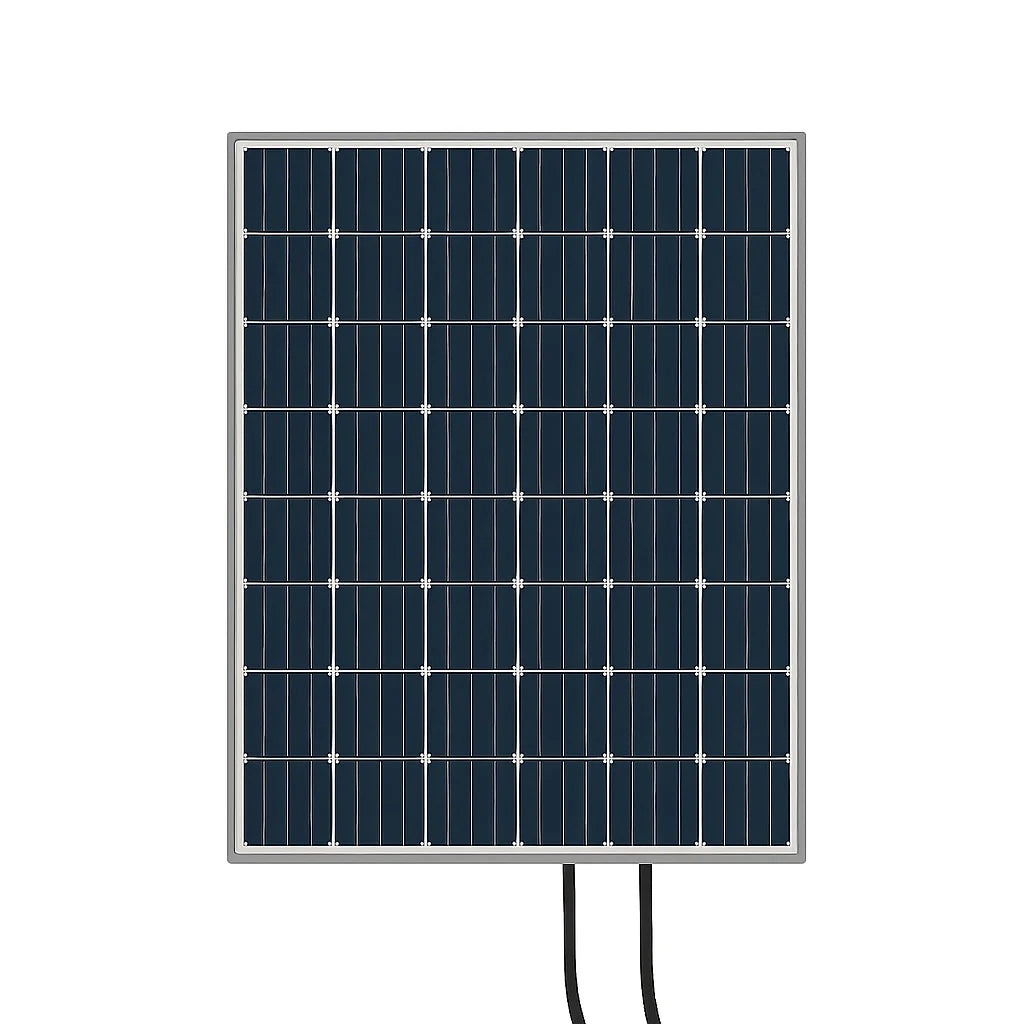
Yes, lithium batteries can be charged with solar panels, but only through a compatible MPPT solar charge controller configured for lithium chemistry. The controller must support LiFePO4 charging profiles with appropriate absorption and float voltages (typically 55.2V for 48V systems, 13.8V for 12V). Direct connection of solar panels to lithium batteries without a charge controller risks overcharging, voltage spikes, and Battery Management System (BMS) damage. An MPPT controller like the Victron SmartSolar MPPT 75/15 regulates current and voltage precisely, protecting your lithium battery and maximising solar energy harvest.
Is it safe to mix different brands of lithium batteries in a solar bank?
No. Mixing different lithium battery brands or chemistries in the same solar system creates serious safety and performance risks. Different manufacturers use different BMS communication protocols, internal resistance values, and charge profiles. When connected in parallel, current distributes unevenly, causing one battery to overcharge while another undercharges. This leads to voltage mismatch, thermal runaway, and potential fire hazard. Mixing also voids warranties from all manufacturers. For reliable, long-term performance, use identical lithium batteries from the same brand and chemistry, such as Skyenergi Edge lithium batteries, configured by a qualified installer.
What size solar panel do I need to charge a 100Ah lithium battery?
A 100Ah lithium battery with 80% usable capacity (80kWh) typically requires a solar array of 2-4kW depending on your location's daily sunlight hours and desired charge time. In the UK, average peak sun hours range from 2-4 hours daily. To fully charge in one day, use the formula: Battery capacity (kWh) ÷ Peak sun hours ÷ System efficiency (0.85) = Required solar array size. For example, 8kWh ÷ 3 hours ÷ 0.85 = 3.1kW. An MPPT charge controller like the Victron BlueSolar MPPT 75/15 ensures maximum power point tracking, so your actual solar panels work at peak efficiency regardless of temperature or cloud cover.
Do lithium batteries need a special solar charger?
Yes. Lithium batteries require a solar charge controller configured for LiFePO4 chemistry, not standard lead-acid profiles. Lead-acid chargers use lower float voltages (13.5V for 12V systems) and longer absorption phases, which undercharge lithium and cause poor performance. Lithium requires precise voltage regulation: 13.8V absorption and 13.5V float for 12V systems. MPPT controllers like the Victron SmartSolar MPPT 75/15 or SRNE solar controllers with lithium-compatible firmware deliver the correct charge profile, protect your BMS, and maximise cycle life. Without proper configuration, your lithium battery's warranty is void and performance degrades rapidly.
This article was written using GrandRanker
Prev post

How to Calculate Battery Capacity: A 2026 Guide
Updated on 20 August 2026
Next post

12V Lithium Battery for Tight Spaces: Complete Guide
Updated on 18 August 2026


