





AGM vs Lithium Batteries – How It Shapes Campervan Reliability
AGM vs lithium batteries: Learn key distinctions, practical performance, usable capacity, lifespan, and cost implications for UK campervan owners.
Choosing the right battery for your campervan can feel overwhelming when reliable off-grid adventures across the British countryside depend on consistent power. With so many brands and models available, understanding the real-world differences between Absorbent Glass Mat and lithium batteries matters more than ever. This guide breaks down the core performance and durability differences between these popular battery types, helping you make an informed decision for your UK campervan lifestyle.
Table of Contents
- AGM And Lithium Batteries Defined Clearly
- Key Technical Differences And Battery Chemistry
- Usable Energy, Charging Rates, And Lifespan
- Weight, Installation, And Maintenance Factors
- Cost, Value, And Long-Term Savings Comparison
- Choosing The Right Battery For UK Campervan Needs
Key Takeaways
| Point | Details |
|---|---|
| Battery Type Selection | AGM batteries offer a lower upfront cost, while lithium batteries provide superior long-term performance and efficiency. |
| Performance and Lifespan | Lithium batteries support deeper discharge cycles and longer lifespans of 10+ years compared to 3–7 years for AGM batteries. |
| Weight and Installation | Lithium batteries are lighter, significantly improving campervan performance and offering more flexible installation options. |
| Cost Efficiency | Although lithium batteries have a higher initial cost, their longevity and reduced maintenance can lead to lower overall expenses over time. |
AGM and lithium batteries defined clearly
Campervan power systems fundamentally rely on battery technology that enables reliable energy storage, with Absorbent Glass Mat (AGM) and lithium batteries representing two primary options for off-grid power solutions. Understanding their core characteristics helps campervan owners make informed decisions about their electrical setup.
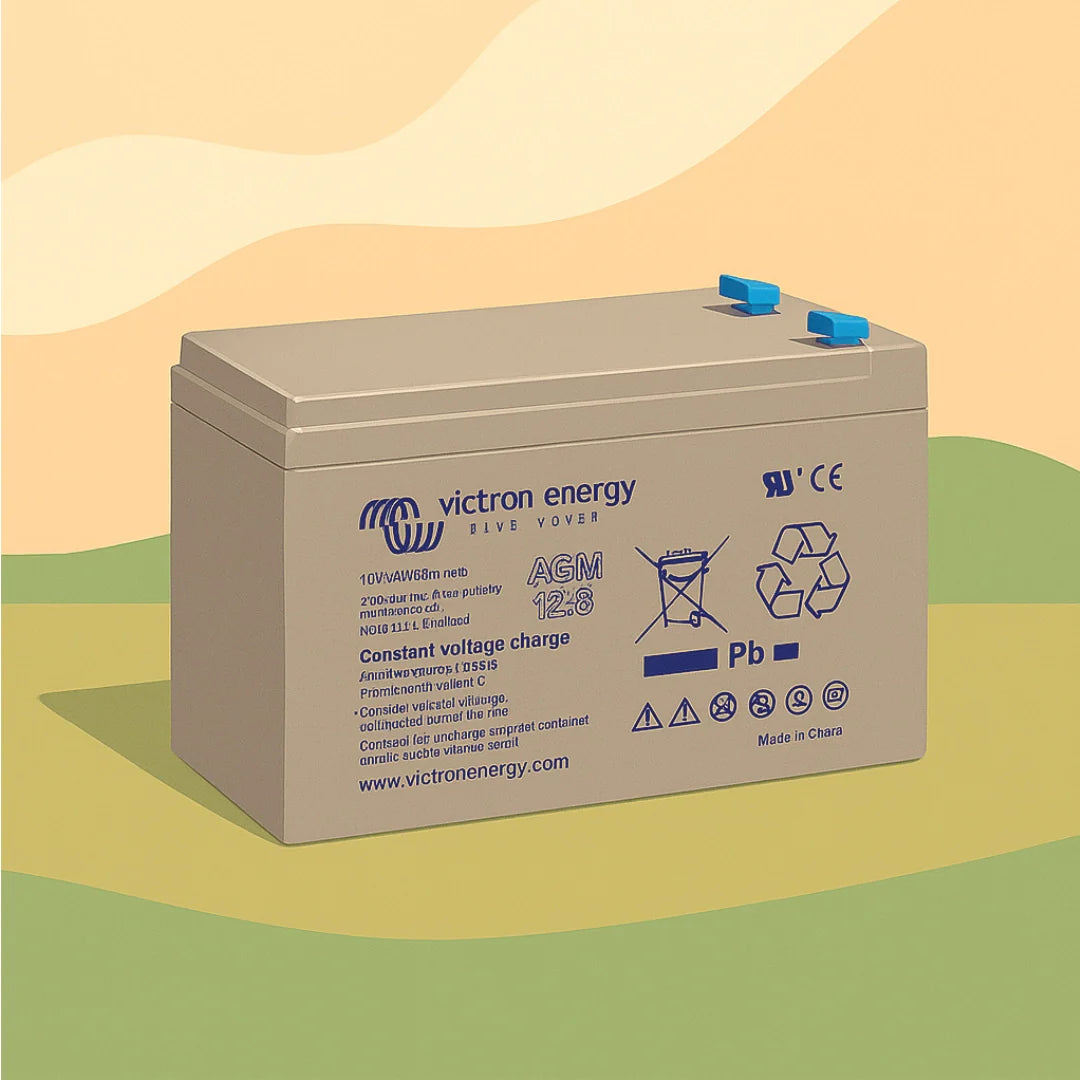
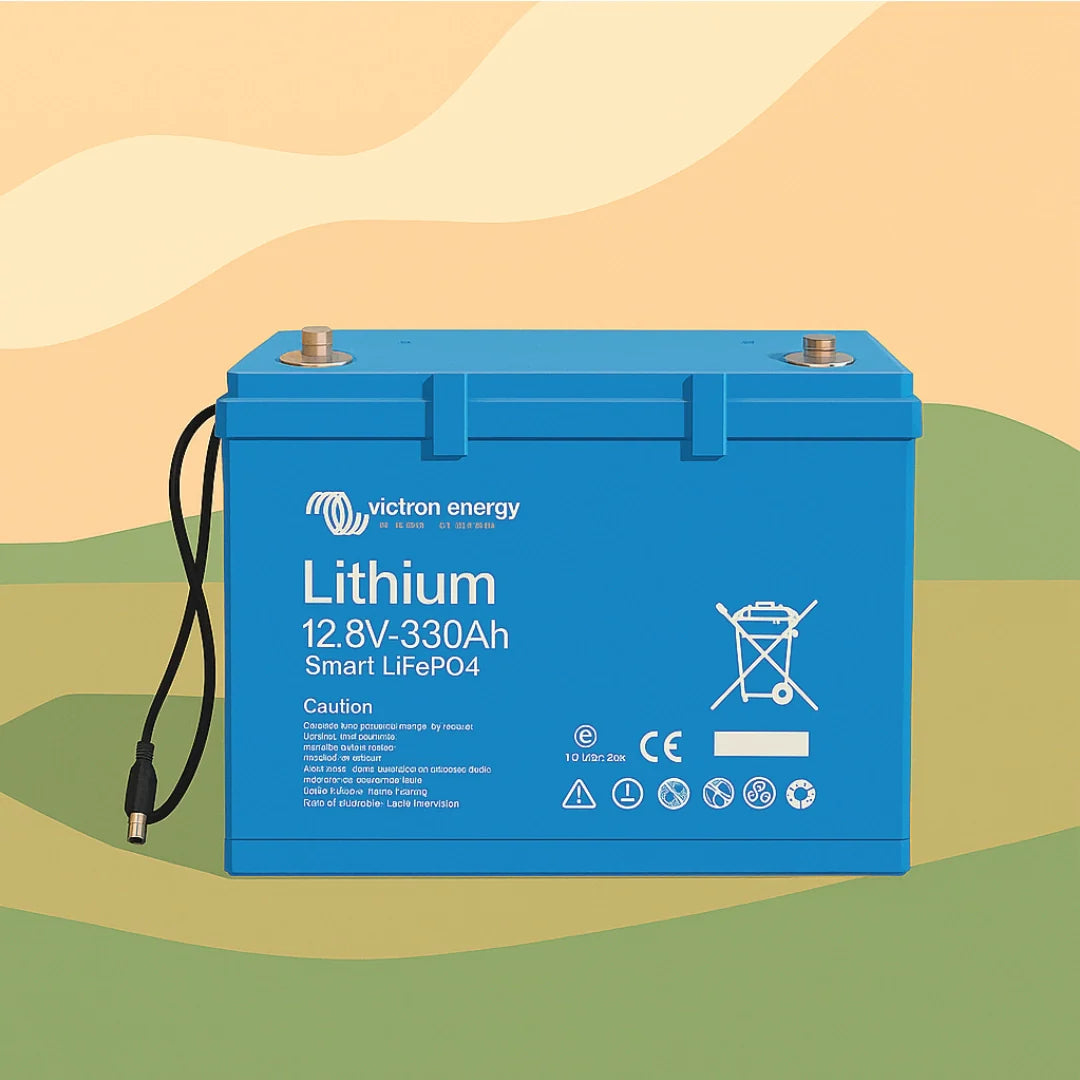
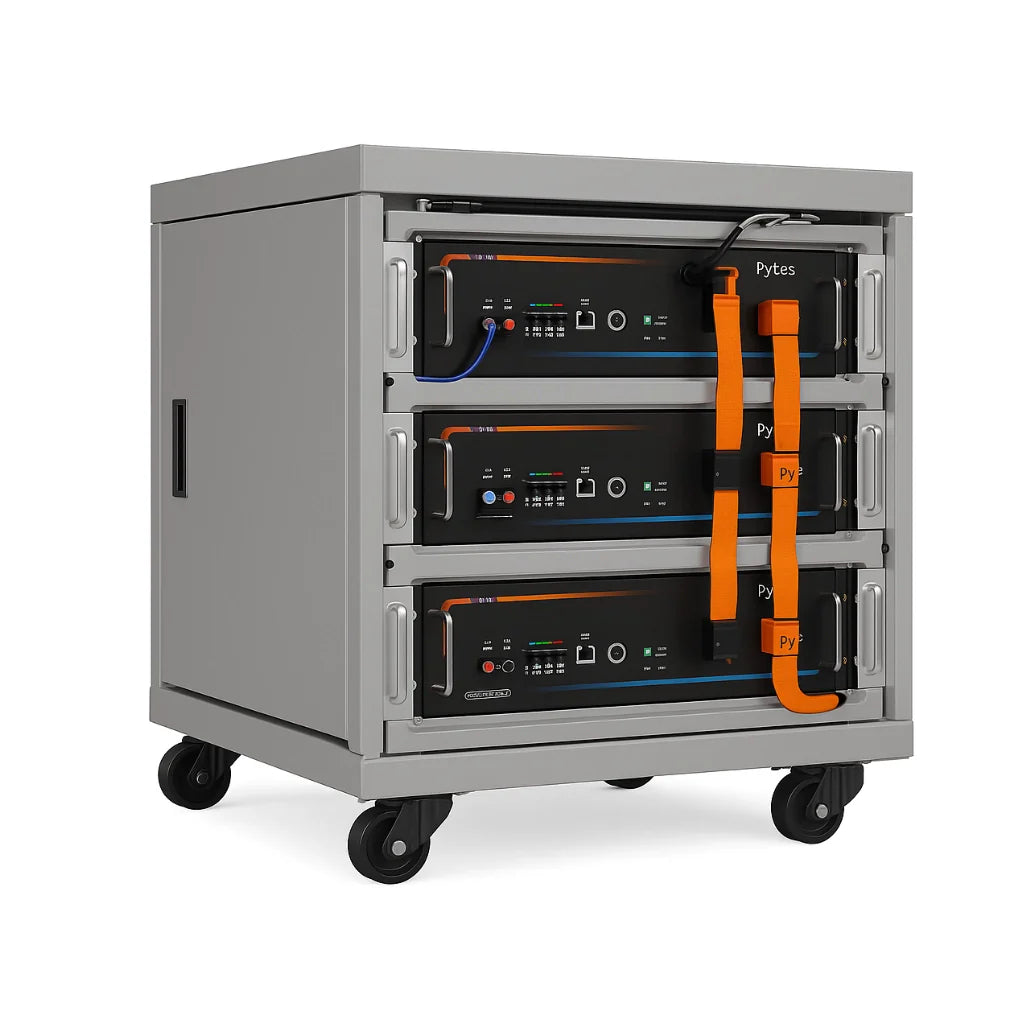
AGM batteries are a type of sealed lead-acid battery where the electrolyte is absorbed into a fibreglass mat separator, creating a maintenance-free design. Lithium-ion batteries operate via reversible lithium ion intercalation, enabling more advanced energy storage capabilities compared to traditional lead-acid technologies.
Key differences between these battery types include:
- Energy Density: Lithium batteries offer significantly higher energy density
- Cycle Life: Lithium batteries typically provide 2-3 times more charge/discharge cycles
- Weight: Lithium batteries are considerably lighter than AGM equivalents
- Performance: Lithium batteries maintain more consistent voltage throughout discharge
Each battery technology presents unique advantages for campervan electrical systems. AGM batteries remain more affordable upfront, while lithium batteries deliver superior long-term performance and efficiency.
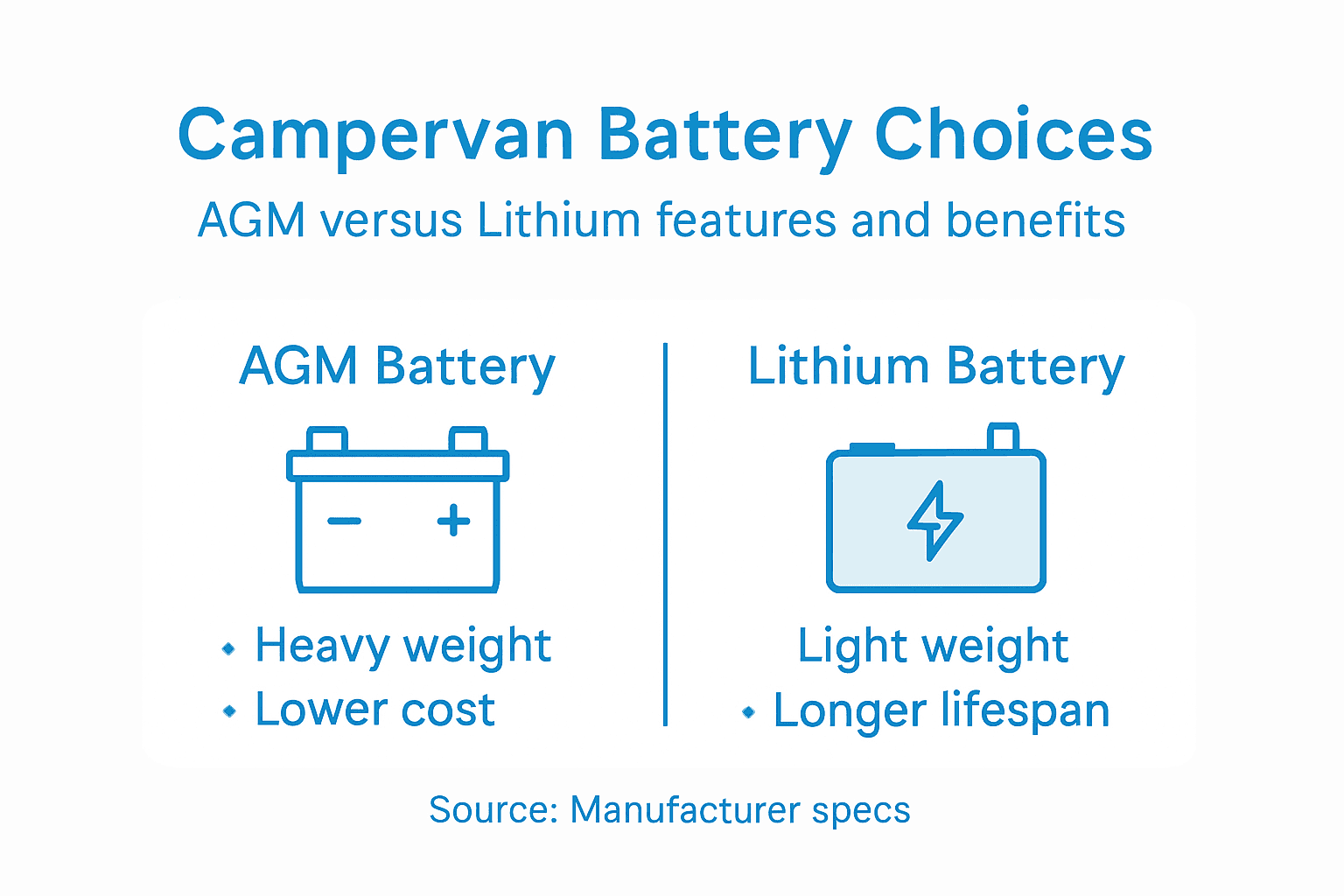
Here is a concise comparison of AGM and lithium batteries highlighting core practical differences for campervan use:
| Feature | AGM Battery | Lithium Battery |
|---|---|---|
| Usable Capacity | Up to 50% of rated capacity | Up to 90% of rated capacity |
| Typical Lifespan | 3–7 years | 10+ years with proper use |
| Weight (per 100Ah unit) | 25–30 kg | 10–13 kg |
| Charging Time (to full) | Around 7–10 hours | As little as 2–4 hours |
| Maintenance Needs | Occasional checks, less complex | Minimal, relies on battery management |
| Weather Performance | Sensitive to low temperatures | Functions well in wide temperature range |
| Upfront Cost | Lower initial outlay | Significantly higher investment |
| Total Cost Over 10 Years | Higher, due to replacements and upkeep | Lower, offset by longevity |
Pro tip: Consider your specific power requirements, budget constraints, and intended usage when selecting between AGM and lithium battery technologies for your campervan.
Key technical differences and battery chemistry
Campervan battery technologies represent a complex landscape of electrochemical engineering, with lithium-ion and Absorbent Glass Mat (AGM) batteries offering distinctly different approaches to electrical energy storage. Lithium batteries operate using non-aqueous electrolyte systems that enable remarkable performance characteristics across electrical systems.
The fundamental chemistry distinguishing these battery types involves their electrode and electrolyte configurations. Lithium-ion batteries utilise lithium compounds like lithium iron phosphate (LiFePO4) or lithium cobalt oxide (LiCoO2) as cathode materials, with carbon-based anodes facilitating efficient ion movement. In contrast, AGM batteries rely on lead plates immersed in sulphuric acid, with a fibreglass mat preventing electrolyte spillage and enabling a sealed, maintenance-free design.
Key technical distinctions between lithium and AGM battery chemistries include:
- Voltage Characteristics: Lithium batteries maintain more consistent voltage throughout discharge
- Energy Density: Lithium technologies offer substantially higher energy storage per kilogram
- Charge Efficiency: Lithium batteries demonstrate superior charge acceptance rates
- Temperature Performance: Lithium batteries operate more effectively across wider temperature ranges
- Cycle Life: Lithium batteries typically provide 2-3 times more charge/discharge cycles compared to AGM
The electrochemical complexity of these battery systems means campervan owners must carefully evaluate their specific power requirements, budget constraints, and intended usage patterns when selecting an appropriate energy storage solution.
Pro tip: Consult a professional battery specialist to conduct a detailed assessment of your campervan’s electrical demands before making a final battery technology selection.
Usable energy, charging rates, and lifespan
Campervan electrical systems demand battery technologies that deliver reliable, consistent power across varying conditions. Charging rates significantly impact battery performance and longevity, with lithium batteries demonstrating remarkable advantages over traditional AGM designs.
The usable energy capacity represents a critical differentiator between lithium and AGM battery technologies. Lithium batteries can typically discharge between 80-90% of their total capacity without compromising performance, whereas AGM batteries are generally limited to around 50% discharge depth. This fundamental difference translates into substantially more practical energy availability for campervan owners seeking extended off-grid power solutions.
Key performance characteristics include:
- Depth of Discharge: Lithium batteries support deeper discharge cycles
- Charging Speed: Lithium technologies accept faster charging rates
- Cycle Life: Lithium batteries often exceed 2000 charge/discharge cycles
- Temperature Resilience: Lithium batteries maintain performance across wider temperature ranges
- Maintenance Requirements: Lithium batteries demand minimal maintenance compared to AGM
Lifespan considerations further underscore the technological superiority of lithium batteries. While AGM batteries typically last 3-7 years, lithium alternatives can potentially deliver over a decade of reliable service when properly maintained.
Pro tip: Invest in a battery management system to maximise the performance and longevity of your campervan’s lithium battery installation.
Weight, installation, and maintenance factors
Campervan owners increasingly prioritise efficient and lightweight energy solutions, where battery technology plays a crucial role. Lithium batteries offer significant weight advantages due to their advanced solid-state electrolyte design and fundamental chemical composition.

The weight differential between lithium and AGM batteries is substantial, with lithium variants typically weighing 60-70% less than comparable AGM systems. This weight reduction translates directly into improved campervan performance, reduced fuel consumption, and enhanced overall vehicle efficiency. AGM batteries, constructed with dense lead plates and acid electrolytes, remain significantly heavier and more challenging to integrate into compact mobile environments.
Key considerations for battery installation and maintenance include:
- Weight Efficiency: Lithium batteries are dramatically lighter
- Space Requirements: Lithium technologies occupy less physical volume
- Mounting Flexibility: Lighter batteries enable more versatile installation options
- Temperature Management: Lithium batteries require more sophisticated thermal monitoring
- Maintenance Complexity: Lithium systems need specialised battery management systems
Installation complexity differs markedly between battery technologies. AGM batteries offer relatively straightforward mounting and minimal maintenance requirements, whereas lithium batteries demand more sophisticated integration, including precise temperature monitoring and specialised charging infrastructure.
Pro tip: Consult a professional campervan electrical specialist to ensure proper lithium battery installation and optimise your system’s long-term performance.
Cost, value, and long-term savings comparison
Campervan battery investments represent a complex financial calculation extending far beyond initial purchase price. Lithium-ion battery costs have dramatically decreased, creating an increasingly compelling economic argument for advanced battery technologies.
The total cost of ownership for lithium batteries reveals significant advantages over traditional AGM systems. While upfront lithium battery investments remain higher, their extended lifespan, superior performance, and reduced maintenance requirements translate into substantial long-term financial benefits. AGM batteries, though cheaper initially, incur higher replacement and operational costs over time due to limited cycle life and reduced energy efficiency.
Key financial considerations include:
- Initial Investment: Higher upfront cost for lithium batteries
- Lifecycle Durability: Lithium batteries offer 3-5 times longer operational life
- Replacement Frequency: Reduced battery replacement requirements
- Maintenance Expenses: Minimal ongoing maintenance costs
- Energy Efficiency: Lower operational energy consumption
Economic analysis suggests that campervan owners can potentially recoup the additional lithium battery investment within 3-5 years through reduced replacement costs, improved energy efficiency, and enhanced system performance.
Pro tip: Calculate your specific long-term energy requirements and perform a comprehensive cost-benefit analysis before selecting between AGM and lithium battery technologies.
Choosing the right battery for UK campervan needs
Selecting an appropriate battery system represents a critical decision for UK campervan enthusiasts, balancing performance, reliability, and practical considerations. UK campervan users must carefully evaluate battery technologies considering the unique challenges of British travel conditions and diverse camping environments.
The primary selection criteria involve understanding individual travel patterns, budget constraints, and specific electrical system requirements. Lithium batteries increasingly dominate the market for serious campervan enthusiasts due to their superior performance characteristics, while AGM batteries remain a viable option for more casual or budget-conscious travellers. Considerations such as typical journey duration, off-grid capabilities, and frequency of use become paramount in making an informed choice.
Key factors in battery selection include:
- Travel Frequency: Weekend campers vs full-time travellers
- Budget Constraints: Initial investment vs long-term value
- Power Consumption: Electrical system complexity and energy demands
- Weight Limitations: Vehicle payload and performance considerations
- Climate Adaptability: Performance in typical British weather conditions
Most UK campervan owners will find lithium batteries increasingly attractive, offering significant advantages in weight, efficiency, and long-term reliability. The technology’s improved affordability and performance make it an increasingly compelling choice for those seeking dependable off-grid power solutions.
Summary of how battery choice influences key aspects of UK campervan travel:
| Campervan Factor | AGM Battery Suitability | Lithium Battery Advantages |
|---|---|---|
| Weekend Journeys | Cost-effective, sufficient | Over-specified for basic needs |
| Long-term Off-Grid | Needs larger, heavier banks | Lightweight and extended performance |
| Cold Climates | Reduced efficiency, more care | Stable output in British weather |
| Budget Sensitivity | Low upfront cost | Higher, but better long-term value |
| Frequent Use | Shorter cycle, more maintenance | Long lifespan, less intervention |
Pro tip: Conduct a comprehensive electrical audit of your campervan’s specific power requirements before finalising your battery technology selection.
Enhance Your Campervan Reliability with Advanced Lithium Battery Solutions
Choosing between AGM and lithium batteries is a crucial decision that shapes your campervan’s energy independence, weight management, and long-term cost savings. This article highlights challenges such as limited usable capacity, reduced cycle life, and maintenance concerns associated with AGM batteries—all issues that lithium technology expertly addresses through higher energy density, longer lifespan, and intelligent battery management.
At Skyenergi, we understand these key pain points and offer tailored lithium battery systems engineered specifically for UK campervan conditions. Our range includes high-performance lithium leisure batteries and complete energy solutions, designed to be lightweight, reliable, and compatible with your existing setup. Featuring real time Bluetooth monitoring and robust thermal management, our products ensure you enjoy stable voltage output and extended off-grid power without frequent replacements or bulky installations.
Experience the difference now by exploring our lithium leisure batteries.
Take control of your campervan’s power performance and secure long term savings. Visit Skyenergi today to find out how our expert solutions can transform your vehicle’s electrical system. Don’t let outdated batteries limit your adventures—upgrade your energy storage with confidence.
Frequently Asked Questions
What are the key differences between AGM and lithium batteries for campervans?
AGM batteries are traditional lead-acid batteries with a lower energy density and shorter lifespan, while lithium batteries offer higher energy density, extended cycle life, and faster charging times, making them more suitable for off-grid campervan use.
How does the weight of AGM and lithium batteries impact campervan performance?
Lithium batteries are significantly lighter than AGM batteries, which improves campervan performance by reducing overall weight, enhancing fuel efficiency, and allowing for more flexible installation options.
What is the expected lifespan of AGM compared to lithium batteries in campervans?
AGM batteries typically last between 3 to 7 years, whereas lithium batteries can provide over 10 years of reliable service when properly maintained, making them a better long-term investment for campervan owners.
How do the maintenance requirements differ between AGM and lithium batteries?
AGM batteries require occasional checks and maintenance, while lithium batteries require minimal maintenance, often relying on a battery management system to ensure optimal performance and longevity.
Recommended
- 6 Types of Campervan Batteries and Their Key Advantages – Skyenergi
- Why Choose Lithium Batteries Over Lead Acid? – Skyenergi
- Lithium vs AGM — What’s Best for Campervans? – Skyenergi
- 7 Types of Off-Grid Battery Systems for UK Campervans – Skyenergi
- Best Solar Thermal Solutions – Expert Comparison 2025 - Skan Plumbing & Heating
Prev post

7 Key Advantages of Energy Storage Systems for Campervans
Updated on 15 February 2026
Next post

Solar Charging Workflow Tutorial for UK Campervans
Updated on 11 February 2026


