





Lithium charging requirements for beginners
Learn how to charge lithium batteries safely. This guide covers charger types, voltage limits, charging stages and practical tips for beginners.
Table of Contents
- Why lithium charging is different from lead-acid
- Identifying your lithium battery: chemistry, voltage and configuration
- LiFePO4 battery charging voltage and limits
- Understanding lithium battery charger requirements
- Charging lithium batteries from solar: practical setup
- Lithium battery charging time: what to expect
- Common charging mistakes and how to avoid them
- Frequently Asked Questions
Last Updated: October 21, 2026
Why lithium charging is different from lead-acid
Lithium batteries charge differently than lead-acid, different process, voltage limits, and current requirements that define lithium charging requirements.
Lead-acid batteries tolerate overcharging and can sit at full charge without harm.
At Skyenergi, we work with campervan owners and off-grid installers making this transition daily.
Charging lithium correctly is straightforward once you understand the fundamentals: specific voltage limits, controlled current, and a staged process called constant-current/constant-voltage (CC/CV) charging.
Identifying your lithium battery: chemistry, voltage and configuration
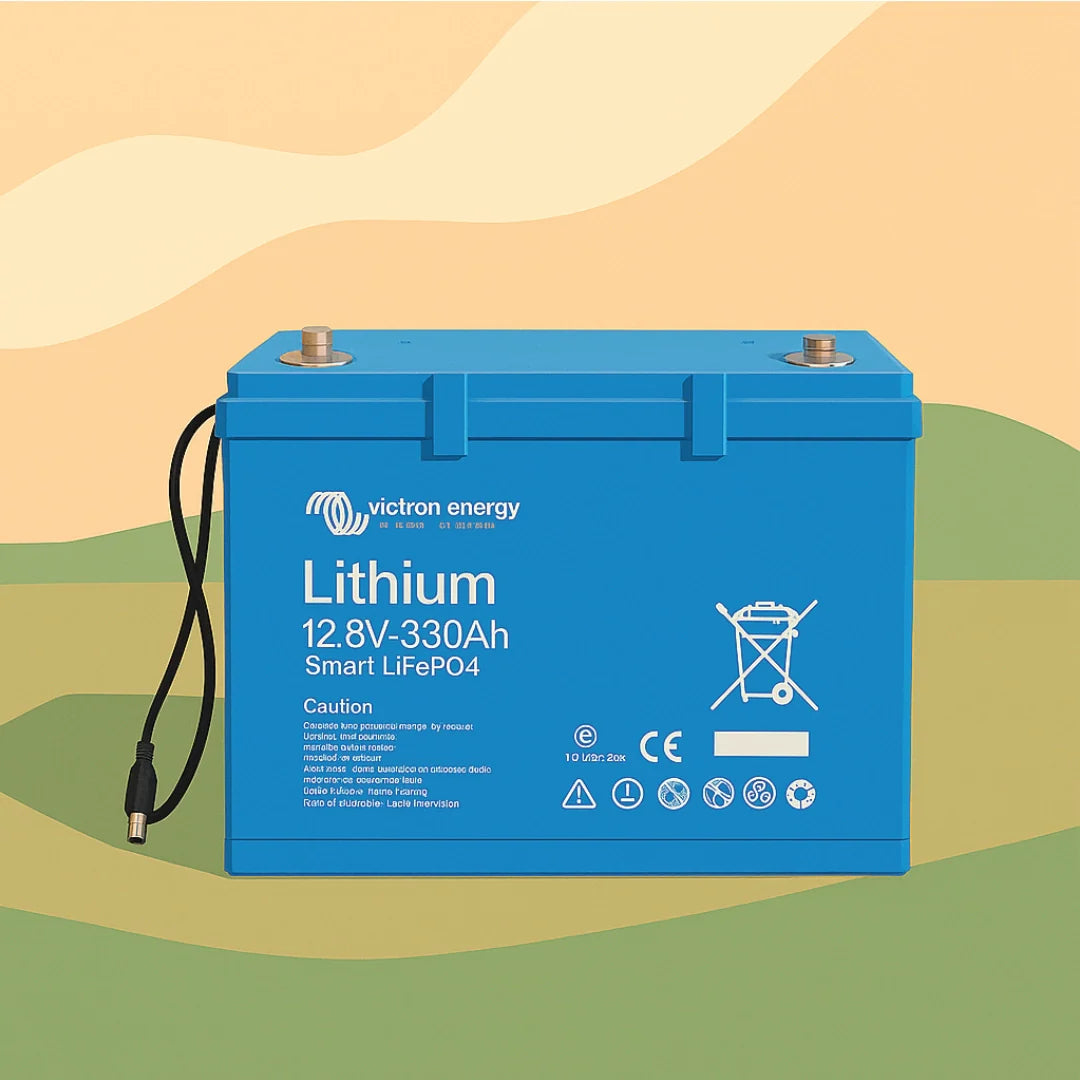
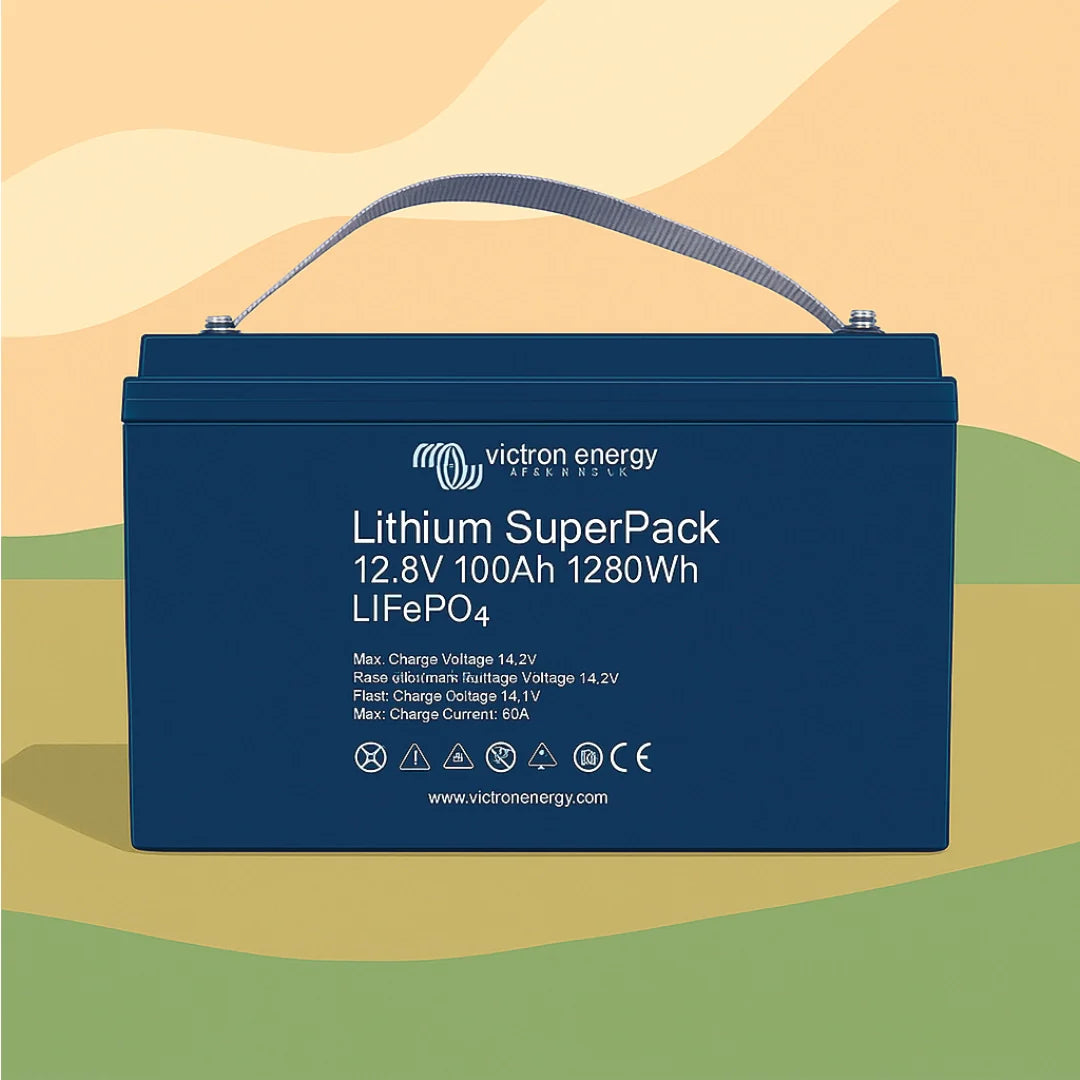
Before you charge anything, know what you're charging. Every lithium battery has specific requirements based on chemistry, voltage, and internal cell configuration, all printed on the label or in the manual.
What to look for on your battery label
Look for these key details on your battery:
- Chemistry type: LiFePO4 (lithium iron phosphate) or Li-ion (lithium-ion). These charge to different maximum voltages.
- Nominal voltage: Usually 12V, 24V, or 48V for leisure batteries. This tells you what charger voltage range you need.
- Capacity in Ah: Amp-hours. A 100Ah battery stores 100 amps of current for one hour.
- Cell configuration: Listed as 4S (four cells in series) or similar. This determines the maximum charge voltage.
- Maximum charge current: Often shown as a percentage of capacity. A 100Ah battery might accept 50A maximum charge current.
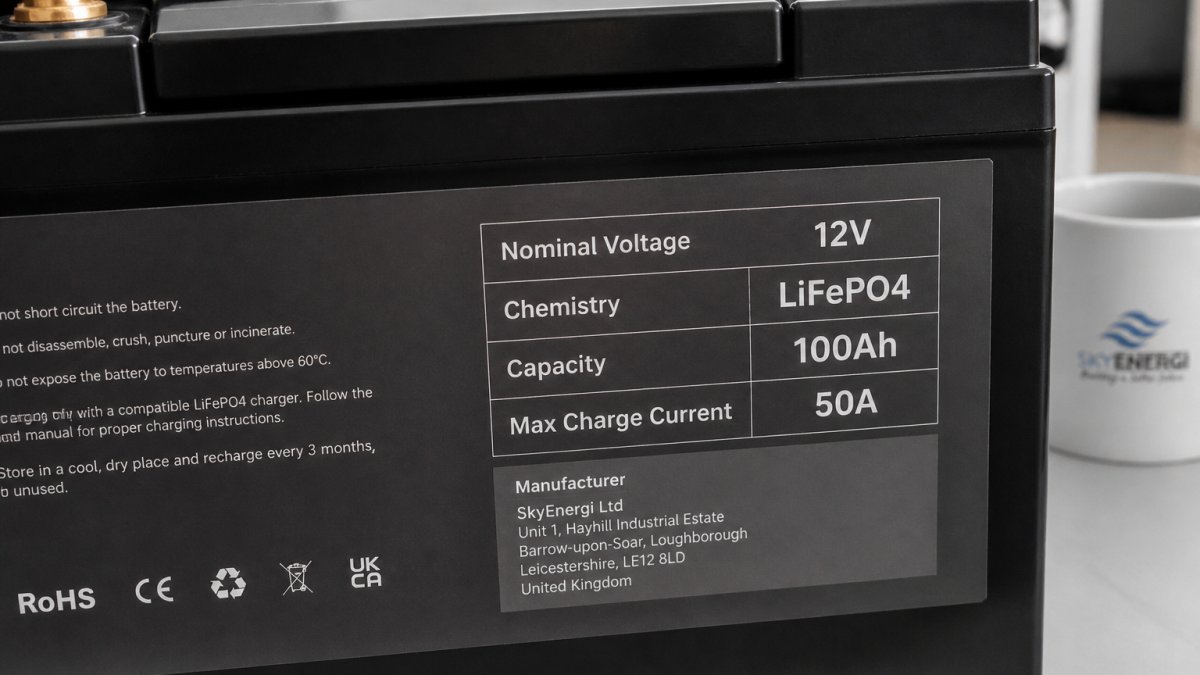
Most leisure batteries for campervans and off-grid systems are 12V LiFePO4 or 12V lithium-ion. If the label is unclear, check the manual or contact the manufacturer.
Your charger must match this information: a lithium-ion charger may charge LiFePO4 to the wrong voltage, and a 24V charger won't work on a 12V battery.
LiFePO4 battery charging voltage and limits
LiFePO4 batteries have non-negotiable maximum voltage limits. Charge above them and the battery fails prematurely.
For a 12V LiFePO4 battery, the maximum charge voltage is typically 14.4V to 14.6V, lower than lead-acid, which tolerates 14.8V or higher.
The BMS stops charging if voltage gets too high, and the battery won't charge further until you restart.
LiFePO4 also has a minimum charge voltage: most systems won't charge below 10V, and a fully discharged battery may need a special recovery charger.
Temperature also affects maximum voltage: cold batteries should charge to slightly lower voltages, hot ones tolerate slightly higher. A good charger adjusts automatically, the Victron Blue Smart charger does this with temperature compensation.

Understanding lithium battery charger requirements
Not every charger works with lithium. Lead-acid chargers often charge too aggressively or to the wrong voltage, so you need one designed for lithium chemistry, verified against your battery's specs before you connect anything. Proper voltage regulation serves as the foundation for long-term health, just as consistent electric scooter battery maintenance ensures that your power source remains reliable throughout its entire service life.
A beginner's charger compatibility checklist
Use this checklist to confirm a charger is suitable for your lithium battery. Work through it in order; if any item fails, the charger is not compatible.
- Chemistry match: The charger must have a dedicated lithium profile (often labelled LiFePO4 or Li-ion). A generic "lithium" mode may not be correct for both chemistries.
- Voltage range: The charger's output voltage range must cover your battery's nominal voltage and its maximum charge voltage. For a 12V LiFePO4 battery, look for a charger that can be set to 14.4-14.6V.
- Current limit: The charger's maximum output current must not exceed your battery's maximum charge current (often 0.5C, meaning half the Ah capacity). A 100Ah battery with a 50A limit should not be charged at more than 50A.
- Programmability: You need to be able to set the maximum charge voltage and current to match your battery. Fixed-voltage chargers are risky unless they are specifically designed for your exact battery model.
- Temperature compensation: The charger should reduce voltage or current when the battery is cold. If it lacks this, you must manually avoid charging below 0°C.
- BMS compatibility: The charger should handle a BMS cutout gracefully, stopping and restarting without damage or error states.
Pass all six checks and the charger is likely safe; fail any and don't use it.
Features to look for in a lithium-compatible charger
- Lithium-specific charging algorithm: The charger must have a profile or mode for lithium batteries.
- Programmable voltage limits: You should be able to set the maximum charge voltage to match your battery.
- Current limiting: The charger should limit current to safe levels for your battery.
- Temperature monitoring: The charger adjusts charging based on battery temperature.
- BMS compatibility: The charger recognises when the BMS cuts power and handles it gracefully.
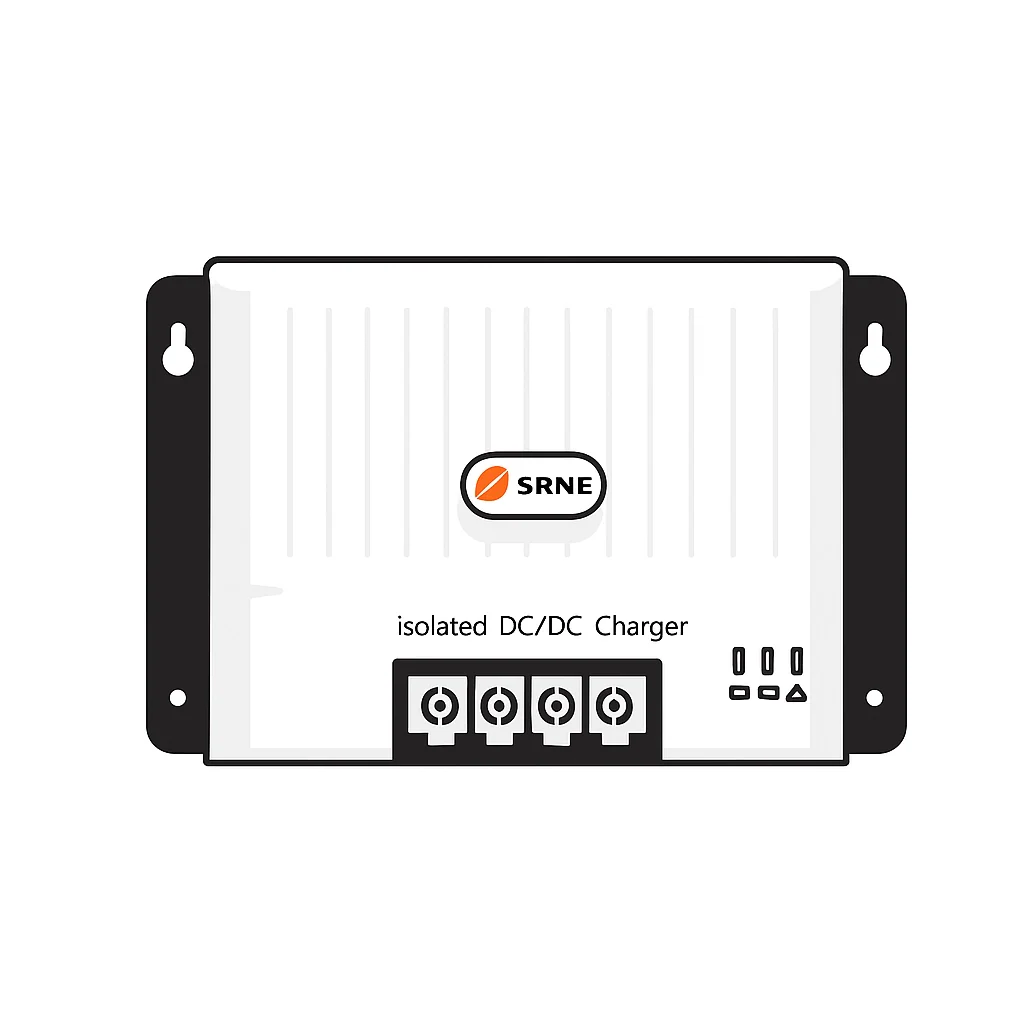
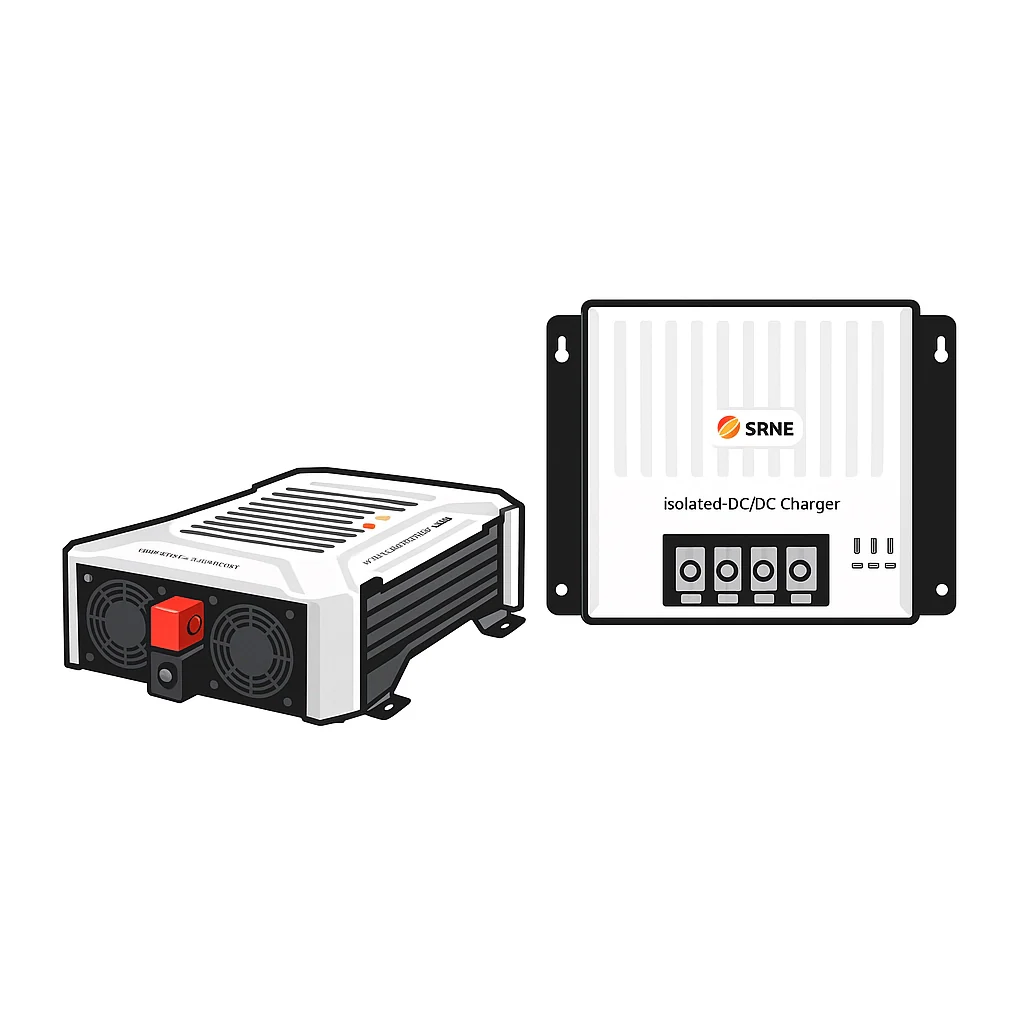
SRNE offers chargers and charge controllers with programmable lithium profiles. Their MPPT solar charge controllers let you set charge voltage and current precisely and include temperature compensation.
Constant-current and constant-voltage charging explained
CC/CV charging is the standard two-stage method for lithium batteries.
Constant-current stage: The charger delivers maximum current (e.g., 50A) until the battery reaches target voltage (e.g., 14.4V).
Constant-voltage stage: Once the battery hits target voltage, the charger holds it steady at 14.4V while reducing current.
A good charger manages this automatically: set the maximum voltage and current, and it handles the transition.
Charging lithium batteries from solar: practical setup
Solar charging adds complexity but is very common in off-grid and campervan systems. A solar charge controller between your panels and battery manages the process.
Victron Energy Blue Smart IP22 Charger 12/30 →
An MPPT (maximum power point tracking) solar controller is best. The Victron SmartSolar MPPT 75/15 is a popular choice at £48.95.

One advantage of solar charging: it's gentle. Panels rarely deliver current fast enough to damage a battery, and slow, steady charging is better for longevity than fast wall chargers.
Lithium battery charging time: what to expect
Charging time depends on battery capacity, charger current, and depth of depletion, plus several other factors worth understanding for planning and troubleshooting.
The basic calculation
A 100Ah battery charged at 50A takes roughly two hours from empty to full, assuming constant 50A throughout. In reality the constant-voltage stage slows the final 20%, so total time is often 2.5 to 3 hours.
Smaller chargers take longer. A 30A charger on a 100Ah battery takes 3 to 4 hours. A 10A charger takes 10 to 12 hours.
Factors that affect charging time
- Battery capacity: Larger batteries take longer. A 200Ah battery at 50A takes twice as long as a 100Ah battery.
- Charger current: Higher current reduces time, but you must not exceed the battery's maximum charge current.
- State of charge: A battery at 50% takes half the time of one at 0%. The constant-voltage stage takes proportionally longer as the battery approaches full.
- Temperature: Cold batteries accept charge more slowly and may need to warm up first. Hot batteries may charge faster but can be damaged if voltage is not adjusted.
- Charger algorithm: Some chargers have a float or storage stage that adds time but protects the battery.
- Wiring and connections: Poor connections or undersized cables can cause voltage drop, making the charger work harder and take longer.
- Solar input: Solar charging is slower and variable. A 400W panel in good sunlight might deliver 25-30A, but on a cloudy day it delivers much less. Full charge from solar alone can take a full day or more.
- DC-to-DC charging: In campervans, the charger is limited by alternator output. A typical van alternator produces 80-120A, but the charger usually limits this to 50A to protect the alternator. Charging a 100Ah battery at 50A takes 2-3 hours of driving.
Troubleshooting slow charging
If your battery is taking much longer than expected, check these common causes:
- Charger current setting: Ensure the charger is set to the correct current limit. Some chargers default to a low current.
- Cable size and length: Thin or long cables cause voltage drop. Use appropriately sized cables for the current.
- Battery temperature: If the battery is below 0°C, charging may be blocked or reduced. Warm it up first.
- BMS cutout: If the BMS has cut charging, the charger may show a fault. Check for overvoltage or overtemperature.
- Solar conditions: If charging from solar, check that the panels are not shaded and the controller is operating correctly.
SRNE charge controllers and chargers display charging status to help diagnose issues.
The practical takeaway: don't expect instant charging. Off-grid, solar is primary, wall chargers are backup for quick top-ups, and DC-to-DC chargers charge while you drive, convenient but slow.

Common charging mistakes and how to avoid them
Using a lead-acid charger on lithium
The most common mistake: lead-acid chargers charge too aggressively and often to the wrong voltage, causing battery damage, BMS cutouts, or premature failure.
Fix: Use a charger designed for lithium chemistry. Check the manual or contact the manufacturer. If you're unsure, ask Skyenergi. We can recommend the right charger for your battery.
Charging in extreme cold
Lithium batteries shouldn't charge below 0°C. Cold temperatures reduce chemical reaction speed. The battery resists current flow. Chargers push harder to deliver current, which damages the battery internally.
Fix: Wait for the battery to warm up before charging. If you're off-grid in winter, use a battery heater pad. Some chargers have temperature compensation, but they can't override physics. Cold batteries need warmth first.
Ignoring the BMS cutout
If charging stops suddenly, the BMS has cut power. This usually means the charger voltage is too high or the charger isn't compatible with your battery.
Fix: Check your charger settings. Reduce the maximum voltage slightly. Test with a smaller current. If the problem persists, the charger isn't compatible. Switch to a lithium-rated charger.
Leaving the battery fully charged for weeks
Lithium batteries degrade slightly when held at maximum charge for long periods, as high voltage stresses the internal chemistry.
Fix: If you're storing the system for weeks, discharge the battery to 50-80% state of charge. This is called storage mode. Most chargers have a storage voltage setting. Use it before long storage periods.
Mixing old and new batteries
Two batteries in parallel must share the same chemistry, age, and capacity.
Fix: Use matched batteries. If you're adding capacity, add the same model battery. If you're replacing an old battery, replace both.
Charging lithium batteries correctly protects your investment and keeps your system reliable. The fundamentals are simple: know your battery specs, use the right charger, and follow the manufacturer's limits.
Frequently Asked Questions
Do I need a special charger for a lithium battery?
Yes. Lithium batteries require chargers designed specifically for lithium chemistry. Standard lead-acid chargers will damage a lithium battery or fail to charge it properly. Your charger must support the correct voltage profile for your battery type, LiFePO4 batteries need different voltage limits than lithium-ion. Look for chargers labelled as lithium-compatible or with programmable charge profiles. The Victron Blue Smart IP22 Charger, for example, supports both lead-acid and lithium batteries with fully adjustable settings via Bluetooth.
What voltage should I use to charge a LiFePO4 leisure battery?
LiFePO4 batteries charge to a maximum of 3.65 volts per cell. For a 4-cell (4S) 12V LiFePO4 battery, the maximum charge voltage is 14.6V. This is lower than lead-acid (14.4V) and different from standard lithium-ion chemistry. Exceeding this voltage damages the battery and shortens its lifespan. Always use a charger with programmable voltage settings or one pre-configured for LiFePO4. Skyenergi's Edge lithium batteries work with chargers that support this specific voltage profile.
Can I charge a lithium battery from a solar panel?
Yes, but you need a solar charge controller designed for lithium batteries. A standard PWM controller won't work, you need an MPPT (Maximum Power Point Tracking) controller that supports lithium chemistry settings. The Victron SmartSolar MPPT 75/15 is ideal for small to medium solar setups, offering programmable charging profiles and Bluetooth monitoring. The controller manages voltage and current automatically, protecting your battery from overcharge and ensuring efficient energy harvest from your panels.
How long does it take to charge a lithium battery?
Charging time depends on battery capacity and charger output. A 100Ah lithium battery charged at 30A takes roughly 3-4 hours to reach full charge. Smaller batteries charge faster, a 50Ah battery at 30A takes 1.5-2 hours. Charging current is limited by your charger's maximum output and the battery's BMS (battery management system). Faster charging rates generate more heat; most lithium batteries tolerate charge rates up to 0.5C (50% of capacity per hour), so a 100Ah battery can safely accept up to 50A.
Prev post

Fogstar vs EcoTree Lithium Batteries: A 2026 Comparison
Updated on 23 October 2026
Next post

Why Use DC-to-DC Chargers in Vans: A Practical Guide
Updated on 21 October 2026


