


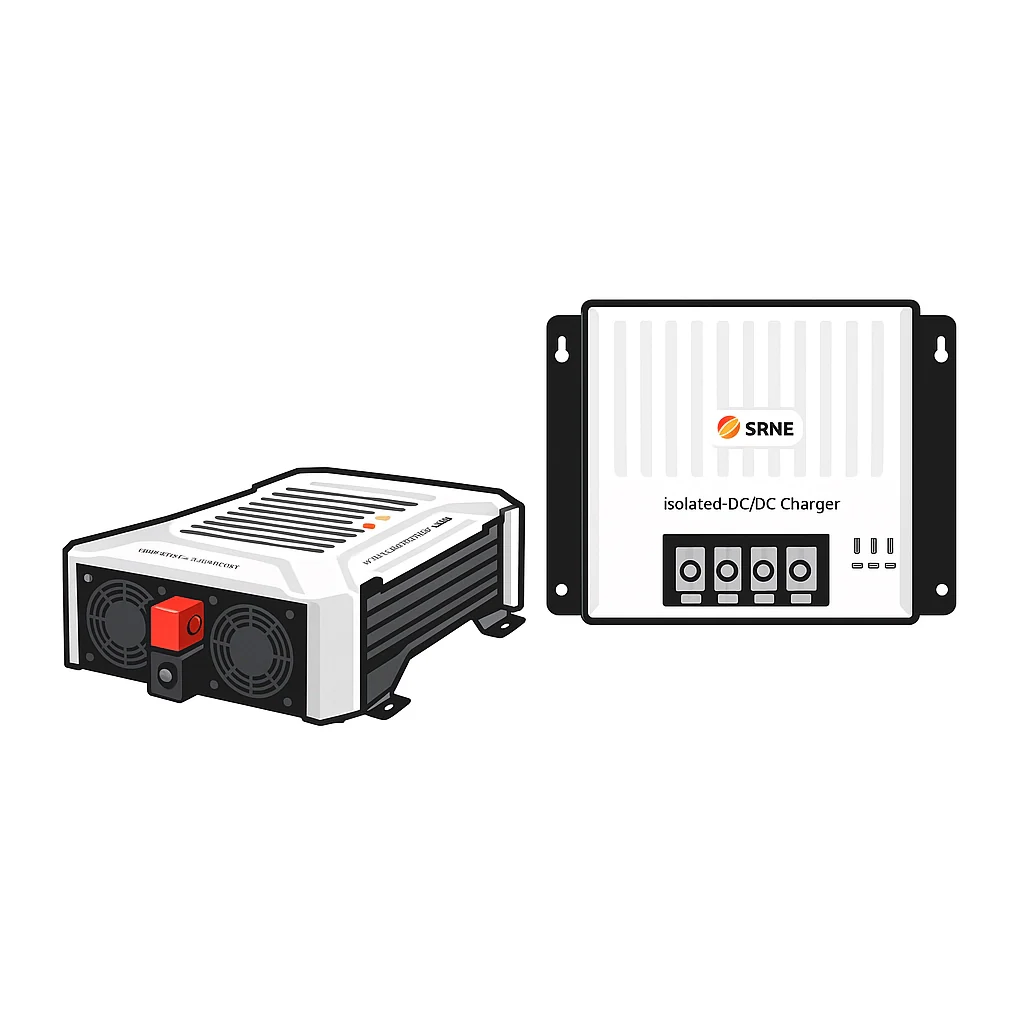


Fogstar vs EcoTree Lithium Batteries: A 2026 Comparison
Fogstar and EcoTree lithium batteries for campervans compared. Review capacity, charging, pricing and specs to find your ideal off-grid power solution.
Last Updated: October 22, 2026
Quick Summary
Fogstar vs ecotree lithium batteries both use LiFePO4 chemistry and offer standard BMS protection, but differ in capacity ranges and features. Fogstar starts at £250 with capacities up to 280Ah, while EcoTree begins at £280 and extends to 400Ah, making EcoTree better for larger systems requiring extended off-grid capability.
- Fogstar batteries range from 100Ah to 280Ah with standard BMS and limited Bluetooth monitoring
- EcoTree offers larger capacity options up to 400Ah with similar standard BMS protection
- Both brands integrate with Victron systems via CAN-bus for compatible setups
- LiFePO4 chemistry in both brands delivers 3,000-7,000 cycles, lasting 15-20 years versus 6-8 years for lead-acid
- Choose based on your power needs: 100Ah covers weekend trips, 280Ah+ supports extended off-grid use with inverters
Table of Contents
- Fogstar vs EcoTree: Quick Comparison Table
- Battery Capacity and Available Sizes
- 100Ah Lithium Leisure Battery for Campervan: What You Need
- LiFePO4 Battery Cycle Life and Durability
- Lithium Battery Charging for Campervans: Compatibility and Speed
- SRNE Lithium Battery and Inverter Compatibility
- Price and Value Comparison
- Which Battery System Should You Choose?
- Frequently Asked Questions
Fogstar vs EcoTree: Quick Comparison Table
When comparing fogstar vs ecotree lithium batteries for your campervan, both are established names serving different needs and budgets. The real question isn't which brand is universally better, but which matches your setup, power requirements, and budget.
| Feature | Fogstar | EcoTree | Skyenergi Edge | Skyenergi Elite |
|---|---|---|---|---|
| Battery Chemistry | LiFePO4 | LiFePO4 | LiFePO4 | LiFePO4 |
| Capacity Range | 100Ah-280Ah | 100Ah-400Ah | 100Ah-280Ah | 304Ah-560Ah |
| BMS Type | Standard | Standard | JBD 100A-280A | JBD 250A-300A |
| Heat Pad | No | No | No | Yes |
| Bluetooth Monitoring | Limited | Limited | No | Optional |
| Victron Integration | Via CAN-bus | Via CAN-bus | Via SmartShunt | Plug-and-play CAN-bus |
| Starting Price | £250+ | £280+ | £219 | £745 |
| Best For | Mid-range setups | Premium features | Budget-conscious buyers | Advanced monitoring |
Capacity and price alone don't tell the full story. Here's what actually matters when upgrading your campervan's power system.

Battery Capacity and Available Sizes
Your first decision is capacity. What matters is usable capacity, the energy you can draw without damaging the battery.
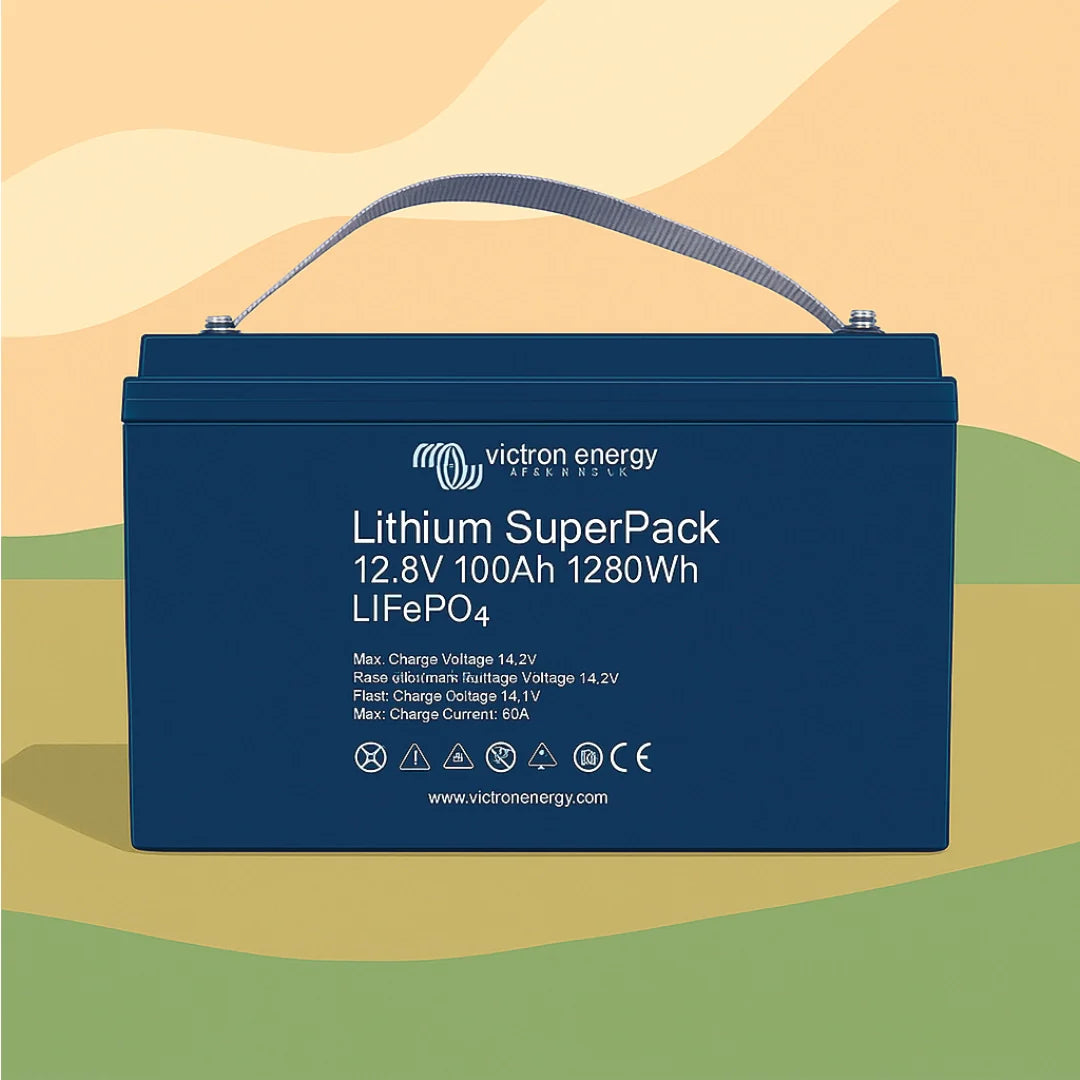
Skyenergi's Skyenergi Edge 100Ah Lithium Leisure Battery starts at £219, making it the entry point for those moving from lead-acid systems. The Skyenergi Edge 280Ah at £445 doubles capacity for extended off-grid trips.

For most campervan owners, 100Ah covers 2-3 days of typical use: fridge, lighting, and water pump. Running a second fridge, heating, or an inverter for power tools needs 200Ah or more. The jump from 100Ah to 280Ah is a different camping experience, letting you run more appliances without voltage sag.
Skyenergi batteries use the same LiFePO4 chemistry, so dimensions stay consistent across the range.
If your campervan has limited space, 100Ah or 280Ah works. For larger systems or high-draw appliances, capacity becomes your limiting factor.
100Ah Lithium Leisure Battery for Campervan: What You Need
A 100Ah lithium leisure battery delivers roughly 1.2 kWh of usable energy, enough for a weekend trip and marginal for a week.
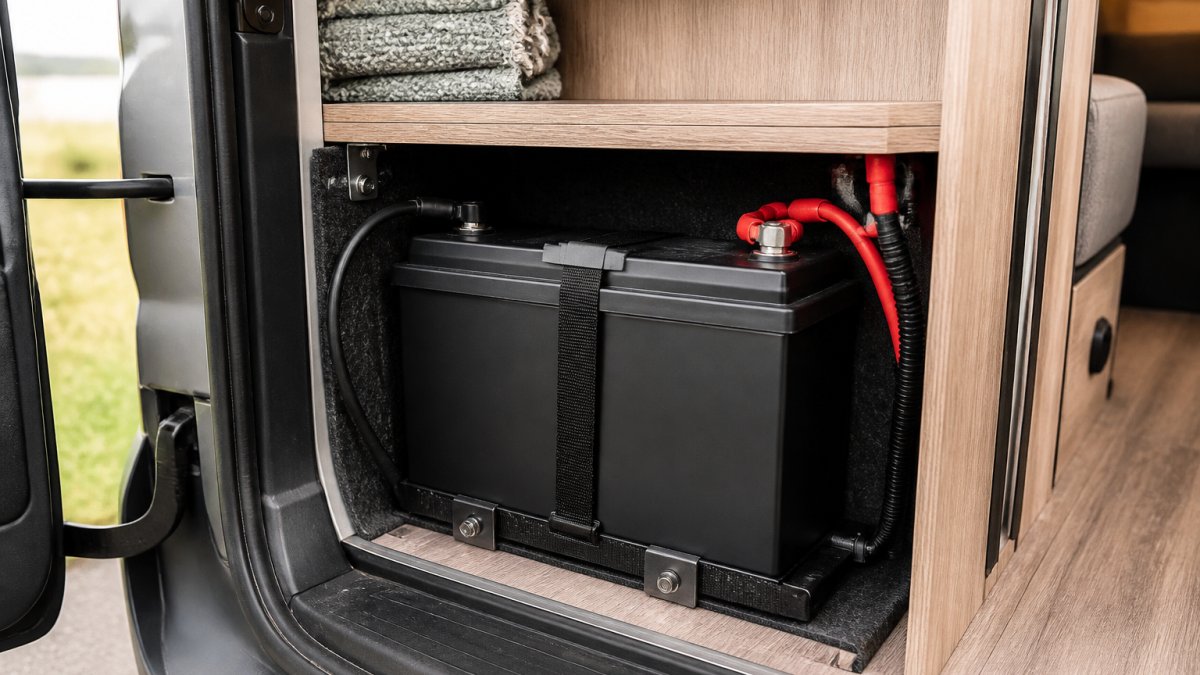
The Skyenergi Edge 100Ah at £219 is built around a JBD BMS and Grade A EVE cells. This combination delivers stable voltage under load, which matters when you're running multiple appliances. A fridge drawing 8A won't cause voltage sag like lead-acid does. Your appliances stay at rated voltage longer, which means faster charging and fewer brownouts.
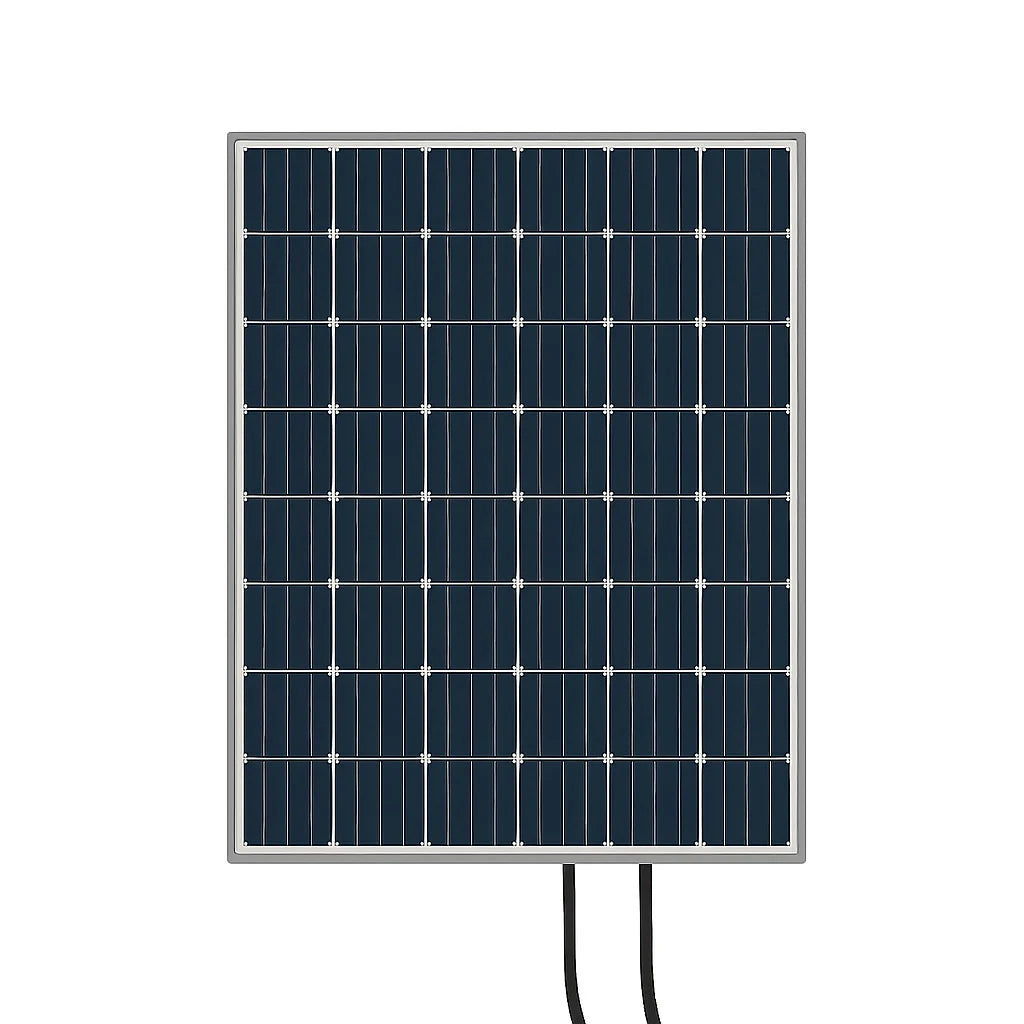
For a solo owner or couple doing weekend trips, 100Ah is sufficient for a fridge, lights, water pump, and basic charging. Add solar panels and a DC-DC charger and you're genuinely off-grid, with the BMS handling alternator and solar charging without intervention.
One constraint: 100Ah isn't enough if you're running an inverter for extended periods. A 3kW inverter drawing 40A will drain 100Ah in 2.5 hours. If you need inverter power for cooking or power tools, move to 280Ah or larger.
LiFePO4 Battery Cycle Life and Durability
LiFePO4 chemistry is the standard for leisure batteries now. Fogstar and EcoTree use it, and Skyenergi's entire range, from Edge through Elite and Core2, relies on LiFePO4 cells.
The advantage over lead-acid is cycle life. A lead-acid leisure battery lasts 300-500 full cycles before capacity drops below 80%. LiFePO4 batteries achieve 3,000-7,000 cycles at 80% depth of discharge, depending on the management system and cell quality.
In real terms: using your campervan 40 weekends per year, a lead-acid battery needs replacing every 6-8 years, while a LiFePO4 battery lasts 15-20 years. The upfront cost is higher, but cost per year of use drops significantly.
Skyenergi's Core2 680Ah explicitly states up to 7,000 cycles at 80% depth of discharge, ensuring over 10 years of reliable service. That's backed by Grade A matched cells and a 300A JBD BMS, the same system found in professional marine and off-grid installations.
The BMS protects cycle life by monitoring each cell, balancing charge, and cutting off if temperature or voltage goes out of range. Skyenergi's Elite and Core2 models include heat pad technology for safe charging in freezing conditions, a real advantage for winter camping or off-grid living.
Cold weather is where cycle life gets tested. A LiFePO4 battery without heat pads won't accept charge below 0°C. The Skyenergi Elite and Core2 solve this with integrated heating, maintaining charge acceptance down to -10°C.

Lithium Battery Charging for Campervans: Compatibility and Speed
Charging speed separates good leisure battery setups from great ones. Lithium accepts charge much faster than lead-acid, but only if your charger supports it.
Most campervans have two charging sources: the alternator (via a DC-DC charger) and mains power (via a charger or charger-inverter). Some add solar panels with an MPPT controller.
According to Victron Energy's lithium charging guidance, proper charging profiles reduce heat and extend cycle life by 20-30%. Skyenergi's Elite range integrates directly with Victron systems via CAN-bus, meaning your Victron Cerbo GX automatically detects the battery and applies the correct charging curve. No manual configuration needed.
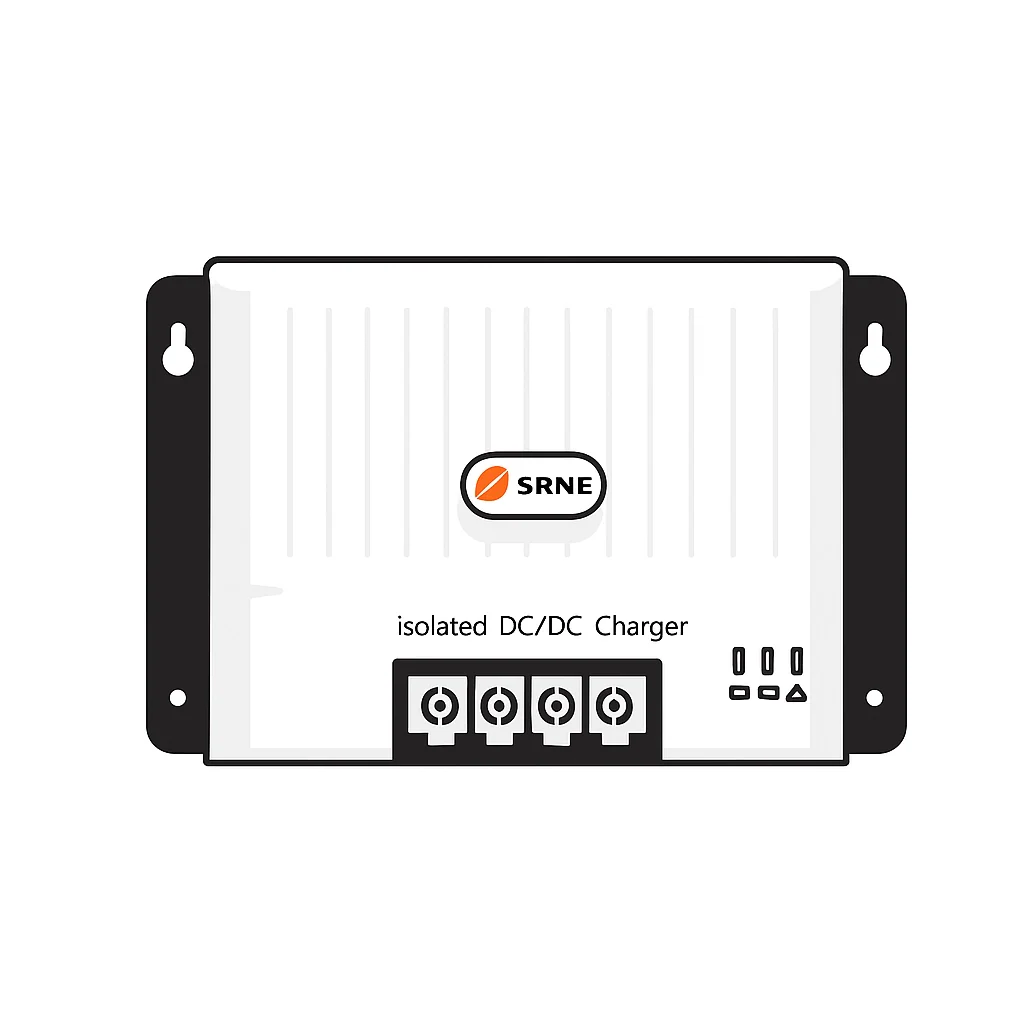
Solar charging is where SRNE systems shine. An MPPT solar charge controller from SRNE tracks maximum power point, adjusting voltage and current to extract every available watt from your panels. Paired with a Skyenergi battery, this creates a closed-loop system: the battery tells the charger when to stop, preventing overcharge and extending cell life.
From a 3kW mains charger, a 100Ah lithium battery charges from 20% to 80% in roughly 1 hour, versus 6-8 hours for lead-acid, which matters when charging quickly on campsite mains before heading off-grid.
If you're building a complete system from scratch, SRNE charging controllers paired with Skyenergi batteries reduce wiring complexity and improve efficiency.
Skyenergi Edge 100Ah Lithium Leisure Battery →
SRNE Lithium Battery and Inverter Compatibility
An inverter converts 12V DC to 240V AC for household appliances. Most campervan inverters are 1,000-3,000W, sized to what you run simultaneously.
A 3kW inverter draws 250A at 12V. Your battery management system must handle that current surge. Skyenergi's Elite 560Ah features a 300A JBD BMS, designed for exactly this scenario, high-current inverter draws without throttling.
SRNE systems integrate with inverter-chargers, combining inverter and charger in one unit. The battery tells the inverter-charger when to switch modes: charging from mains, inverting to AC, or idle, reducing wiring and improving efficiency.
Skyenergi's Core2 680Ah explicitly states compatibility with 3kW inverters. The combination, 680Ah capacity plus 300A BMS, means you can run a 3kW kettle or power tools without voltage collapse. Larger inverters require larger batteries or risk the BMS cutting out under sustained load.
To run an induction cooktop or air compressor, you need capacity and BMS headroom. A 100Ah battery with a 3kW inverter is a mismatch, the BMS will cut out after a few seconds. Pair the inverter to your battery size: 1kW per 100Ah is a safe rule.
Price and Value Comparison
Upfront cost drives the decision for many buyers, but cost per usable year matters more.
Skyenergi Edge 100Ah: £219. This is the entry point. You're buying proven components, JBD BMS, Grade A EVE cells, at the lowest price. No Bluetooth, no heat pad, no fancy integration. Just reliable power.
Skyenergi Edge 280Ah: £445. Double the capacity for roughly double the price. For weekend campers, this is the sweet spot: enough power for a week off-grid, still affordable.
Skyenergi Elite 304Ah: £745. You're paying for heat pad technology and Victron CAN-bus integration. If you're camping in winter or building a Victron-based system, this pays for itself in convenience.
Skyenergi Core2 680Ah: £1,129. Maximum capacity, maximum features. Bluetooth monitoring via the Skyenergi App, heat pad, 300A BMS, and 10+ year lifespan. For serious off-grid living or professional campervan conversions, this is the investment.
What matters is the value proposition: are you paying for features you'll use?
A 100Ah battery at £219 costs £2.19 per amp-hour; a 280Ah at £445 costs £1.59. Larger batteries have lower per-unit cost, but only if you need the capacity. For weekend-only camping, 100Ah is better value than 280Ah.
Heat pad technology adds cost but eliminates the need for external heaters. If you're camping in winter, a £500 heat pad battery is cheaper than buying a separate heater and managing it manually.
Which Battery System Should You Choose?
The choice depends on your priorities.
Skyenergi batteries offer reliable performance. The Edge 100Ah at £219 is an affordable way to go lithium. The Elite and Core2 models integrate seamlessly with SRNE charging systems, which means fewer wiring headaches and better efficiency.
If you're upgrading from lead-acid, start with the Skyenergi Edge 100Ah. It replaces your old battery directly, works with your existing charger, and costs less than alternatives.
If you're building a complete system, the Skyenergi Elite 304Ah with Victron integration and heat pad technology is the smarter investment. It handles winter camping, scales to larger systems, and reduces installation complexity.
For maximum off-grid capability, the Skyenergi Core2 680Ah delivers 10+ years of reliable service with Bluetooth monitoring and a 300A BMS that supports 3kW inverters without compromise.
Skyenergi's focus on complete system solutions, SRNE compatibility, and UK-based support means you're buying a system that works together.
Upgrading your campervan's power system is a significant investment, but the right lithium battery pays dividends in reliability, weight savings, and years of service. Whether you choose Fogstar, EcoTree, or Skyenergi, moving from lead-acid to lithium transforms how you camp and live off-grid. Skyenergi's Edge and Elite ranges deliver proven performance with integrated SRNE charging systems that make the whole setup simpler. Get started with a Skyenergi lithium battery and discover how stable, efficient power changes everything about your campervan experience.
Frequently Asked Questions
Is 100Ah enough capacity for a campervan?
A 100Ah lithium leisure battery provides around 1.2 kWh of usable energy at 12V, enough for 1-2 days of light use (fridge, lighting, phone charging). For longer trips or higher power draw (heating, water pumps), 200Ah or larger is more practical. Your actual requirement depends on appliances, climate, and trip length. Skyenergi's Edge 100Ah offers an affordable entry point; larger Edge and Elite models suit extended off-grid stays.
What should you compare when choosing a lithium leisure battery?
Focus on usable capacity (amp-hours), battery management system (BMS) quality, charging compatibility (solar, alternator, mains), weight, dimensions, warranty length, and temperature performance. LiFePO4 chemistry is standard across quality brands. Check whether the battery integrates with your existing chargers and monitoring systems. Skyenergi's range includes models with heat pads for cold-weather charging and Victron integration for advanced monitoring.
Can a lithium leisure battery be charged from a campervan alternator?
Yes, but you need a DC-DC charger between the alternator and the lithium battery. Lithium cells require controlled charging voltages that alternators cannot provide directly. A quality DC-DC charger regulates current and voltage to safely charge the battery while driving. Many campervan setups combine alternator charging with solar panels and mains chargers for flexible energy input.
How long does a LiFePO4 battery cycle life typically last?
LiFePO4 batteries deliver 3,000-7,000 charge cycles at 80% depth of discharge, translating to 10+ years of use in leisure applications. Skyenergi's Core2 680Ah achieves up to 7,000 cycles, meaning it can be fully charged and discharged daily for over a decade. Cycle life depends on charging practices, temperature, and how deeply you discharge the battery each time.

Prev post

Best Portable Solar Panels for Campervans: 2026 Review
Updated on 24 October 2026
Next post

Lithium charging requirements for beginners
Updated on 22 October 2026


