





How to Choose a 12V Lithium Battery for a Small Campervan
Learn how to choose a 12V lithium battery for a small campervan conversion. Size your system, compare options, and match charging equipment.
Table of Contents
- Step 1: Work Out Your Daily Energy Use and Battery Size
- Step 2: Choose the Right LiFePO4 Battery for Your Van Conversion
- Step 3: Understand Usable Capacity and 100Ah Lithium Battery Fridge Runtime
- Step 4: Match Your Lithium Battery Charging for Campervans
- Step 5: Check Battery Dimensions, Weight, and Payload for a Small Van
- Step 6: Compare 12V Lithium Battery Options for Small Campervans
- Step 7: Installation, Safety, and Common Mistakes to Avoid
- Conclusion
- Frequently Asked Questions
Last Updated: October 4, 2026
Step 1: Work Out Your Daily Energy Use and Battery Size
Choosing a 12v lithium battery for a small campervan conversion starts with one number: your daily energy use in watt-hours. Get that wrong and every later decision, from capacity to cable size, is guesswork.
Here is how we would do it.
List every load you plan to run, its power draw in watts, and the hours per day you expect to use it.
| Appliance | Watts | Hours/day | Watt-hours/day |
|---|---|---|---|
| 12V compressor fridge | 45 | 8 | 360 |
| LED lighting | 15 | 5 | 75 |
| Water pump | 60 | 0.5 | 30 |
| Laptop charger | 65 | 3 | 195 |
| Phone and tablet charging | 20 | 2 | 40 |
| Daily total | 700 Wh |
Add a 20% buffer for cold weather and inverter losses. That takes our example to roughly 840 Wh per day.
Using a Campervan Battery Size Calculator
A campervan battery size calculator does the same maths for you: it takes your load list and divides by system voltage to give a target amp-hour figure. At 12.8V, 840 Wh works out at about 66Ah of usable energy per day.
Most people then multiply by days of autonomy. Two days off-grid without charging means you need around 132Ah usable.
Step 2: Choose the Right LiFePO4 Battery for Your Van Conversion
A LiFePO4 battery for van conversion is the right default in 2026. The chemistry is stable, it handles deep discharge well, and it weighs far less than the lead-acid equivalent.
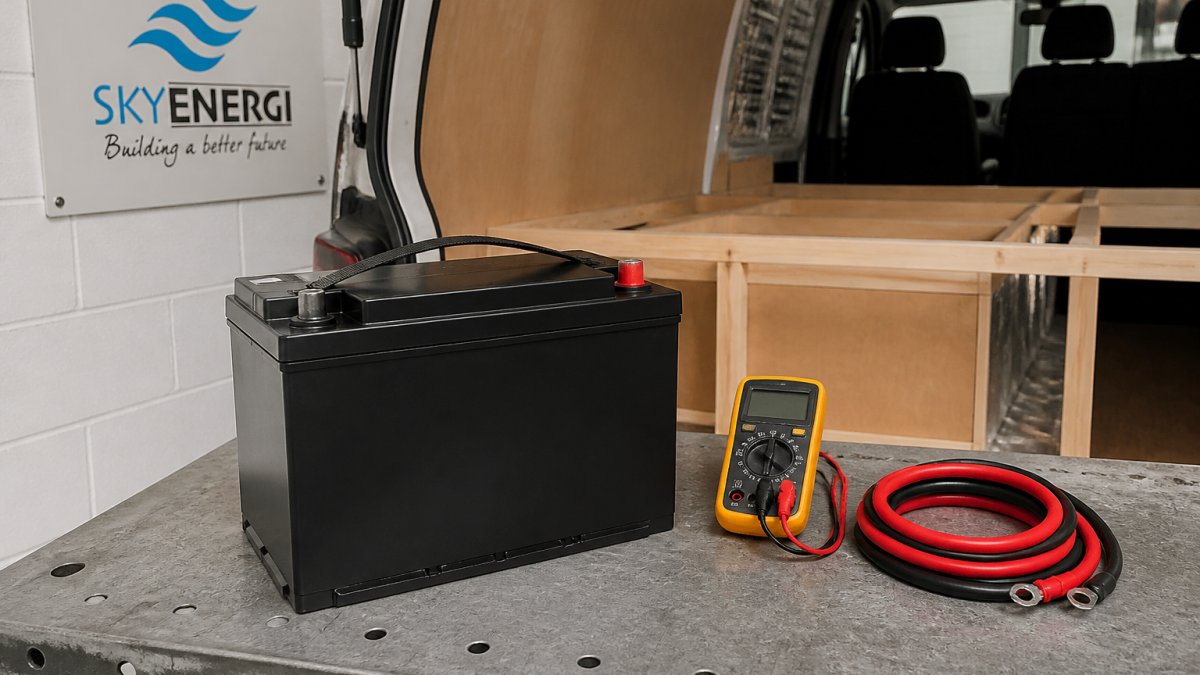
Three things decide which one you buy:
- Capacity: match it to your Step 1 figure, not to what fits the tray.
- BMS rating: a 100A battery management system suits most small-van loads.
- Physical size: check it fits before you order.
The guidance on lithium battery safety from the Health and Safety Executive is worth reading before you install anything near a heat source or a fuel line.
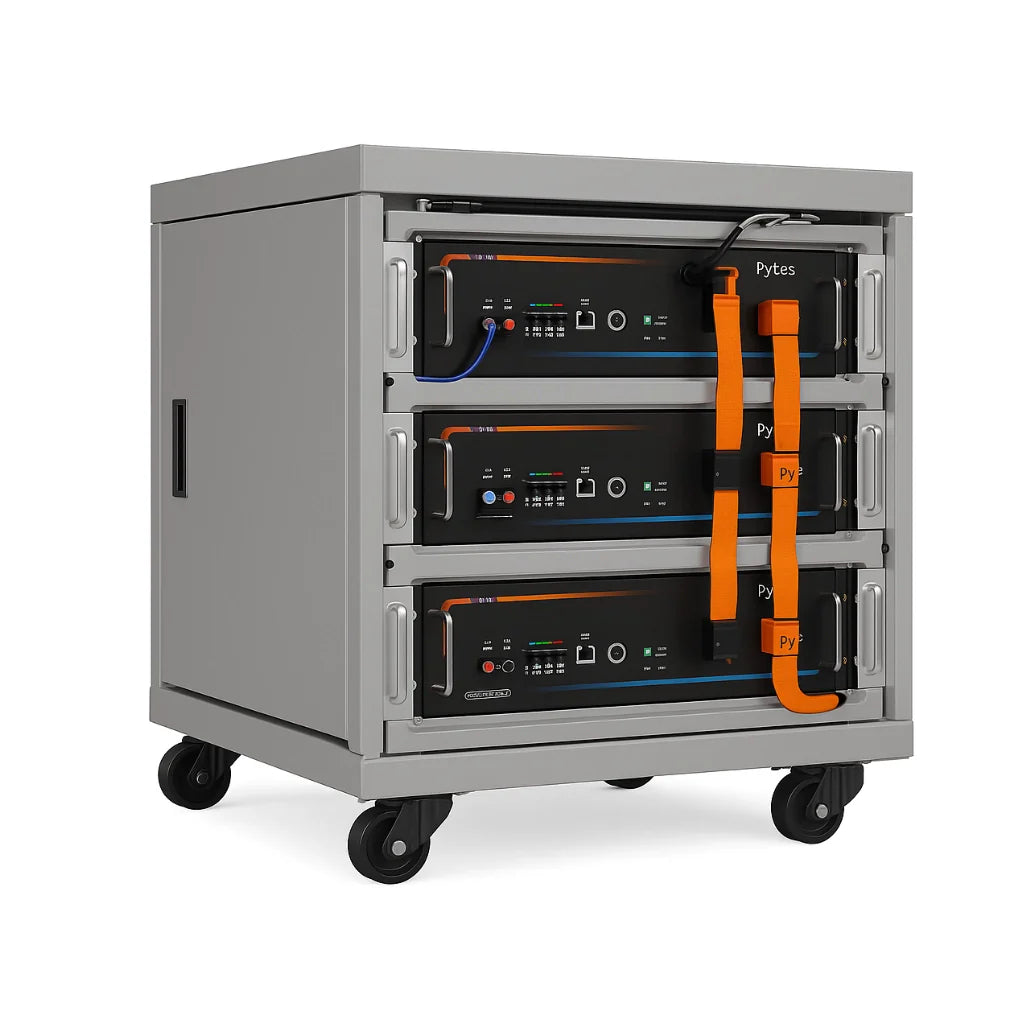
Our Skyenergi Edge 100Ah uses a 100A JBD BMS and Grade A EVE cells in a rugged IP65 housing. It has no Bluetooth and no heat pads, which keeps the price down.

Step 3: Understand Usable Capacity and 100Ah Lithium Battery Fridge Runtime
Usable capacity is the energy you can actually draw, not the number on the label. Depth of discharge is how far you take the battery down each cycle.
Lithium lets you use around 80% of rated capacity safely. Lead-acid gives you roughly half. That single difference is why a 100Ah lithium battery often replaces a 200Ah lead-acid bank.
So how long will a fridge run? A typical 12V compressor fridge draws about 45W and cycles on and off. Over 24 hours it might use 360Wh.
A 100Ah lithium battery at 12.8V holds 1,280Wh. At 80% depth of discharge, that is 1,024Wh usable.
Add lights, a pump and device charging and that drops to around one full day per charge.
A Simple Autonomy Worksheet for Small Vans
Most guides stop at the headline runtime. A more useful approach is to calculate autonomy for your own setup. Use this three-step method:
- Total your daily watt-hours from Step 1. For our example, 840Wh after buffer.
- Convert to amp-hours at 12.8V: 840 ÷ 12.8 = 66Ah per day.
- Divide usable capacity by daily amp-hours: a 100Ah battery with 80Ah usable gives 80 ÷ 66 = 1.2 days. A 200Ah battery gives 160 ÷ 66 = 2.4 days.
This shows why a single 100Ah battery is often a one-day battery for a small van with a fridge, lights, and device charging. If you want two days off-grid without charging, you need either a larger battery or a realistic plan to recharge daily.
Why Headline Amp-Hours Mislead
A 100Ah battery from one brand may deliver less usable energy than a 100Ah battery from another if the BMS cuts off earlier or the cells are lower grade. Always check the recommended depth of discharge and the BMS low-voltage cutoff. For small vans, the difference between 80Ah and 90Ah usable can be the difference between one night and two.
Step 4: Match Your Lithium Battery Charging for Campervans
Lithium battery charging for campervans needs the right voltage profile. LiFePO4 wants a slightly higher charge voltage than lead-acid and no float-stage trickle. Get the charging side wrong and you will never reach full capacity.
Alternator Charging, Split Chargers, and DC-DC Chargers
A basic split charger connects your leisure battery to the alternator through a relay. It works, but it charges slowly and can overwork a smart alternator.
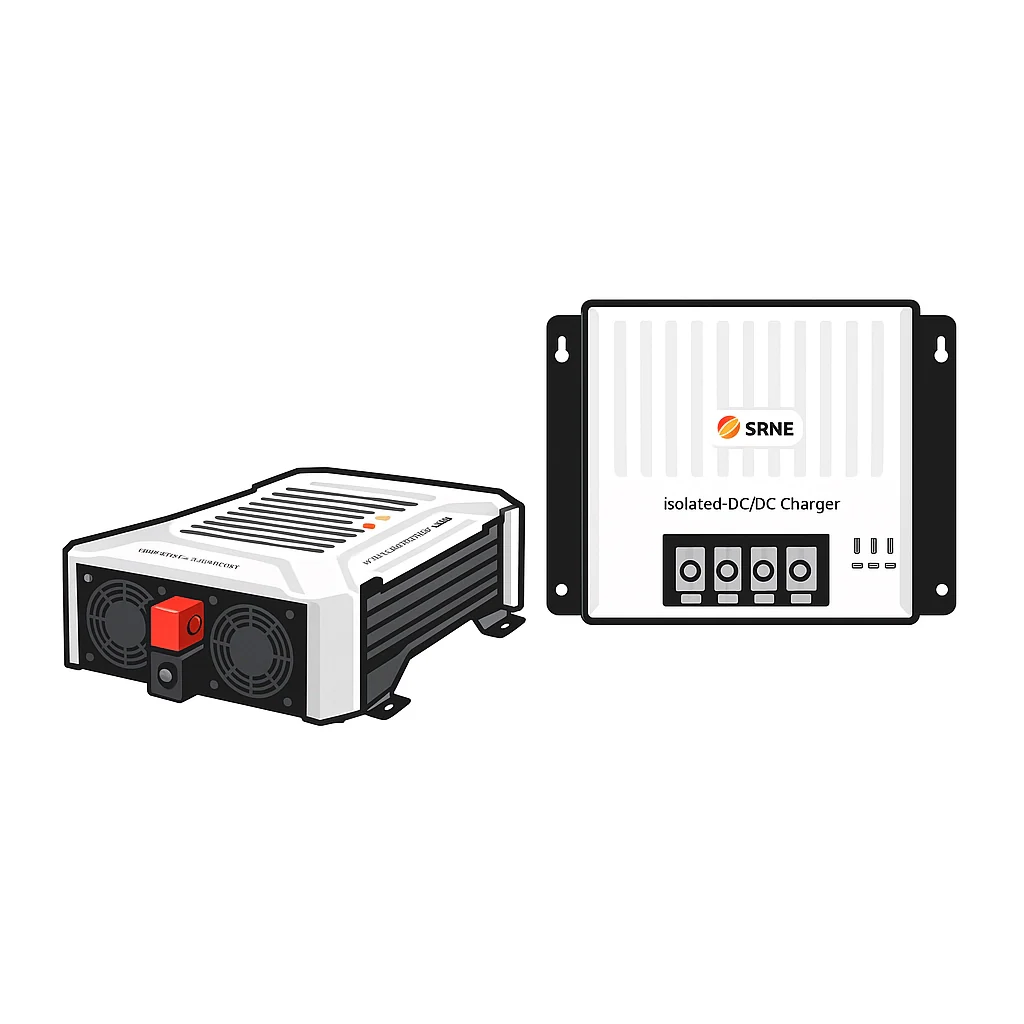
A DC-DC charger is the better answer for most conversions. It takes the alternator output and converts it to a stable charging profile for lithium, typically 20A to 50A depending on the unit. As a rule of thumb, choose a charger rated at 20-30% of your battery's amp-hour capacity.
Match the charger's output to your battery's maximum charge current. Our Core2 105Ah accepts a healthy charge rate, so a 30A DC-DC unit suits it well.

Solar, Shore Power, and SRNE Charge Controllers
Solar is the cheapest way to keep a leisure battery topped up when parked. An MPPT controller gets more from the panels than a basic PWM unit, especially in low light or high heat.
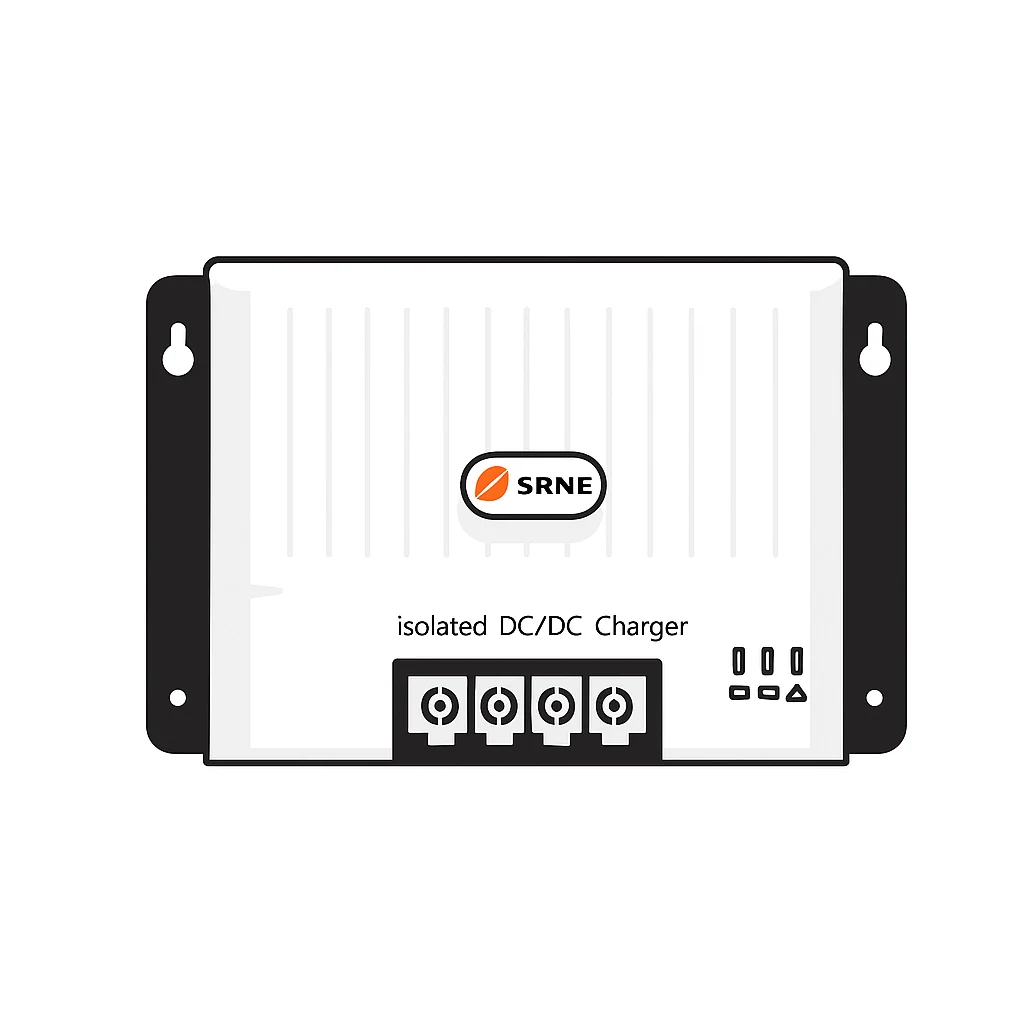
SRNE charge controllers handle MPPT tracking, lithium charge profiles and system monitoring in one box. Pair one with a 200W to 300W panel array and you will replace a good chunk of your daily use on a sunny day.
Shore power covers the rest. An inverter charger lets you plug into a campsite hook-up and charge at the same time. Make sure the charger has a lithium profile; older lead-acid chargers may not reach the correct voltage and can leave the battery chronically undercharged.
Skyenergi Edge 100Ah Lithium Leisure Battery →
Cable and Protection Basics
Charging current flows through cables that must be sized for the worst-case load. Undersized cable causes voltage drop, heat, and slow charging. Fit a fuse or circuit breaker close to the battery positive terminal on every charging source. For a 30A DC-DC charger, a 40A fuse is a sensible choice. Keep cable runs short and use the correct gauge for the round-trip distance.
Step 5: Check Battery Dimensions, Weight, and Payload for a Small Van
Battery location drives everything else in a small van. You need the dimensions before you commit to a layout.
Measure the space, then measure it again with the terminals and any straps in place. A battery that fits on paper often does not fit once you add cable lugs and a hold-down bracket.
Weight matters too. Lithium is far lighter than lead-acid for the same usable capacity, but it still counts against your payload. Check your van's plate weight and keep a margin for water, gas and passengers.
Common locations in a small conversion:
- Under a front seat, if the base is deep enough
- In a dedicated locker beside the wheel arch
- Under the bed platform, well ventilated
- In a rear garage area on larger vans
Keep the battery as close to the charger and distribution point as you can. Short cable runs mean less voltage drop and thinner, cheaper cable.
Step 6: Compare 12V Lithium Battery Options for Small Campervans
Two batteries cover most small-van builds. Both are 12.8V LiFePO4 with a 100A JBD BMS, so the choice comes down to features and price.
| Feature | Skyenergi Edge 100Ah | Skyenergi Core2 105Ah |
|---|---|---|
| Capacity | 100Ah | 105Ah |
| BMS | 100A JBD | 100A JBD |
| Cells | Grade A EVE | Grade A EVE |
| Bluetooth monitoring | No | Yes, via Skyenergi App |
| Heat pad | No | Yes |
| Housing | IP65 | IP65 |
| Price | £219.00 | £266.00 |
| Best for | Simple, low-cost builds | Year-round and cold-weather use |
The Edge 100Ah is our pick for a weekend van on a tight budget. It does the job with no extras.
The Core2 105Ah suits anyone touring into colder months. The integrated heat pad allows safe charging below freezing, and the app shows state of charge, cell voltages and temperature in real time.
If you want live data on the Edge, pair it with a Victron SmartShunt.
Step 7: Installation, Safety, and Common Mistakes to Avoid
Safety comes down to fusing, cable sizing and correct charging. Skip any of the three and you risk a fire or a dead battery.
Fit a fuse as close to the battery positive terminal as possible. Use a fuse block to split circuits cleanly. Our ST Blade Fuse Block gives you 12 fused circuits with a built-in negative busbar, which keeps wiring tidy and fault-finding simple.

Cable size depends on current and run length. Undersized cable causes voltage drop and heat. Oversized cable wastes money.
Add an isolator so you can cut power without tools. Our Mini On-Off Battery Switch handles 300A continuous and 500A intermittent, well beyond anything a small van needs.
Two mistakes we see often:
- Charging a cold lithium battery without low-temperature protection
- Mixing old lead-acid charging gear with a new lithium battery
Cold-Weather Charging and Low-Temperature Protection
Charging a LiFePO4 battery below freezing damages the cells. The BMS should block it, but not every battery has that protection built in.
The Core2 105Ah solves this with an integrated heat pad, which warms the cells so charging can continue safely in low temperatures. If your battery has no heat pad, do not charge it in freezing conditions. Wait for it to warm up.
Discharging in the cold is fine. It is charging that causes the damage.
Conclusion
Getting a 12v lithium battery right comes down to doing the load maths first, then matching capacity, charging and fit to your build. Most failed systems fail at Step 1, not at the battery.
At Skyenergi, we supply the Edge and Core2 lithium batteries, DC-to-DC chargers, SRNE charge controllers and the fusing and switching gear to complete the job. Everything ships fast from stock, with UK-based support if you get stuck mid-build.
Get started with Skyenergi and build a power system that keeps your fridge running and your lights on, whatever the weather.
Frequently Asked Questions
How long will a 12V fridge run on a 100Ah lithium battery?
A 100Ah LiFePO4 battery gives roughly 80Ah of usable capacity at 80% depth of discharge. A typical 12V compressor fridge draws around 1.5Ah per hour over a 24-hour cycle in moderate weather, so expect two to three days before you need to recharge. Hot weather, frequent door openings and a poorly insulated fridge will shorten that runtime, so pair the battery with solar or a DC-DC charger for longer trips off-grid.
How do I know what size lithium battery I need for my campervan?
Add up the daily watt-hours of everything you run, then divide by 12 to get amp-hours. A small campervan with a fridge, LED lights, phone charging and a laptop typically needs 60 to 100Ah of usable capacity per day. Because LiFePO4 batteries should not be drained below 20%, a 100Ah battery gives you about 80Ah to use. For weekend trips, 100Ah is usually enough; for full-time use, plan for 200Ah or more.
Can a campervan lithium battery be charged by solar panels and a DC-DC charger?
Yes, and combining both is the most reliable setup. A DC-DC charger tops up the battery while you drive, typically delivering 30A to 50A depending on the unit. Solar panels through an MPPT charge controller, such as an SRNE model, keep the battery topped up when parked. Make sure every charging source uses a lithium charging profile with the correct absorption and float voltages for LiFePO4 cells.
What should I check when comparing lithium batteries for a campervan?
Check the BMS rating, cell grade, usable capacity, physical dimensions, weight, and whether the battery has low-temperature charge protection. A 100A JBD BMS is a solid baseline for a 100Ah battery. Confirm the battery fits your available space and that your payload allowance covers the weight. Also verify the warranty length and whether the supplier offers UK-based technical support if something goes wrong mid-trip.
Next post

12V Lithium Battery Monitoring System: SRNE Review
Updated on 04 October 2026


