





Best Portable Solar Panels for Campervans: 2026 Review
We review the best portable solar panels for campervans, covering panel types, sizing, MPPT controllers and real-world output to help you choose.
Last Updated: October 23, 2026
Quick Summary
The best portable solar panels for campervans are folding or rigid-framed modules sized around 200W for a two-person setup running a compressor fridge, lights and device charging, paired with an MPPT controller such as the SRNE Shiner 2430 and a lithium leisure battery like the Skyenergi Core2 105Ah. Go to 300W or more for family use, inverter loads or winter touring.
- Size your kit from daily watt-hours, not a forum wattage: a worked example totals 629Wh per day.
- A 200W panel may deliver only 60-70% of rated output in real UK conditions, so round up.
- Folding panels typically measure around 1.2m x 0.7m folded and weigh 12-15kg, so measure your locker first.
- For a 10m run at 200W, 6mm² cable keeps voltage drop under 3%.
- Spend on the controller and battery before adding extra panel wattage.
Table of Contents
- What Makes the Best Portable Solar Panels for Campervans
- How to Size a Campervan Solar Panel Kit Around Daily Energy Use
- Flexible vs Rigid Solar Panels for Campervans: Trade-Offs That Matter
- Is a 200W Solar Panel for Campervan Use Enough?
- SRNE MPPT Solar Charge Controller: Getting More From Every Panel
- Portable vs Roof-Mounted Panels: Security, Storage and Deployment
- Matching Your Panel to a Lithium Leisure Battery and Power Station
- Verdict: Which Setup Suits Your Van Life
- Frequently Asked Questions
What Makes the Best Portable Solar Panels for Campervans
The best portable solar panels for campervans balance three things: usable output, weight you can actually lift, and a controller that harvests properly in British weather. At Skyenergi, we see far more disappointment caused by undersized kits and mismatched controllers than by panels that were simply too small.
Portable solar panels are free-standing photovoltaic modules, usually folding or rigid-framed, that you deploy on the ground or against a windscreen rather than bonding permanently to the roof.
Portable solar panels are the right answer when you move often, park in shade, or want solar without drilling holes in a roof you may sell on. They are the wrong answer if you want zero setup effort at every stop.
Rigid, folding and flexible: which panel type suits your van
Three panel types dominate campervan builds, and each suits a different owner.
- Rigid framed panels: aluminium-framed monocrystalline modules. Cheapest per watt, most durable, heaviest. Best for roof mounting or a panel you leave deployed for weeks.
- Folding panels: two or more rigid sections hinged together with a carry handle and often a built-in stand. Best for ground deployment and moving between pitches.
- Semi-flexible panels: thin, bendable modules bonded to a slight curve. Best where roof space or weight is tight.
If you are still deciding between mounting styles, our range of solar panels covers both rigid and portable formats so you can match the panel to the van rather than the other way round.
How to Size a Campervan Solar Panel Kit Around Daily Energy Use
Sizing starts with your appliances, not with a wattage someone recommended on a forum. Add up what you actually run in a day, then work backwards to panel wattage and battery capacity.
Here is the method we would use on any van, with a worked example for a typical two-person campervan:
- List every 12V load and its draw in watts. A compressor fridge might draw 45W when running, but it cycles on and off. Use the average draw over 24 hours, often around 15-20W for a 50-litre fridge in mild weather. Lights (LED) 5W, water pump 30W for short bursts, phone charging 10W, laptop 60W via an inverter.
- Multiply watts by hours used per day to get watt-hours. Fridge: 18W average × 24h = 432Wh. Lights: 5W × 4h = 20Wh. Pump: 30W × 0.5h = 15Wh. Phone: 10W × 3h = 30Wh. Laptop: 60W × 2h = 120Wh. Total = 617Wh per day.
- Add inverter losses if you run mains appliances. Add roughly 10% for the inverter’s own consumption and conversion losses. For the laptop above, that adds about 12Wh. New total ≈ 629Wh.
- Divide total daily watt-hours by realistic solar hours for your season. In the UK, a flat-mounted panel in summer might see 4-5 equivalent sun hours on a clear day, but in winter that drops to 1-2 hours, and cloudy days yield even less. Use 3 hours as a shoulder-season average. 629Wh ÷ 3h ≈ 210W. So a 200W panel is borderline; 250-300W gives margin.
- Round up generously, because a flat-mounted panel in cloud never hits its rated figure. A 200W panel might only deliver 60-70% of rated output in real UK conditions. So for 629Wh daily, you might need 300W of panel to reliably cover shoulder-season use.
A campervan solar panel kit is only as good as its weakest part, and that is usually the cable or the controller, not the panel. A 6mm² cable run keeps voltage drop sensible over distance; our pre-terminated solar cable is supplied with MC4 connectors ready to cut in half for a 5-metre run.

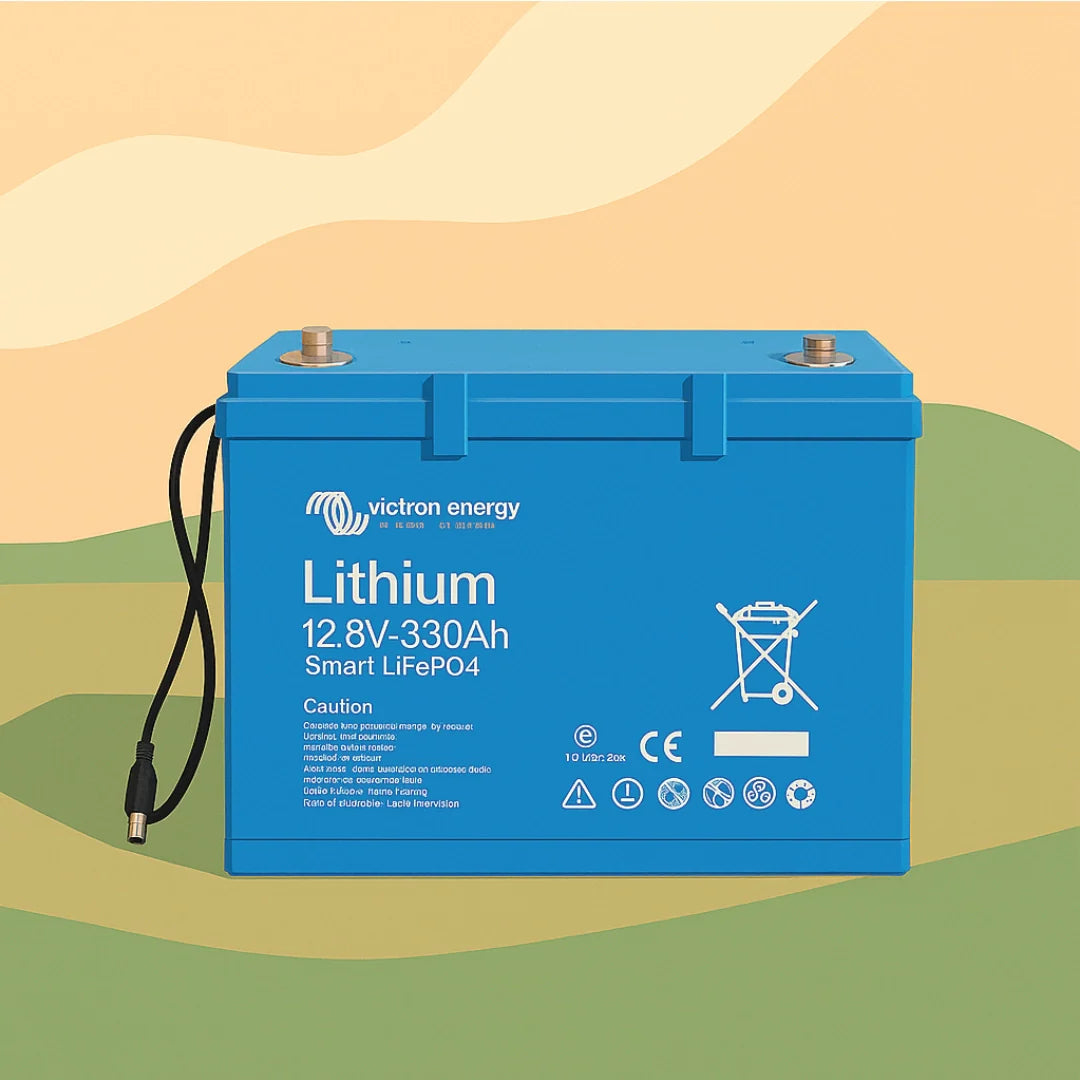
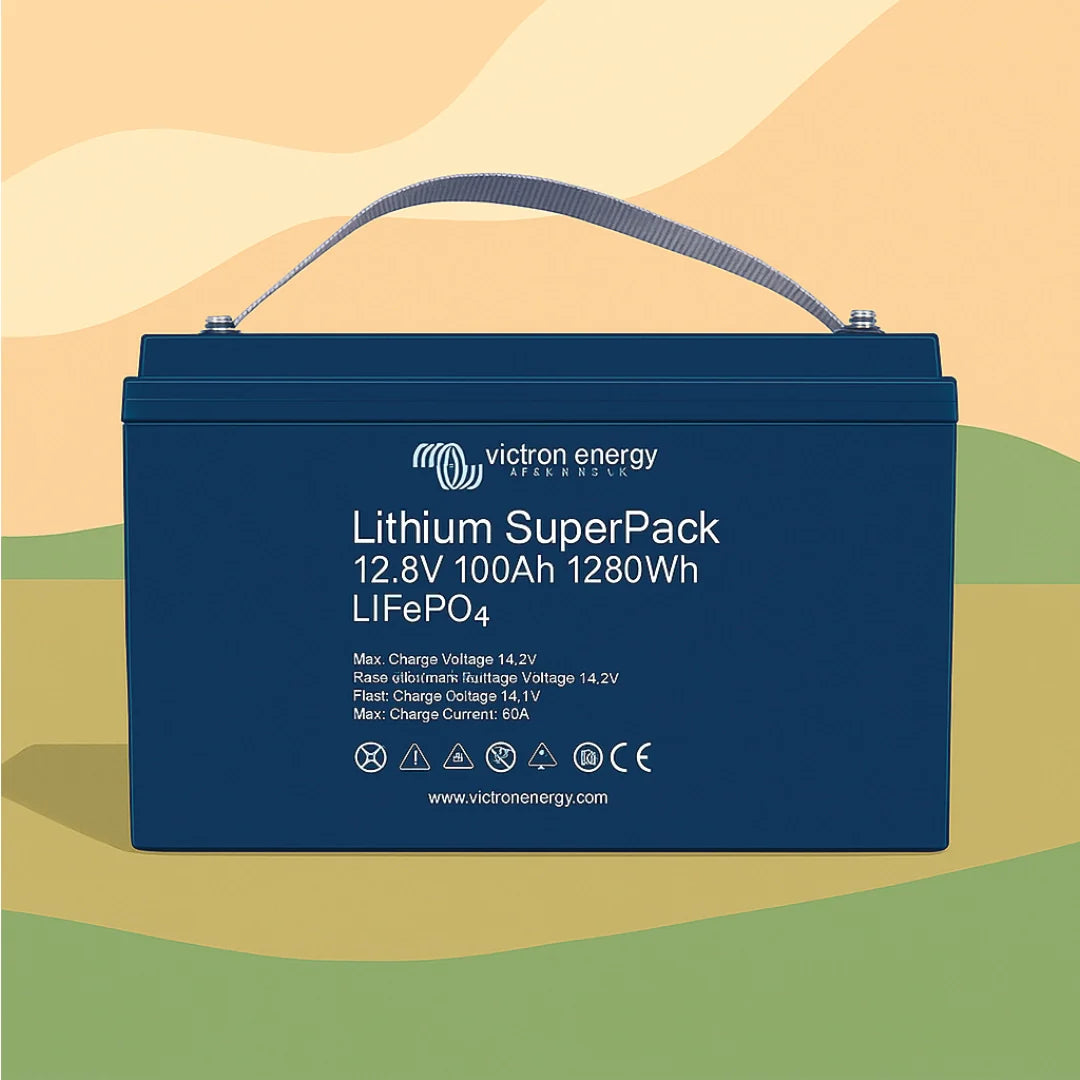
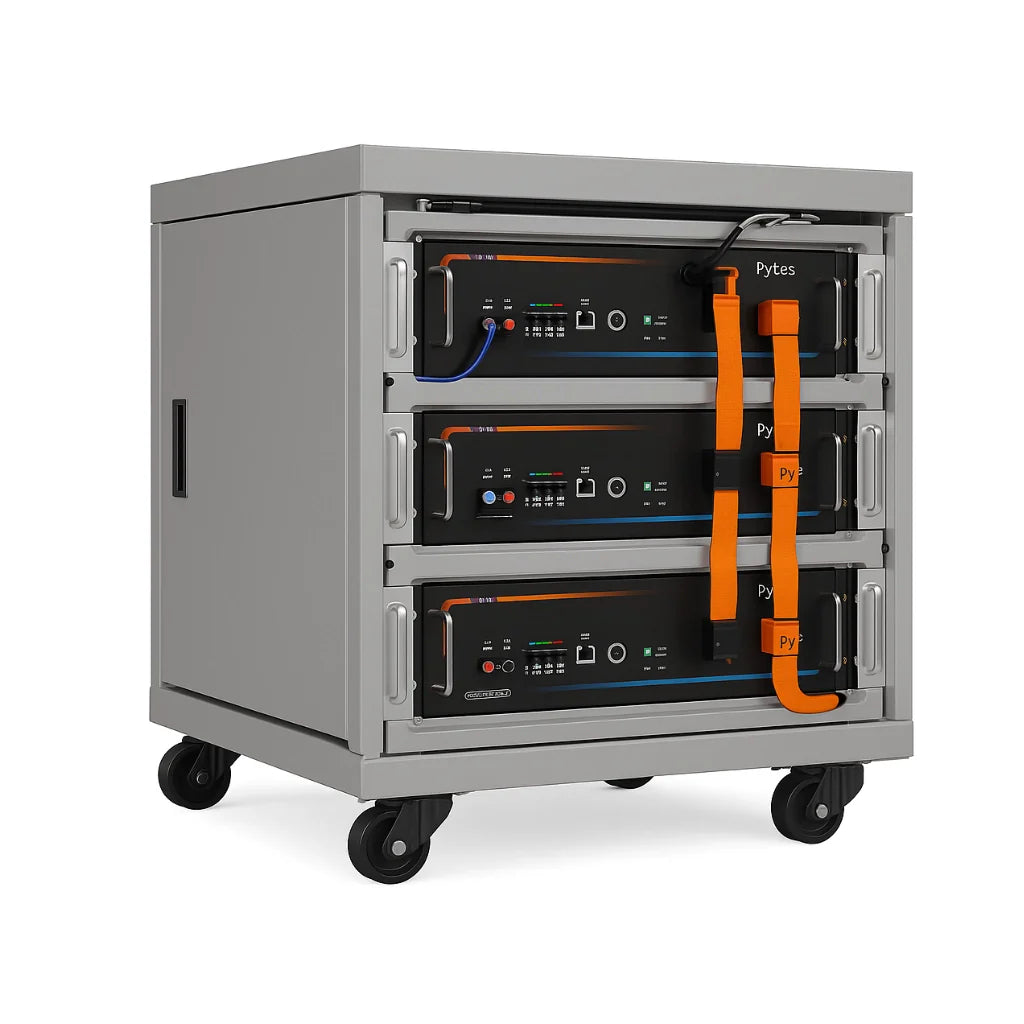
Sizing the battery: Your battery must store enough to cover daily use plus a buffer for cloudy days. The Skyenergi Core2 105Ah lithium leisure battery offers 105Ah (1344Wh) and includes a heat pad for cold-weather charging.
Flexible vs Rigid Solar Panels for Campervans: Trade-Offs That Matter
Flexible panels win on weight and roof profile. Rigid panels win on heat, lifespan and price per watt. Neither is universally better, and anyone telling you otherwise is selling something.
The honest trade-off list:
- Heat: flexible panels bonded flat to a roof cannot shed heat, and output falls as cell temperature climbs. Rigid panels sit on brackets with airflow underneath.
- Lifespan: a framed rigid panel with a 25-year output warranty is a known quantity. Flexible panels are more variable.
- Weight and height: flexible panels add almost nothing to roof height and shave kilograms, which matters on a low-profile conversion.
Is a 200W Solar Panel for Campervan Use Enough?
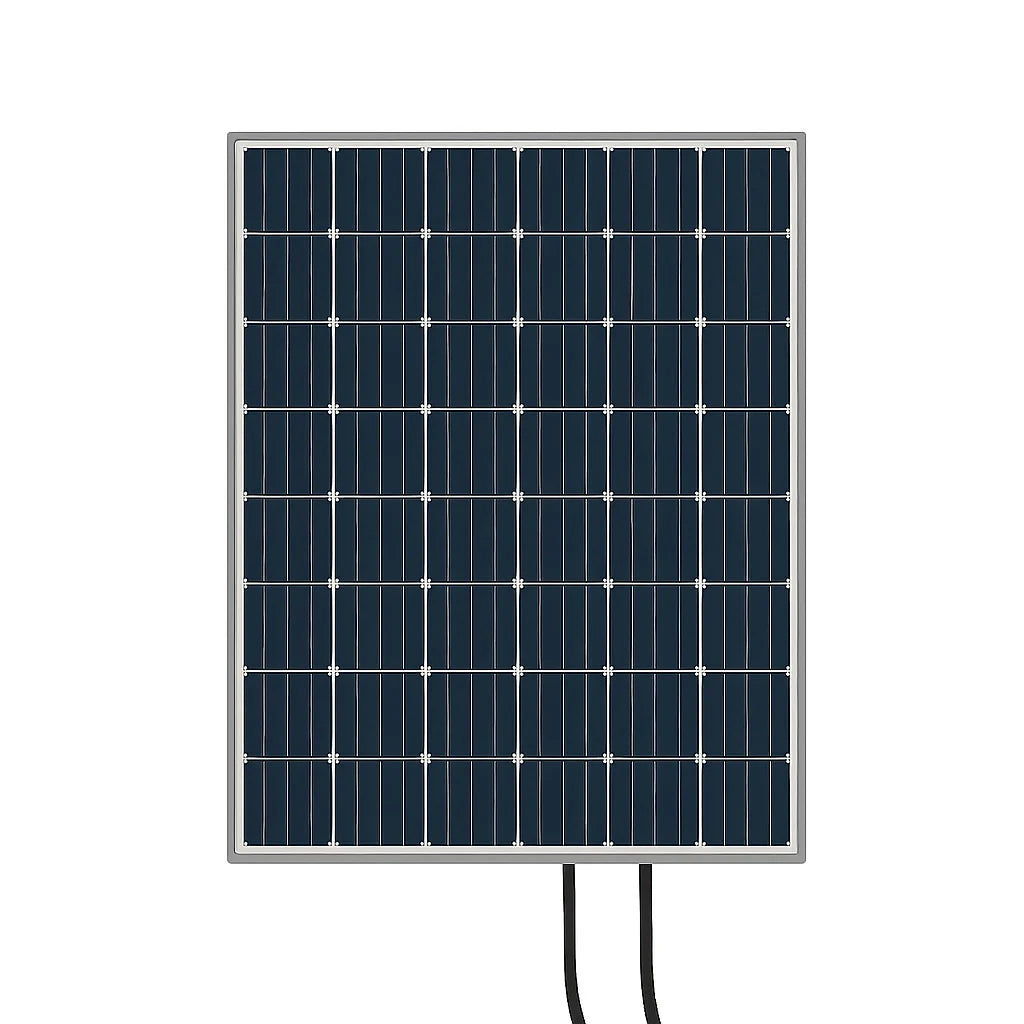
A 200W solar panel for campervan use is enough for a typical two-person setup running a compressor fridge, lights, pump and device charging, provided you are not running an inverter for mains appliances.
The number that matters is not 200W on the label. It is how many watt-hours that panel actually delivers on a grey day in October, which is often a fraction of the rated figure.
Practical guidance from our own builds:
- 200W: two people, compressor fridge, modest device charging, some driving to top up
- 300W+: family use, inverter loads, or winter touring
- Under 200W: maintenance charging and light weekend use only
SRNE MPPT Solar Charge Controller: Getting More From Every Panel
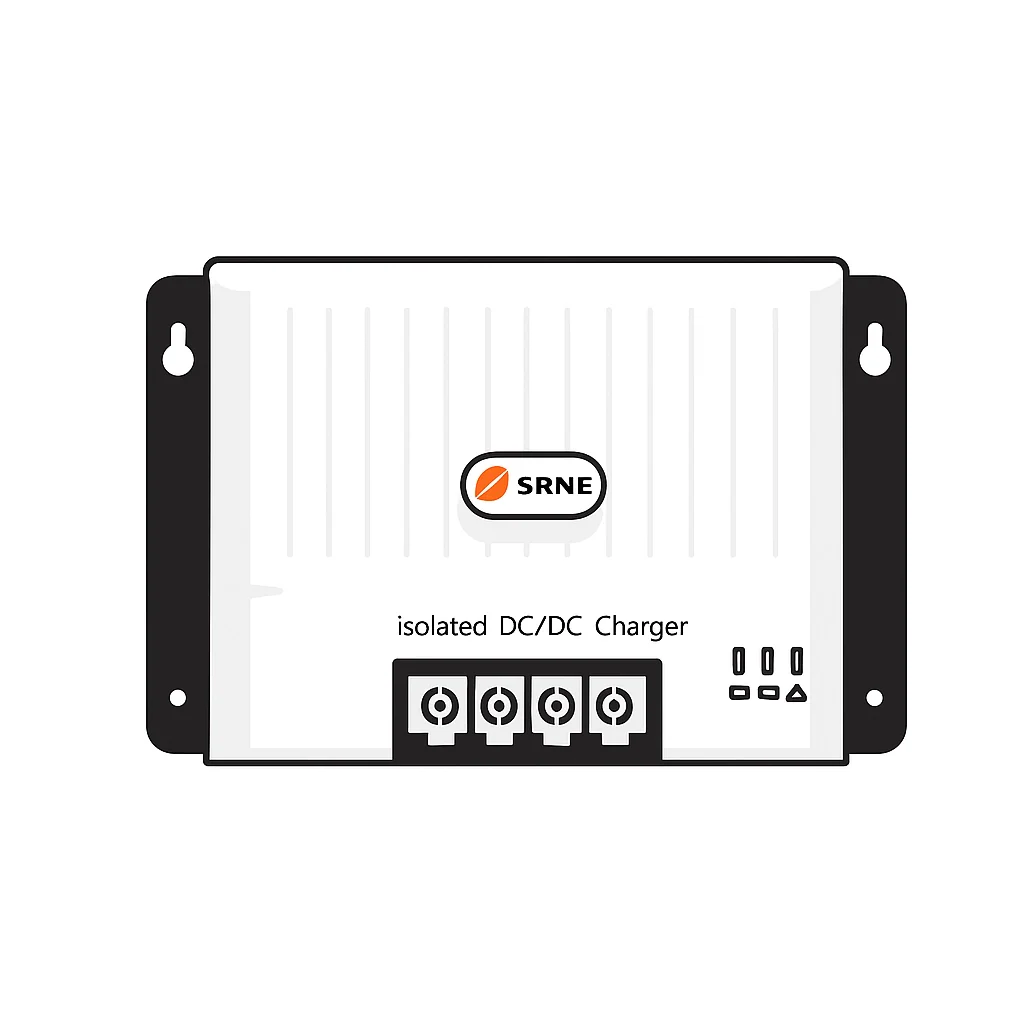
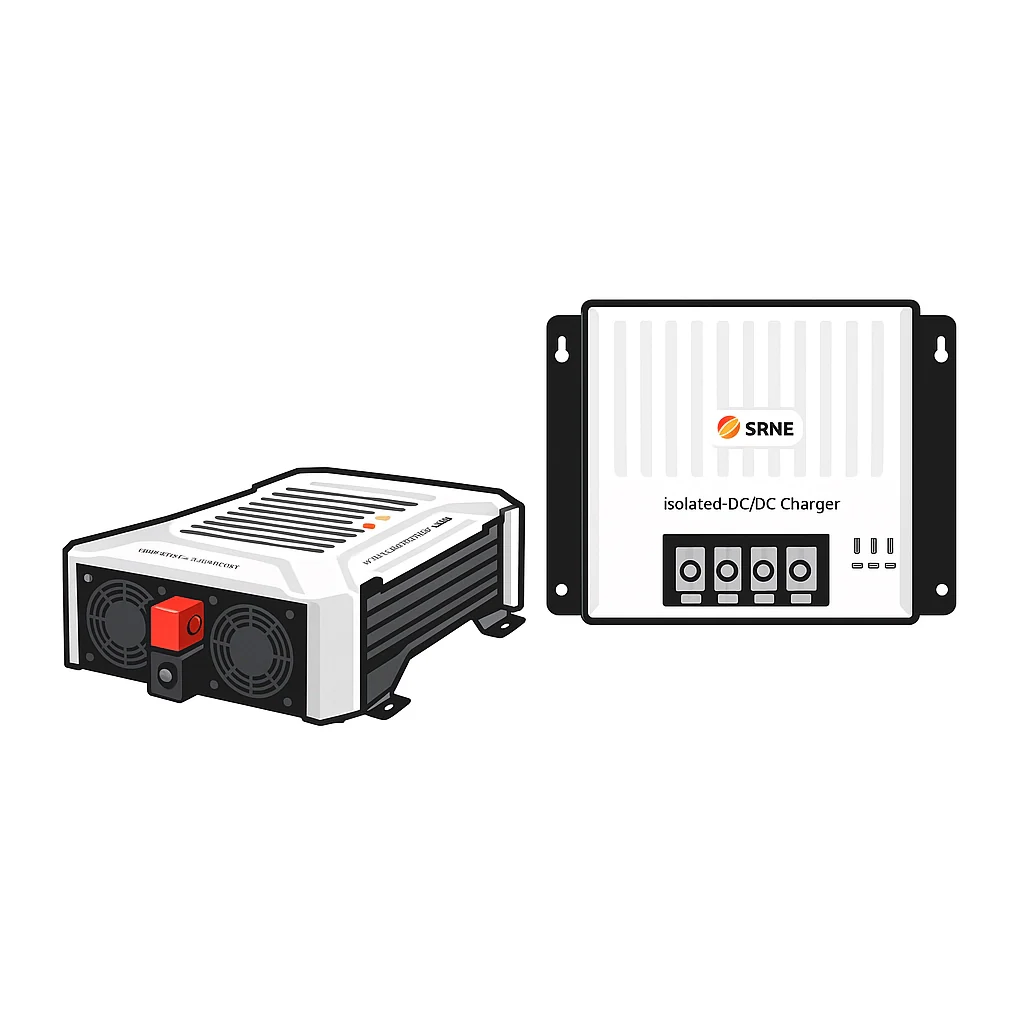
An SRNE MPPT solar charge controller is the component that decides how much of your panel's output actually reaches the battery. Maximum Power Point Tracking continuously adjusts the operating voltage to squeeze the most watts from the array, which matters most when light is patchy.
Victron 260 Watt Solar Panel & Victron Smart MPPT Charge Controller, Cable →
This is where cheap kits fall down. A PWM controller throws away the voltage difference between panel and battery; an MPPT controller converts it.
Portable vs Roof-Mounted Panels: Security, Storage and Deployment
Portable panels give you the sun; roof-mounted panels give you convenience. The decision usually comes down to where you park and how much you trust a campsite.
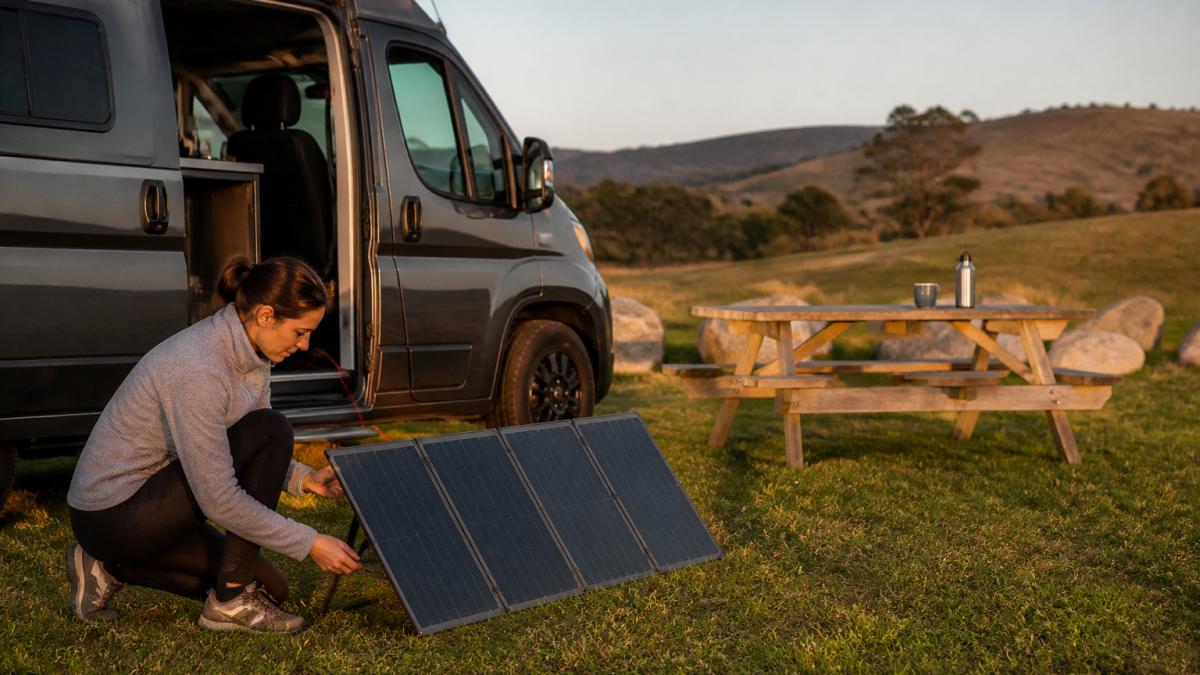
The practical differences:
- Deployment: a portable panel can be moved every hour to follow the sun. A roof panel is fixed, and flat-mounted roof panels are rarely at the ideal angle. For ground deployment, a folding panel with built-in stand legs lets you tilt it toward the sun; most have two angle settings. Expect to reposition 2-3 times a day for best yield.
- Shade: park under trees and a roof panel is useless. A portable panel on a long cable reaches the clearing. Use a 5-10 metre cable run; our pre-terminated solar cable can be cut to length.
- Security: a portable panel left out overnight is a theft risk. Chain it to the van’s wheel or chassis with a security cable, or bring it inside. Some folding panels have reinforced eyelets for this. Never leave it unattended at a public car park.
For roof installations, a watertight cable entry is not optional. Our solar panel entry gland bonds down without drilling and seals cables between 3mm and 7mm.

Matching Your Panel to a Lithium Leisure Battery and Power Station
Panel and battery have to be sized together. A large array charging a small battery wastes capacity; a small array charging a large bank leaves you chronically short.
A lithium leisure battery accepts charge faster and more efficiently than lead-acid, which changes the maths. It also holds usable capacity deeper, so a modest bank goes further.
If you also carry a portable power station, treat it as a separate system with its own solar input limits.
Verdict: Which Setup Suits Your Van Life
Here is how we would decide, based on how you actually travel.
| Setup | Panel Type | Controller | Battery | Best For |
|---|---|---|---|---|
| Weekend tourer | 130W rigid roof panel | Victron SmartSolar MPPT 75/15 | 100Ah lithium | Light use, hook-up backup |
| Two-person tourer | 200W folding or rigid | SRNE Shiner 2430 MPPT 30A | 105Ah lithium | Fridge, lights, devices |
| Off-grid long-stay | 260W+ array | SRNE or Victron MPPT 100/30 | 200Ah+ lithium | Inverter loads, winter use |
| Low-roof conversion | 200W semi-flexible | SRNE Shiner 2430 MPPT 30A | 105Ah lithium | Weight and height limits |
The pattern is consistent: spend on the controller and the battery before you spend on extra panel wattage. A well-matched 200W system with a proper MPPT controller and a lithium battery will outperform a badly matched 300W array every time.
For a complete kit that removes the guesswork, the Victron 260W panel and SmartSolar MPPT kit bundles panel, controller, cable, mounting and gland in one package.

Frequently Asked Questions
How many solar panels do I need for a campervan?
Start with your daily energy use in watt-hours, not panel count. Add up the appliances you run each day, then divide that figure by your realistic daily solar yield. A 200W panel can produce roughly 400-700Wh on a decent day, so a typical van with a compressor fridge, lights and device charging often suits 200-300W of panel capacity. If you work from the van or run an inverter regularly, plan for more. Pairing panels with an MPPT controller and a lithium leisure battery keeps the setup efficient.
Will a 200W solar panel run a 12V fridge?
A 200W solar panel for campervan use can comfortably support a modern 12V compressor fridge in summer, when the panel generates enough to cover the fridge's daily draw and top up the battery. In winter, shorter days and lower sun angles cut output significantly, so the fridge may rely partly on stored battery capacity. Insulating the fridge compartment and parking in direct sun help. If the fridge is your main load, size the panel and battery together rather than treating the panel alone as the answer.
Do I need an MPPT charge controller for a portable solar panel?
An MPPT controller harvests more energy than a basic PWM unit, especially in cloudy or changeable conditions where panel voltage fluctuates. For campervan systems charging a lithium leisure battery, an MPPT controller is the sensible choice. The Victron SmartSolar units track the panel's maximum power point and apply a suitable charging profile. Check the controller's maximum PV voltage and current against your panel's ratings before buying.
Can a portable solar panel charge a lithium leisure battery?
Yes, provided the charge controller is set to a lithium profile. LiFePO4 batteries accept charge efficiently and tolerate partial states of charge well, which suits solar's variable output. Set the controller's absorption and float voltages to the battery maker's specification, and use the controller's temperature compensation where supported. A portable panel feeding a controller and then a lithium battery is a common van life setup, and it works best when the panel's wattage roughly matches your daily consumption.
What are the disadvantages of flexible solar panels?
Flexible panels are light and follow curved roofs, but they run hotter because they lack an air gap behind them, and heat reduces output. They are also harder to replace individually and can trap moisture if bonded poorly. For a portable setup you move and angle by hand, a rigid-framed folding panel usually lasts longer and performs better in high temperatures. Choose flexible panels when roof curvature and weight matter more than peak yield, and mount them with care.
Getting the panel, controller and battery to work as one system is the difference between a van that runs itself and one that needs a hook-up every second night. Skyenergi supplies SRNE and Victron charging equipment alongside lithium leisure batteries, solar panels and the 12V accessories that tie an installation together, with UK-based support and fast delivery. Get started with Skyenergi and build a solar setup sized to how you actually travel.

Prev post

How to Troubleshoot Common 12V Electrical Issues in Motorhomes
Updated on 25 October 2026
Next post

Fogstar vs EcoTree Lithium Batteries: A 2026 Comparison
Updated on 23 October 2026


