





Fogstar Battery Alternative for Campervans: Skyenergi Picks
Looking for a Fogstar battery alternative for campervans? Explore Skyenergi Edge and Elite lithium leisure batteries with SRNE charging systems.
Table of Contents
- Why Campervan Owners Look for a Fogstar Battery Alternative
- Skyenergi Edge and Elite: The Fogstar Battery Alternative Range
- Choosing the Best Lithium Leisure Battery for Motorhomes
- SRNE Lithium Battery Performance in Off-Grid Setups
- Campervan Electrical System Design: Charging, Solar and Fitment
- Cold Weather, Safety Standards and Real-World Discharge Curves
- Frequently Asked Questions
Last Updated: September 16, 2026
Why Campervan Owners Look for a Fogstar Battery Alternative
A Fogstar battery alternative for campervans usually comes down to one question: can you get the same lithium iron phosphate performance, capacity and cycle life without paying a premium brand's price tag. Skyenergi builds its Edge and Elite ranges around exactly that premise, pairing Grade A EVE cells with JBD battery management systems at prices that undercut the premium tier.
The shift is already visible in how people build. According to Skyenergi's 2026 guide to campervan power alternatives, the Edge range delivers 3,000 to 5,000 full discharge cycles at 80% depth of discharge, while the Elite range is rated for 5,000 to 7,000 cycles. That is a decade of daily cycling for most van life electrical loads.
So why do owners start looking elsewhere in the first place? Three reasons dominate: price, availability, and whether the battery fits the space they actually have.
Skyenergi Edge and Elite: The Fogstar Battery Alternative Range
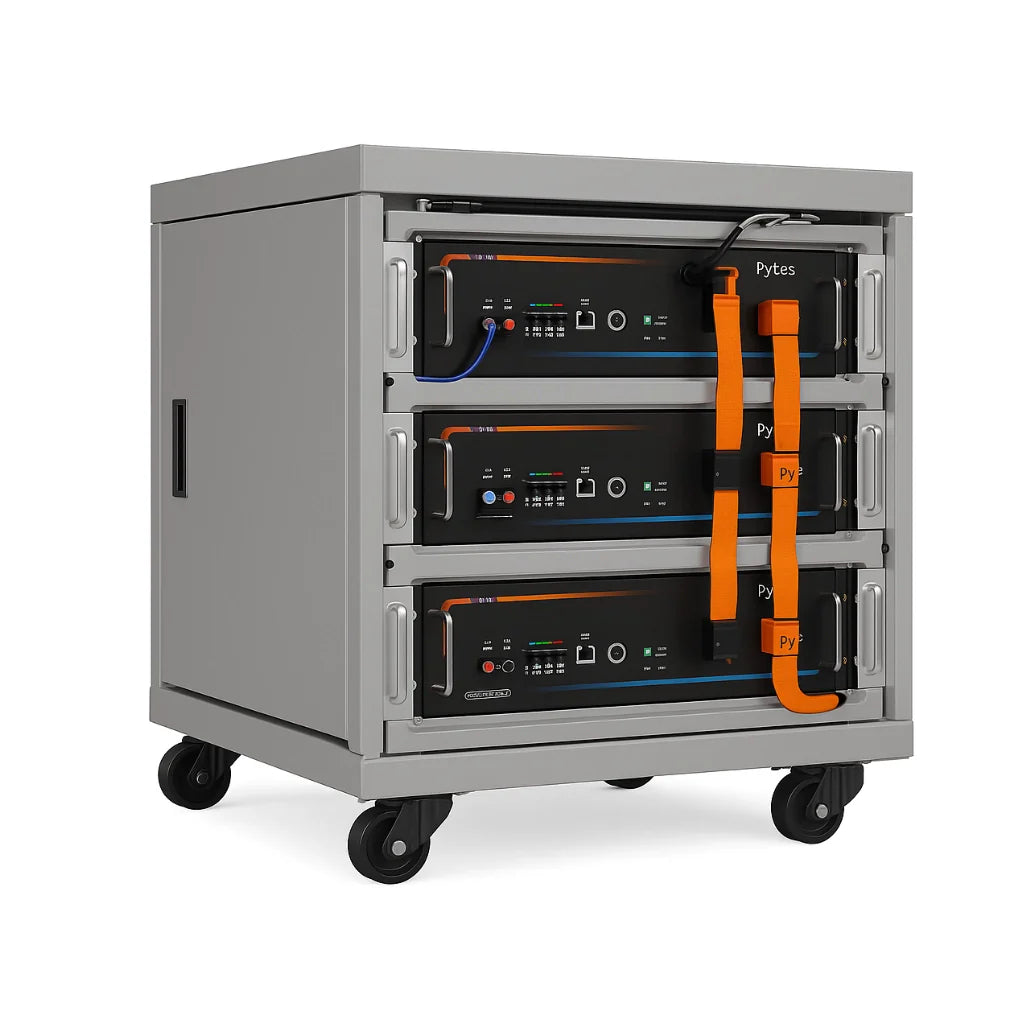
Skyenergi's range splits into two clear tiers. The Edge is the no-frills option, built around a JBD battery management system and EVE lithium cells in a rugged IP65 or IP67 housing. The Elite adds heat pad technology and Victron CAN-bus integration for systems that need it.
| Model | Capacity | BMS | Best For | Price |
|---|---|---|---|---|
| Edge 100Ah | 100Ah | 100A JBD | Small conversions, tight spaces | £219 |
| Edge 280Ah | 280Ah | 280A JBD | Mid-size off-grid builds | £445 |
| Core2 230Ah | 230Ah | 200A JBD | Bluetooth monitoring, cold climates | £527 |
| Elite 304Ah | 304Ah | 250A JBD | Victron-integrated systems | £745 |
| Elite 560Ah | 560Ah | 300A JBD | High-demand off-grid autonomy | £975 |
Skyenergi Edge 100Ah and 280Ah: No-Frills Lithium Power
The Edge range strips out Bluetooth and heat pads to keep the price down, and that is the point. The 100Ah unit at £219 suits compact builds where a lead-acid replacement is the goal and space is tight.

The 280Ah version at £445 uses a 280A JBD BMS, which is a genuinely high continuous discharge rating for the money. Where it falls short: no built-in monitoring, so pair it with a Victron SmartShunt if you want real-time state of charge data.
Skyenergi Elite 304Ah and 560Ah: Smart Victron Integration
For anyone already running Victron gear, the Elite is the obvious pick. Plug-and-play integration with a Cerbo GX means the battery reports directly into your existing monitoring, no separate shunt required.
The 304Ah (£745) and 560Ah (£975) both carry heat pad technology, which matters more than most buyers realise. Lithium iron phosphate cells should not be charged below freezing, and a heat pad keeps the battery within safe charging temperature on a cold morning. The 560Ah unit's 300A BMS supports serious inverter loads without throttling.
Skyenergi Core2 230Ah: Bluetooth and Heat Pad Control
The Core2 230Ah (£527) sits between the two ranges and is arguably the sweet spot for most campervan conversions. It combines a 200A JBD BMS with heat pad technology and Bluetooth monitoring through the SkyEnergi app.
Real-time data covers state of charge, voltage, current, temperature and individual cell voltages. The app also handles charge and discharge switch control and multiple battery monitoring. It suits inverters rated up to 2,000W, which covers most campervan appliance loads.
Choosing the Best Lithium Leisure Battery for Motorhomes
The best lithium leisure battery for motorhomes is the one that matches your daily energy load, your charging capacity and your available space, not the one with the biggest number on the label. Capacity in ampere-hours only tells part of the story.
Work backwards from consumption. Add up your daily watt-hours, divide by your system voltage, then add a buffer for depth of discharge and cold weather derating. A 230Ah battery gives roughly 2,760Wh nominal, and at 80% depth of discharge that is about 2,200Wh of usable energy.
- Fridge: 40-60Ah per day in warm weather
- Diesel heater: 15-30Ah per day in winter
- Laptop and phone charging: 10-20Ah per day
- Lighting and water pump: 5-10Ah per day
SRNE Lithium Battery Performance in Off-Grid Setups
SRNE lithium battery performance in off-grid setups hinges on how well the charging and monitoring hardware talks to the battery. SRNE's MPPT solar charge controllers and inverter chargers are widely used alongside lithium banks because they support configurable charge profiles rather than fixed lead-acid algorithms. But the real-world performance depends on matching the controller's settings to the battery's BMS.
Skyenergi Edge 100Ah Lithium Leisure →
The practical difference is charge acceptance. Lithium iron phosphate batteries absorb current far faster than AGM or gel, so a controller that cannot deliver a high, stable charge voltage wastes solar yield. Configurable absorption and float settings let you set the correct profile for LiFePO₄ rather than accepting a generic default. For example, a typical LiFePO₄ profile might use 14.2V absorption and 13.5V float for a 12V system, but the exact figures should come from the battery manufacturer. SRNE controllers allow you to adjust these values, which is essential for getting the most out of your solar array. Precision in these electrical parameters remains just as critical when upgrading lithium batteries for high-performance electric vehicles to ensure longevity and safety.
What most guides miss is that the controller and the battery management system need to agree on cut-off thresholds. If the BMS disconnects on over-voltage while the controller is still pushing current, you get nuisance shutdowns. Matching the two is a ten-minute job that prevents months of frustration. SRNE controllers can be set to stop charging at a voltage slightly below the BMS cut-off, ensuring a smooth handover. Similarly, the discharge cut-off should be coordinated so the inverter shuts down before the BMS disconnects, avoiding sudden power loss.
Another integration point is monitoring. SRNE inverter chargers often include a display or app that shows solar input, load output and battery voltage. Pairing them with a Skyenergi battery that has Bluetooth monitoring, like the Core2 230Ah, gives you two layers of data: the controller shows system-level performance, while the battery app shows cell-level detail. That combination is invaluable for diagnosing issues and optimising your setup.
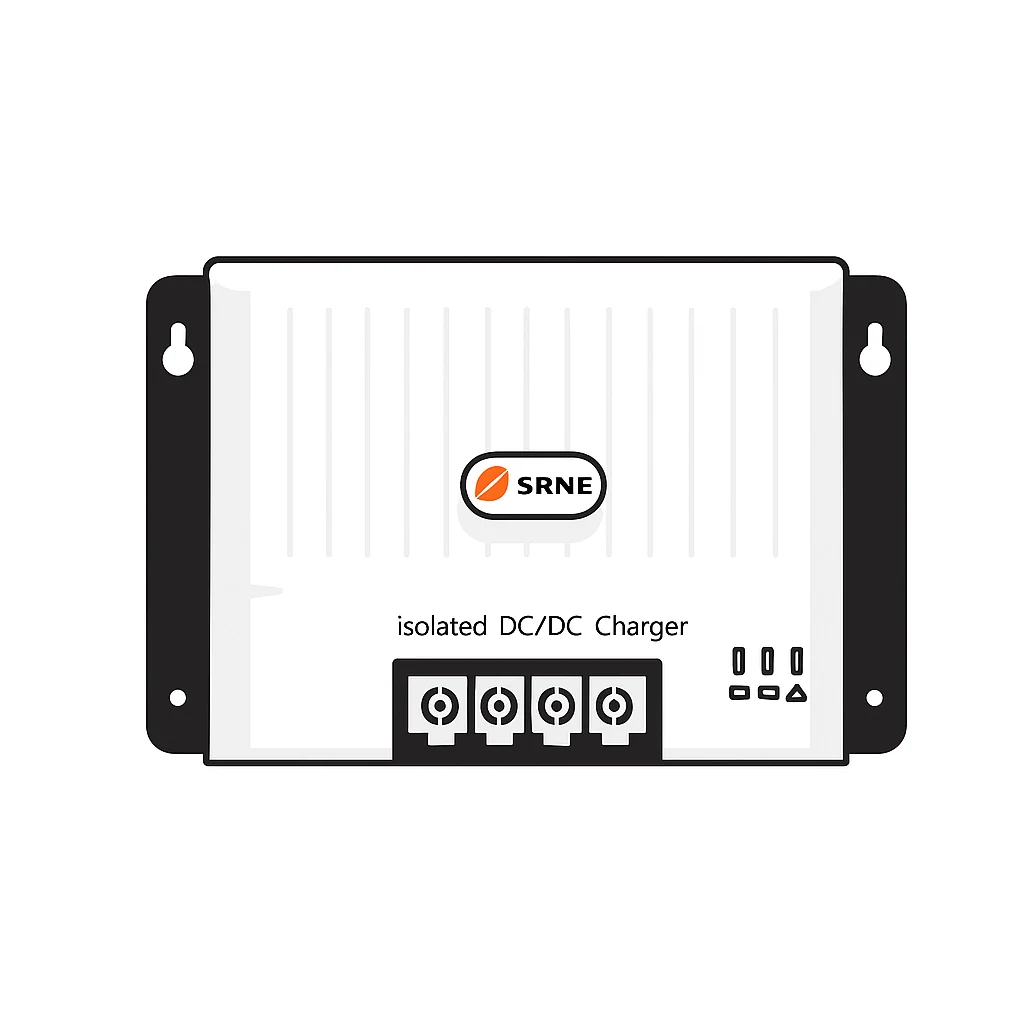
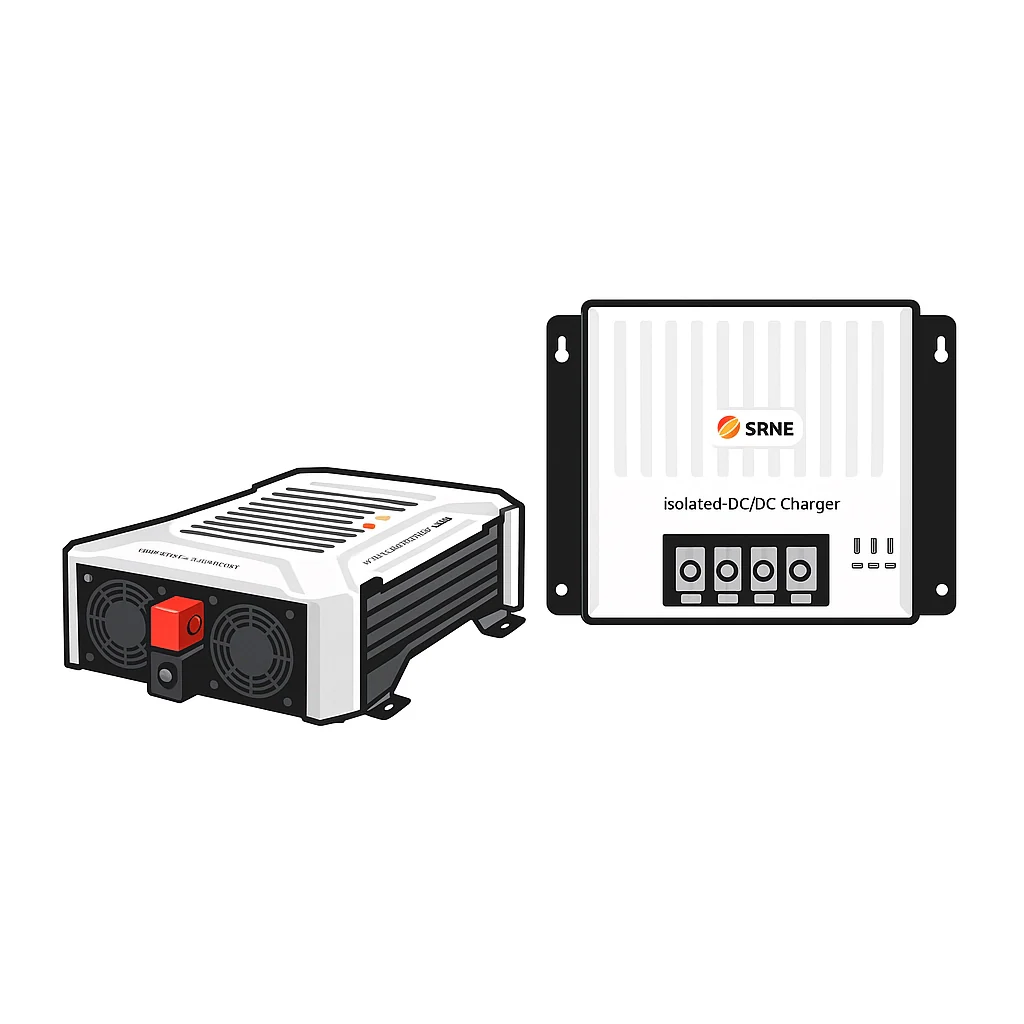
For those building a system from scratch, SRNE and Skyenergi products are designed to work together. Skyenergi supplies SRNE MPPT controllers, DC-to-DC chargers and inverter chargers. This means the charge profile and the BMS are pre-configured to agree from day one, removing the guesswork and reducing the risk of compatibility issues.
Campervan Electrical System Design: Charging, Solar and Fitment
Campervan electrical system design starts with three questions: how much energy do you use, how will you replace it, and where does the hardware physically go. Get the order wrong and you end up rebuilding the installation.
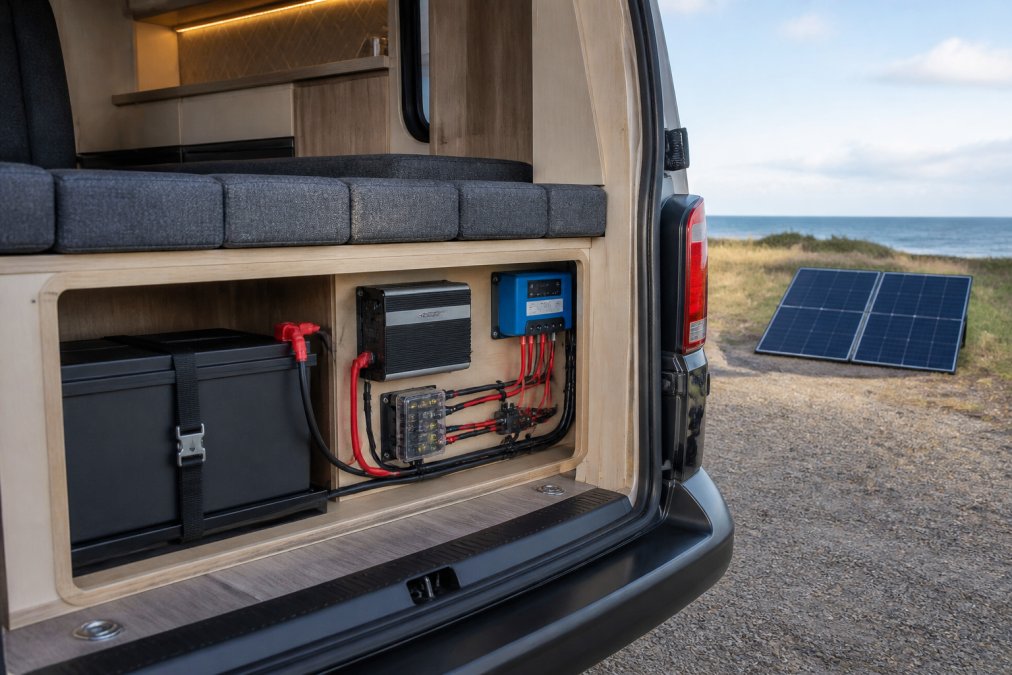
A typical setup combines solar through an MPPT controller, a DC-to-DC charger for alternator charging while driving, and a mains charger for hookup. The battery sits at the centre of all three. Series and parallel connection options let you scale capacity, though parallel strings need matched cable lengths to avoid uneven current sharing.
Fitment catches more people out than wiring.
Cold Weather, Safety Standards and Real-World Discharge Curves
Cold weather is where cheap lithium systems fall apart. Charging LiFePO₄ below 0°C causes lithium plating, which permanently reduces capacity and can lead to internal short circuits. Most budget batteries simply refuse to charge below freezing, leaving you stranded on a winter morning. Heat pad technology, standard on the Skyenergi Elite and Core2 ranges, solves this by warming the cells to a safe temperature before charge current is accepted.
Frequently Asked Questions
How do Skyenergi batteries compare to other lithium brands?
Skyenergi builds its Edge and Elite ranges around JBD battery management systems and Grade A EVE lithium cells. The Elite models add heat pad technology and plug-and-play Victron integration, so the choice comes down to whether you need cold-weather charging and CAN bus monitoring.
What should I look for when choosing a lithium battery for a van conversion?
Start with usable capacity in watt-hours rather than headline ampere-hours, then check the BMS continuous current rating against your inverter and appliance load. Confirm the physical dimensions fit your battery locker, and check the housing IP rating if the battery sits near a door or vents. If you camp through winter, heat pad technology matters because LiFePO4 cells should not be charged below freezing.
Are SRNE-based lithium batteries better for off-grid power?
SRNE charging and monitoring equipment pairs well with lithium leisure batteries because it supports configurable charge profiles and remote system visibility. In an off-grid campervan, that combination lets you set absorption and float voltages to match the battery's specification, monitor state of charge, and spot voltage drop before it affects your fridge or inverter.
Can I replace my motorhome leisure battery with a lithium battery?
In most cases yes, but the charging side usually needs attention. Lithium iron phosphate batteries accept higher charge currents and want different voltage setpoints than lead-acid, so check your solar charge controller and DC-to-DC charger can be set to a lithium profile. Also confirm your existing cabling and fuse ratings suit the new battery's peak discharge current.
How do I safely install a lithium battery in a campervan?
Mount the battery securely so it cannot shift while driving, keep terminals covered, and fit a fuse close to the positive terminal. Use cable sized for the BMS continuous rating, and torque terminal bolts to the manufacturer's figure to avoid resistance and heating. Ventilation matters if the battery sits in a sealed compartment.
Prev post

7 Steps to Install a Battery to Battery Charger
Updated on 17 September 2026
Next post

MPPT vs PWM Solar Charge Controller for Campervan
Updated on 16 September 2026


