





Best Lithium Battery for Motorhome 2026
Best lithium battery for motorhome 2026: Compare top lithium batteries for motorhomes in 2026. Explore LiFePO4 technology, capacity options, and.
Table of Contents
- Why Lithium Batteries Outperform Traditional Options for Motorhomes
- Lithium Battery vs AGM for Motorhomes: What You Need to Know
- LiFePO4 Leisure Battery Benefits: Capacity, Weight and Cycle Life
- Top Lithium Battery Options for Motorhomes: Skyenergi and SRNE Solutions
- How to Install a Lithium Leisure Battery: Key Wiring and BMS Considerations
- SRNE MPPT Solar Controller Compatibility with Lithium Systems
- Choosing the Right Capacity: Amp-Hours and Usable Power
- Conclusion: Your Path to Off-Grid Independence
Last Updated: August 27, 2026
Why Lithium Batteries Outperform Traditional Options for Motorhomes
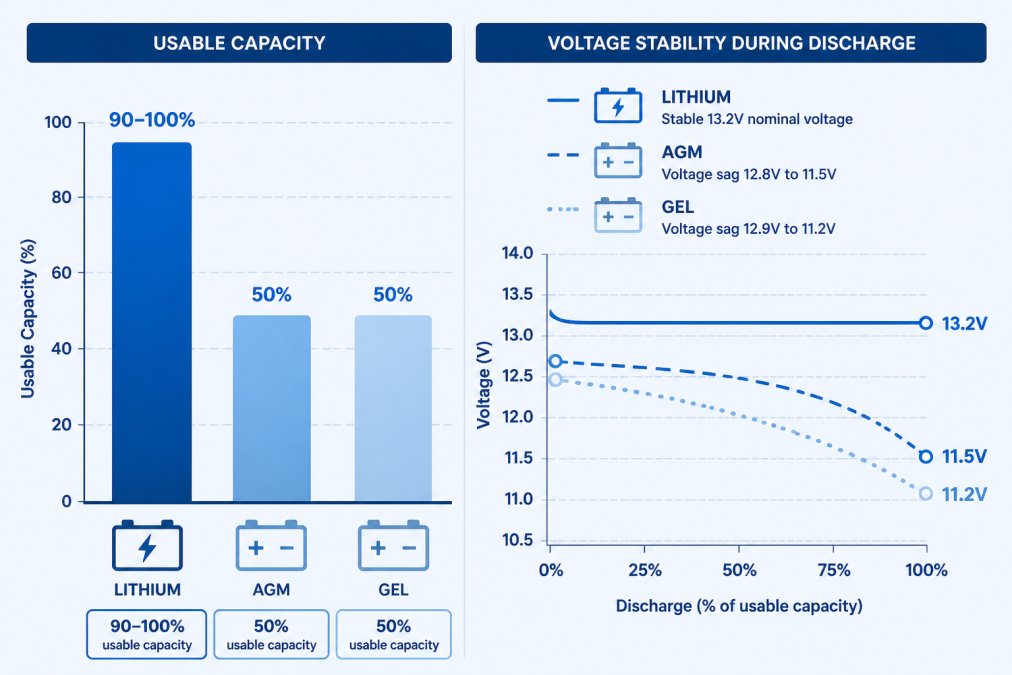
Lithium Iron Phosphate (LiFePO4) leisure batteries have fundamentally changed what's possible for motorhome owners seeking reliable off-grid power. A 100Ah lithium battery weighs approximately 10-12kg, while an equivalent lead-acid unit weighs 25-30kg, a payload saving of 15-18kg per battery. More importantly, lithium delivers 90-100% usable capacity compared to lead-acid's 50%, meaning you get twice the usable power from the same amp-hour rating.
According to Mordor Intelligence's UK battery market analysis, the battery storage market reached £6.45 billion in 2024 and is projected to hit £15.24 billion by 2032, growing at 11.42% annually. This guide from Skyenergi covers everything you need to know about selecting the best lithium battery for your motorhome, including capacity sizing and integration with solar setups. Below, you'll find our top recommendations from Skyenergi and SRNE.
Lithium Battery vs AGM for Motorhomes: What You Need to Know
The choice between lithium and AGM (Absorbent Glass Mat) batteries comes down to how you use your motorhome and what trade-offs you're willing to make. Lithium (LiFePO4) offers superior performance across nearly every metric, but AGM remains viable for specific use cases where cost matters more than capacity.
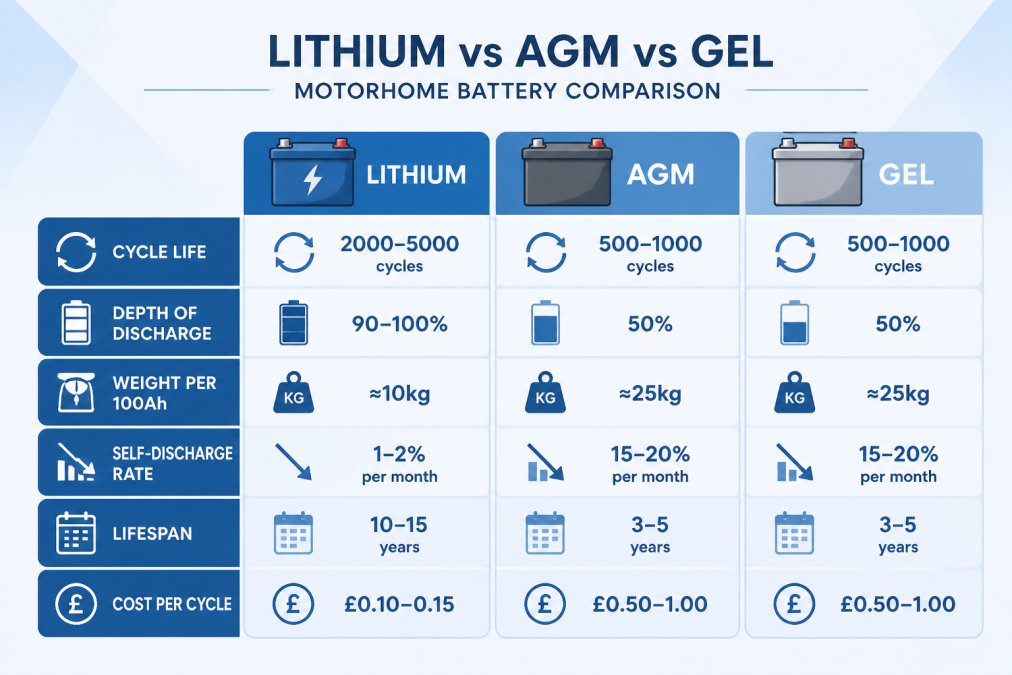
LiFePO4 lithium batteries deliver up to 90-100% usable capacity, whereas AGM batteries should only be discharged to around 50% to prevent damage. A 200Ah AGM battery gives you roughly 100Ah of usable power, while a 200Ah lithium provides 180-200Ah. Lithium cycle life is 2,000-5,000 cycles (10-15 years), compared to AGM's 500-1,000 cycles (3-5 years).
Modern Skyenergi batteries integrate heat-pad technology that enables safe charging even in freezing conditions. Cost per cycle reveals the true economics: a lithium battery costs roughly £0.20 per usable cycle, while AGM costs £0.80 per cycle, four times more expensive over its lifespan.
LiFePO4 Leisure Battery Benefits: Capacity, Weight and Cycle Life
LiFePO4 chemistry has become the industry standard for leisure batteries because it solves the real problems that plague older technologies.
Usable Capacity and Depth of Discharge
Lead-acid and AGM batteries degrade rapidly if discharged below 50% state of charge. Lithium (LiFePO4) batteries safely discharge to 10-20% without damage. A 230Ah lithium battery gives you 200+Ah of usable power, while a 230Ah AGM battery gives you roughly 115Ah, twice the usable energy from the same footprint.
Weight Savings and Payload Impact
A 100Ah lithium battery weighs 10-12kg compared to 25-30kg for an equivalent AGM unit. Skyenergi's Core2 230Ah battery weighs approximately 23kg, compared to 55-60kg for an equivalent AGM unit. Installation becomes easier as lighter batteries require less robust mounting infrastructure.
Cycle Life and Long-Term Reliability
Lithium (LiFePO4) batteries deliver 2,000-5,000 charge cycles depending on depth of discharge and operating conditions. A motorhome owner who charges their battery daily can expect 5-15 years of reliable service, compared to 3-5 years for traditional lead-acid or AGM batteries.
Maintenance-Free Operation
Lead-acid batteries require periodic equalization, water top-ups, and terminal cleaning. Lithium batteries require none of this. You install it, monitor it via Bluetooth, and it works.
Top Lithium Battery Options for Motorhomes: Skyenergi and SRNE Solutions
When selecting a best lithium battery for motorhome use, you're choosing between batteries optimized for specific energy management ecosystems (like Victron) and universal batteries that integrate with any charging system. Skyenergi and SRNE dominate the UK market because they understand motorhome-specific requirements and deliver products designed for real off-grid scenarios.
Skyenergi Core2 Range: Versatile Power for Every Setup
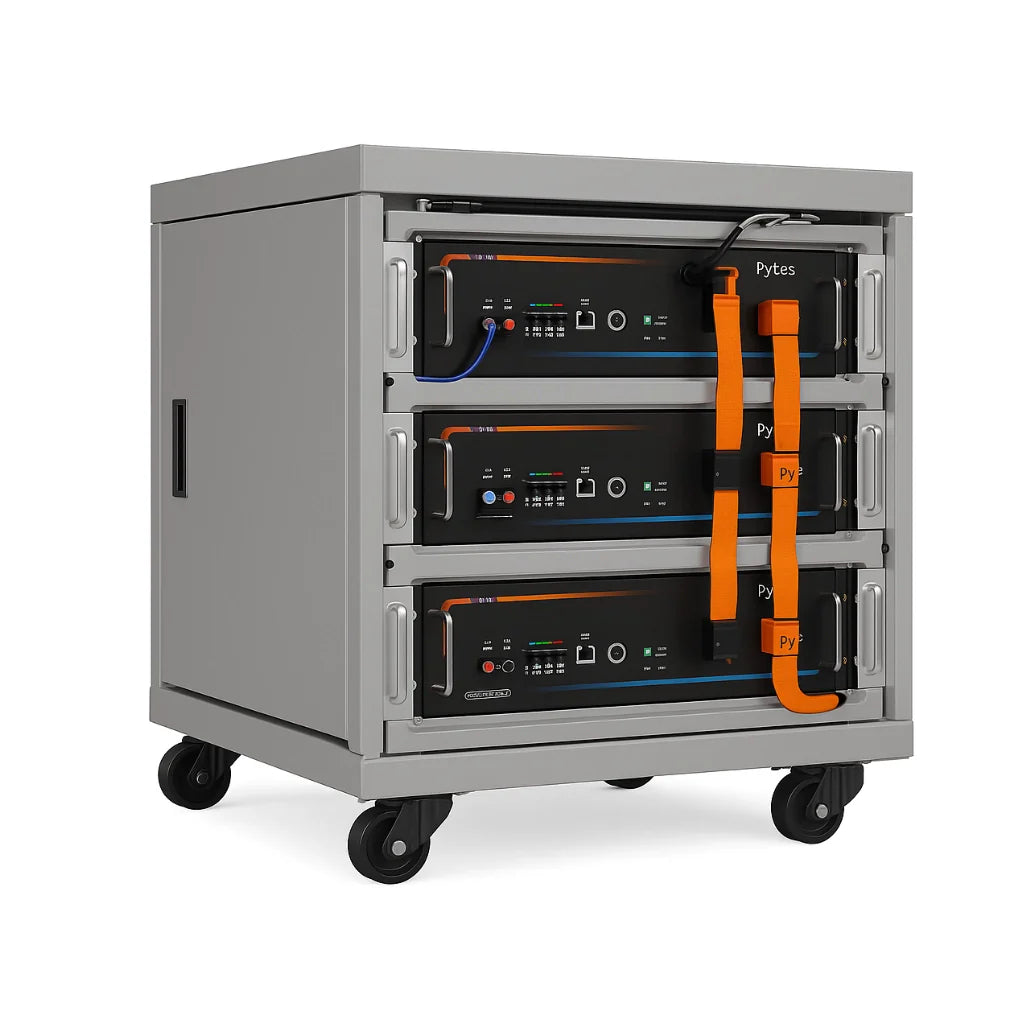
The Skyenergi Core2 series represents a comprehensive lithium leisure battery line. These batteries ship with integrated heat-pad technology, Bluetooth monitoring via the Skyenergi app, and JBD Battery Management Systems rated to 250A-300A depending on capacity. The Core2 range spans 105Ah to 680Ah, meaning you can match capacity precisely to your motorhome's power requirements.
Skyenergi Core2 230Ah
This is the sweet spot for most motorhome owners. A 230Ah lithium battery delivers approximately 2,944Wh of usable energy, enough to run a 12V fridge, LED lighting, water pump, and USB charging for 2-3 days without solar input. The 200A BMS handles moderate inverter loads up to 2kW. Weight is approximately 23kg. The Bluetooth monitoring app provides real-time state of charge, voltage, current draw, and temperature. The integrated heat pad enables charging in sub-zero temperatures.
Best for: Weekend campers and couples doing extended trips with moderate power consumption.
Skyenergi Core2 460Ah
Double the capacity of the 230Ah model. A 460Ah lithium battery delivers approximately 5,888Wh usable energy and supports inverter loads up to 3kW. The 300A BMS handles higher discharge currents, making this suitable for motorhomes running multiple high-draw appliances simultaneously.
Best for: Larger motorhomes, full-time travelers, or anyone running power-hungry appliances regularly.

The flagship Core2 model delivers approximately 8,704Wh of usable energy. The 300A BMS supports full-size inverter loads up to 3kW continuously. This is the option for motorhomes equipped with heating systems, multiple inverters, or extended off-grid expeditions.
Best for: Full-time motorhome living, expedition vehicles, or motorhomes with significant heating/cooling loads.
Skyenergi Elite: Premium Victron Integration
The Skyenergi Elite range is purpose-built for motorhome owners already using Victron energy management systems. The Elite batteries feature CAN-Bus integration that allows plug-and-play connectivity with Victron hardware.
Skyenergi Elite 304Ah
CAN-Bus integration means your Victron Cerbo GX automatically communicates with the battery, adjusting charging parameters in real time based on actual battery state. If you're already invested in Victron infrastructure, this battery justifies itself immediately through simplified system integration.
Best for: Motorhome owners with existing Victron systems who want seamless integration.
Skyenergi Elite 560Ah
Premium capacity with Victron integration. The 560Ah Elite delivers approximately 7,168Wh usable energy and supports 3kW inverter loads. CAN-Bus integration means your entire energy system communicates intelligently, with solar charge controllers, DC-to-DC chargers, inverters, and battery all coordinating to maximize efficiency.
Best for: Serious Victron users with complex energy management setups who prioritize system integration.
Skyenergi Edge: Affordable Reliability
The Skyenergi Edge is the no-nonsense option. It delivers proven LiFePO4 performance without Bluetooth monitoring or heat-pad technology. The 100A JBD BMS is rated for reliable operation in standard temperature ranges.
Skyenergi Edge 100Ah
The Edge 100Ah delivers lithium performance: 90-100% usable capacity, 2,000+ cycle life, and maintenance-free operation. In cold climates, the battery cannot be charged below 0°C without external heating.
Best for: Budget-conscious motorhome owners, seasonal campers, or anyone who doesn't need real-time battery monitoring.
| Battery | Capacity | Best For | Standout Feature |
|---|---|---|---|
| Skyenergi Edge 100Ah | 100Ah | Budget buyers | Lowest entry price for lithium |
| Skyenergi Core2 230Ah | 230Ah | Most motorhome owners | Bluetooth monitoring + heat pad |
| Skyenergi Core2 460Ah | 460Ah | Power-hungry setups | Supports 3kW inverter loads |
| Skyenergi Elite 304Ah | 304Ah | Victron users | CAN-Bus integration |
| Skyenergi Elite 560Ah | 560Ah | Premium Victron setups | Seamless system integration |
How to Install a Lithium Leisure Battery: Key Wiring and BMS Considerations
Installing a lithium leisure battery correctly is non-negotiable. Unlike lead-acid batteries, which tolerate sloppy wiring and marginal charging systems, lithium requires a specific ecosystem of compatible chargers, solar controllers, and fusing.
The Critical Difference: Charging System Compatibility
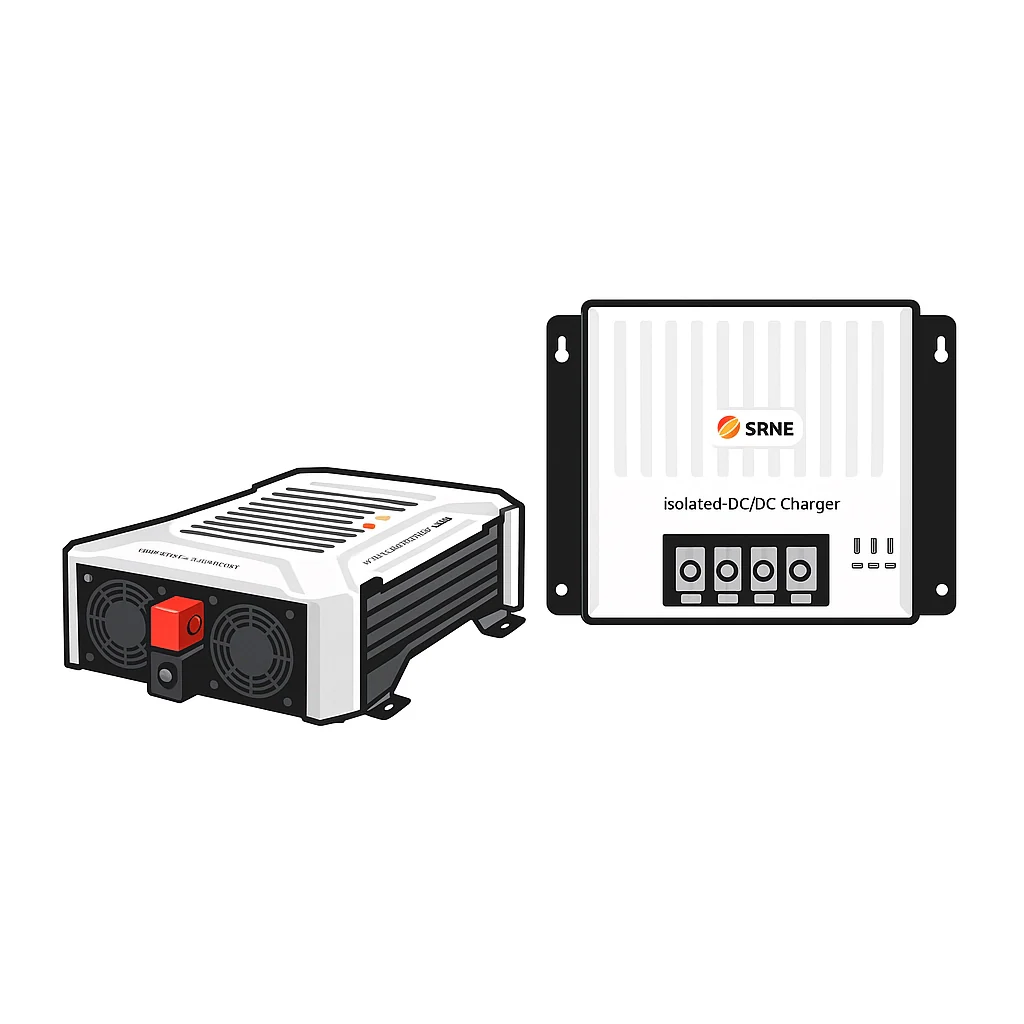
Your existing lead-acid charger likely won't work with lithium. Lead-acid chargers use a constant-voltage charging algorithm that overshoots lithium's optimal charge voltage, causing the battery's BMS to disconnect repeatedly. You need a lithium-compatible charger or a multi-chemistry charger that switches to lithium mode. Skyenergi supplies complete charging ecosystems designed to work together.
Wiring: Fusing and Cable Sizing
Install a 100A-200A ANL fuse (depending on your battery's BMS rating) within 30cm of the positive battery terminal. Cable sizing matters equally. Your main battery cable must be sized for the maximum discharge current your system can draw. A Skyenergi Core2 230Ah battery with a 200A BMS can safely discharge 200A continuously. Use 35mm² cable for runs up to 3 metres.

BMS Integration and Configuration
The Battery Management System (BMS) is your lithium battery's nervous system. It monitors cell voltage, temperature, and discharge current. If any parameter exceeds safe limits, the BMS disconnects the battery to prevent damage. Skyenergi's JBD BMS includes protection against overcharge, over-discharge, over-current, short-circuit, and temperature extremes. Most Skyenergi batteries arrive pre-configured and ready to use.
Solar Charge Controller Compatibility
Your MPPT (Maximum Power Point Tracking) solar charge controller must support lithium charging profiles. Lithium requires a constant-current constant-voltage (CC-CV) profile that stops charging once the battery reaches 3.65V per cell. SRNE MPPT controllers are widely used in UK motorhome installations because they're affordable and support lithium charging via firmware updates. Newer SRNE models ship with lithium support enabled by default. Skyenergi supplies SRNE controllers configured for lithium compatibility.
SRNE MPPT Solar Controller Compatibility with Lithium Systems
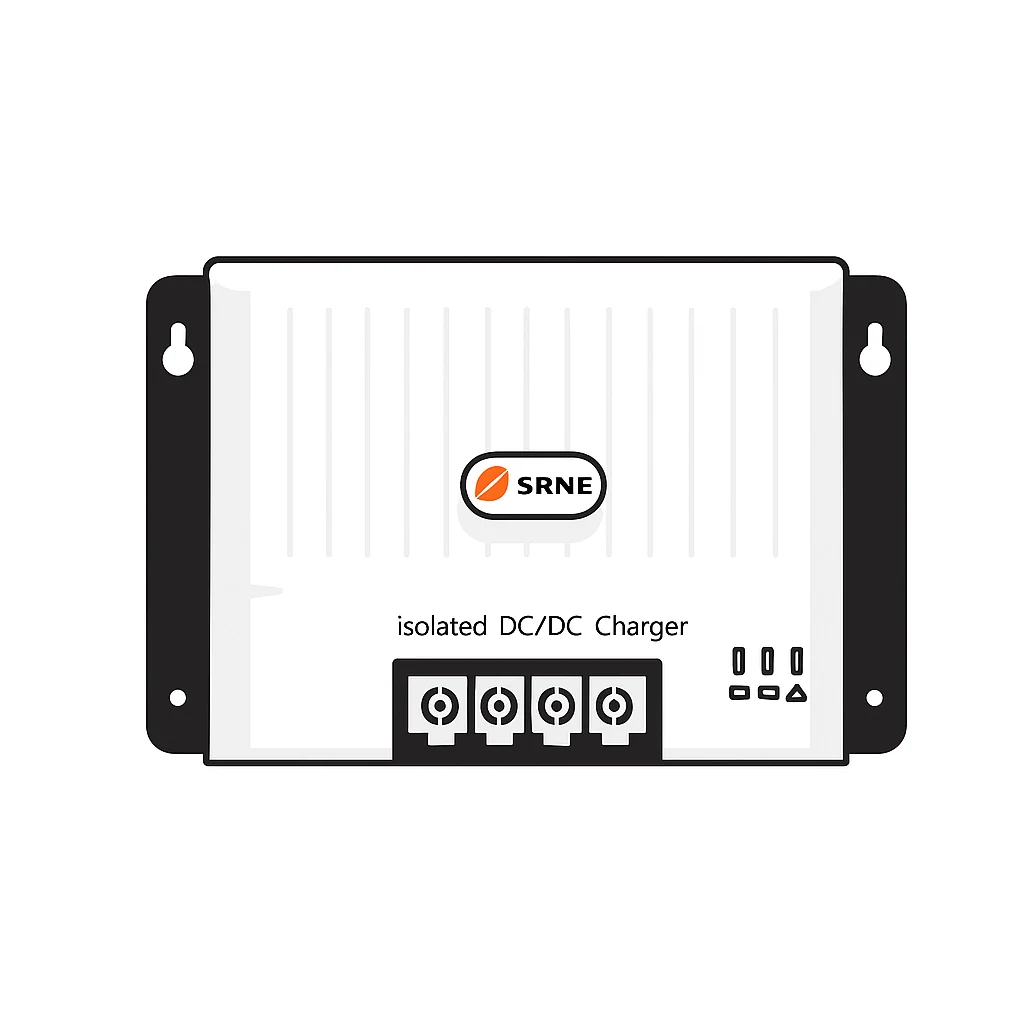
SRNE MPPT (Maximum Power Point Tracking) solar charge controllers are widely used for motorhome solar installations because they're reliable, affordable, and increasingly support lithium batteries.
How SRNE Controllers Detect Battery Chemistry
Modern SRNE controllers include lithium detection firmware that automatically adjusts charging parameters when a lithium battery is connected. The controller monitors battery voltage during the charging cycle. If voltage rises quickly to 3.65V per cell and plateaus, the controller recognizes lithium chemistry and switches to constant-voltage mode. Older SRNE models (pre-2023) may require manual configuration to enable lithium mode via the RS485 interface.
Voltage Thresholds and Charging Behavior
SRNE controllers charge lithium batteries to a maximum of 3.65V per cell (14.6V for 12V systems). This is the optimal charge voltage for LiFePO4 chemistry. They stop charging immediately once the battery reaches 14.6V, rather than continuing to trickle-charge like lead-acid chargers do. This protects your lithium battery from overcharge damage and maximizes cycle life.
Temperature Compensation
SRNE controllers include temperature sensors that adjust charging voltage based on ambient temperature. In cold conditions, the controller reduces charging voltage slightly to prevent damage to cold battery cells. In hot conditions, it reduces voltage further to prevent thermal stress. This temperature compensation is critical for motorhomes operating in variable climates.
Firmware Updates and Lithium Support
If you're using an older SRNE controller without lithium support, check the manufacturer's website for firmware updates. Many SRNE models released before 2023 can be updated to support lithium via USB or RS485 connection. Skyenergi supplies SRNE controllers pre-configured for lithium compatibility.
Choosing the Right Capacity: Amp-Hours and Usable Power
Sizing your lithium battery correctly is the difference between a system that powers your motorhome comfortably and one that leaves you rationing power on every trip.
Calculate Your Daily Power Consumption
Start by measuring actual power consumption. List every device you run daily: 12V fridge (30-50W continuous, 720-1,200Wh per day), LED lighting (5-10W per light, 4-6 hours daily, 120-360Wh per day), water pump (15-20W, 10-20 minutes daily, 50-200Wh per day). A typical motorhome with a fridge, lighting, and occasional inverter use consumes 1,000-1,500Wh per day.
Days of Autonomy
Determine how many days you want to run off-grid without solar input. Most motorhome owners target 2-3 days of autonomy. If your daily consumption is 1,200Wh and you want 3 days of autonomy, you need 4,000Wh usable capacity, requiring approximately 333Ah. A Skyenergi Core2 340Ah battery would give you 3+ days of autonomy.
Account for Solar Input
Most motorhome owners have solar panels. A 200W solar array in decent sunlight generates 1,000-1,200Wh per day. If your daily consumption is 1,200Wh and your solar generates 1,000Wh daily, your net daily deficit is only 200Wh. A 230Ah battery would give you 2+ weeks of autonomy in average sunlight.
Voltage Stability Under Load
Lithium batteries maintain stable voltage across their entire discharge range (13.2V nominal, sagging to 12.0V only near complete discharge). Lead-acid batteries sag to 11.5V halfway through discharge. This voltage stability is why lithium appliances run reliably for days.
Practical Sizing Recommendations
- Weekend campers (2-3 day trips): 105-172Ah lithium
- Extended touring (1-2 week trips): 230-340Ah lithium
- Full-time living or expedition vehicles: 460Ah+ lithium
- Budget-conscious buyers: Skyenergi Edge 100Ah provides entry-level lithium
Conclusion: Your Path to Off-Grid Independence
Lithium leisure batteries represent a genuine shift in what's possible for motorhome owners. You're no longer choosing between power and weight, between reliability and cost, or between off-grid capability and maintenance burden. Modern LiFePO4 batteries solve all three problems simultaneously.
According to Microgeneration Certification Scheme (MCS) data, 92% of new battery installations were paired with solar panels in the first half of 2026, and 36,000 certified battery installations occurred in just six months. Motorhome owners are recognizing that lithium technology solves real problems: weight savings, maintenance-free operation, and the ability to run modern appliances reliably for days without mains power.
The best lithium battery for motorhome use depends on your specific needs, but Skyenergi delivers the complete solution. Whether you're upgrading from lead-acid, building a new system from scratch, or designing a complex Victron-integrated setup, Skyenergi's Core2 and Elite ranges provide the batteries, charging equipment, and SRNE monitoring systems required to create an efficient and reliable power system.
Start with the Skyenergi Core2 230Ah if you're doing extended touring with moderate power consumption. Step up to the Skyenergi Core2 460Ah if you're running power-hungry appliances or full-time living. Choose the Skyenergi Elite 304Ah if you're already invested in Victron infrastructure. Or start affordably with the Skyenergi Edge 100Ah and expand later as your needs evolve.
Get started with Skyenergi and enjoy the independence that genuine off-grid power delivers: reliable energy, lighter payload, and years of maintenance-free operation.
Frequently Asked Questions
Q: What makes LiFePO4 the best lithium battery chemistry for motorhomes?
A: LiFePO4 (Lithium Iron Phosphate) offers inherent thermal stability, longer cycle life (2,000-5,000 cycles), and superior cold-weather charging compared to older lithium cobalt alternatives. LiFePO4 batteries deliver 90-100% usable capacity versus lead-acid's 50%, meaning you access far more stored energy. Skyenergi's LiFePO4 batteries include integrated BMS protection and heat-pad technology, enabling safe charging even below 0°C, critical for year-round motorhome use.
Q: How much weight do I save upgrading to a lithium leisure battery?
A: A 100Ah lithium battery weighs approximately 10-12kg, while an equivalent lead-acid unit weighs 25-30kg. This 50% weight reduction directly improves your motorhome's payload capacity and handling. For a Skyenergi Core2 230Ah battery at roughly 23kg, you gain approximately 30kg of usable payload compared to a traditional lead-acid setup, enough for additional water, fuel, or comfort equipment without exceeding your vehicle's maximum weight limits.
Q: Will a lithium battery work with my existing solar charge controller?
A: Not all solar controllers are lithium-compatible. Your existing lead-acid charger may apply incorrect voltage profiles, damaging the lithium battery or triggering its BMS protection. SRNE MPPT solar controllers are purpose-built for lithium systems and communicate directly with intelligent BMS units, optimising charge rates and protecting against overcharge. When upgrading to lithium, pair it with an SRNE MPPT solar controller or equivalent lithium-certified regulator to ensure safe, efficient charging and maximum system lifespan.
Q: How long do lithium leisure batteries actually last in a motorhome?
A: Lithium (LiFePO4) leisure batteries typically last 10-15 years with 2,000-5,000 charge cycles, compared to 3-5 years for traditional lead-acid or AGM batteries. Skyenergi Core2 batteries are rated for up to 8,000 cycles at 80% depth of discharge, ensuring a lifespan exceeding 10 years with proper use.
This article was written using GrandRanker
Prev post

Why Your Campervan Fridge Cuts Out: 7 Fixes
Updated on 28 August 2026
Next post

Solar MPPT Controller Setup Guide for 2026
Updated on 26 August 2026


